Tell us about the job
Takes about a minute. No obligation.

A furnace install in Anoka County starts with what the equipment will actually run against, and that question has a concrete answer. 150 severe weather events were recorded in Anoka County, Minnesota between 2015 and 2024. At that rate, severe weather is a standing feature of the climate here, not a background variable a contractor can set aside when sizing equipment or planning ductwork. A unit sized to catalog minimums will be undersized for what this area regularly asks of it. Contractors working in this county factor the local load into equipment selection before anything else gets quoted.
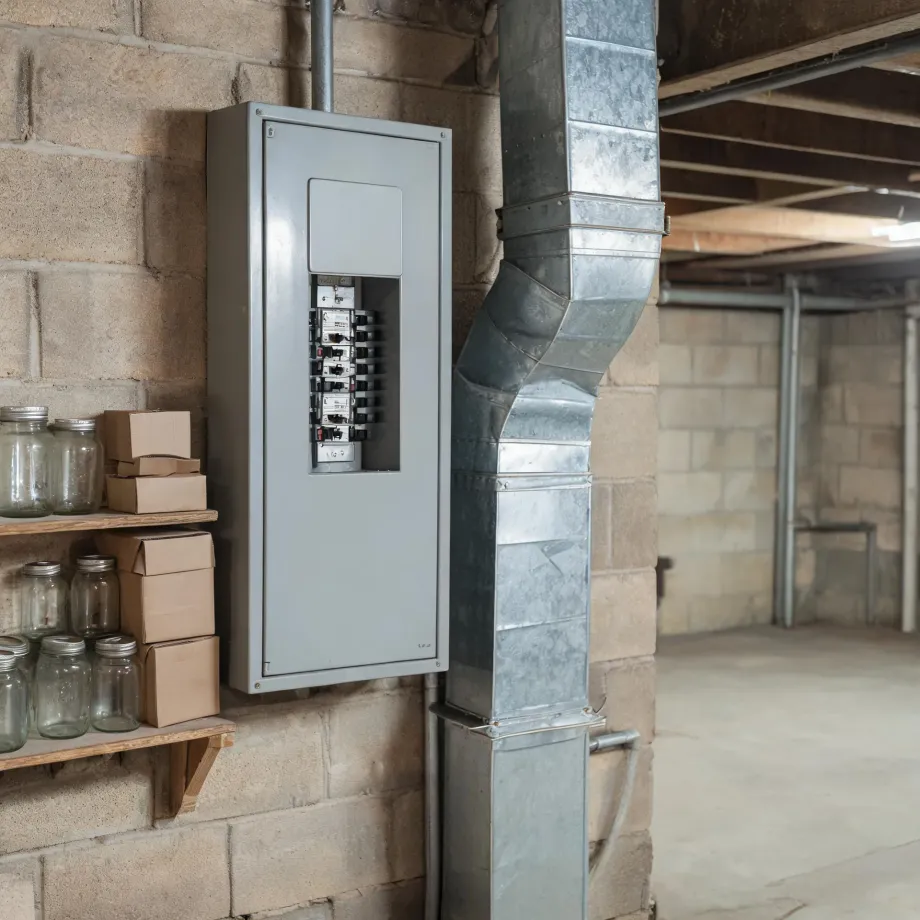
Ductwork laid down for an older furnace was designed around that furnace's airflow, static pressure, and heat output. Half the homes in Anoka County, Minnesota were built in 1986 or earlier (2020-2024 ACS 5-year). A contractor installing a new unit in a house from that era has to assess whether the existing trunk lines and branch runs will actually move the volume the new system demands, or whether they will choke it. Electrical service matters too, but duct geometry is what gets opened, measured, and sometimes recut before the new equipment goes in.
What Gets Installed With a New Furnace
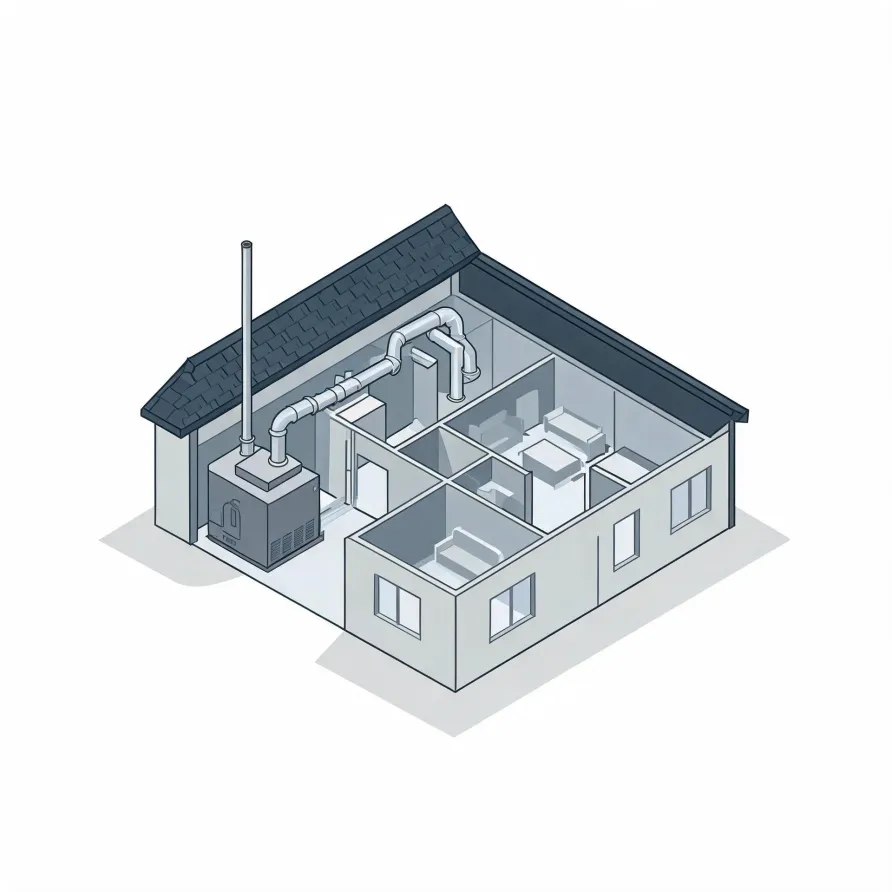
The furnace itself sits in a utility space, basement, or closet at the center of the home's heating system. A contractor sets the unit in place and connects it to the fuel supply, whether gas or propane, along with the flue that carries combustion gases out of the house. The air handler and blower assembly live inside the cabinet and push conditioned air out once the unit fires.
The thermostat mounts on an interior wall and gives the homeowner direct control over the system. A new furnace also requires a filter housing at the return-air opening, which is where air enters before it reaches the heat exchanger. Some installations include a new condensate line if the furnace is a condensing model that produces water vapor as part of its operation.
The drawing shows a typical layout, and a licensed contractor determines exactly what applies to your house.
Get matched in Anoka CountyAnoka County, by the numbers
150 severe weather events were recorded in Anoka County, Minnesota between 2015 and 2024.
NOAA National Centers for Environmental Information, Storm Events Database, bulk CSV export, events 2015-01-01 through 2024-12-31.Half the homes in Anoka County, Minnesota were built in 1986 or earlier (2020-2024 ACS 5-year).
U.S. Census Bureau, 2020-2024 American Community Survey 5-Year EstimatesAnoka County, Minnesota holds 141,863 housing units (2020-2024 ACS 5-year).
U.S. Census Bureau, 2020-2024 American Community Survey 5-Year EstimatesOwners occupy 80.2% of the occupied homes in Anoka County, Minnesota (2020-2024 ACS 5-year).
U.S. Census Bureau, 2020-2024 American Community Survey 5-Year EstimatesFurnace Installation Rules and Codes for Anoka County, Minnesota6 sourced standards and rules
What the Installation Actually Looks Like
Non-weatherized gas furnaces manufactured on or after November 19, 2015 must reach 80.0 percent AFUE.
Non-weatherized oil-fired furnaces manufactured on or after November 19, 2015 must reach 83.0 percent AFUE.
Mobile home gas furnaces manufactured on or after November 19, 2015 must reach 80.0 percent AFUE.
Non-weatherized gas furnaces manufactured on or after December 18, 2028 must reach 95.0 percent AFUE, up from the 80.0 percent minimum that applies to units manufactured before that date.
Licensing and Legal Requirements in Anoka County, Minnesota
Minnesota defines a mechanical contractor as a business that installs, repairs or maintains heating, ventilating, cooling or refrigeration systems — the definition that carries the exemption from the residential contractor licence.
Minnesota's residential contractor licence does not reach HVAC work: the licensing section carries its own exemption list, and a mechanical contractor is exempt from the licence requirement by name.
Severe Weather Events in Anoka County
Minnesota weather puts real stress on heating equipment, and Anoka County gets its share of that load. A furnace sized and installed for local conditions holds up differently than one that was not, which is why weather history belongs in any honest conversation about installation work here.
150 severe weather events, 2015–2024. Source: NOAA National Centers for Environmental Information, Storm Events Database.