Tell us about the job
Takes about a minute. No obligation.
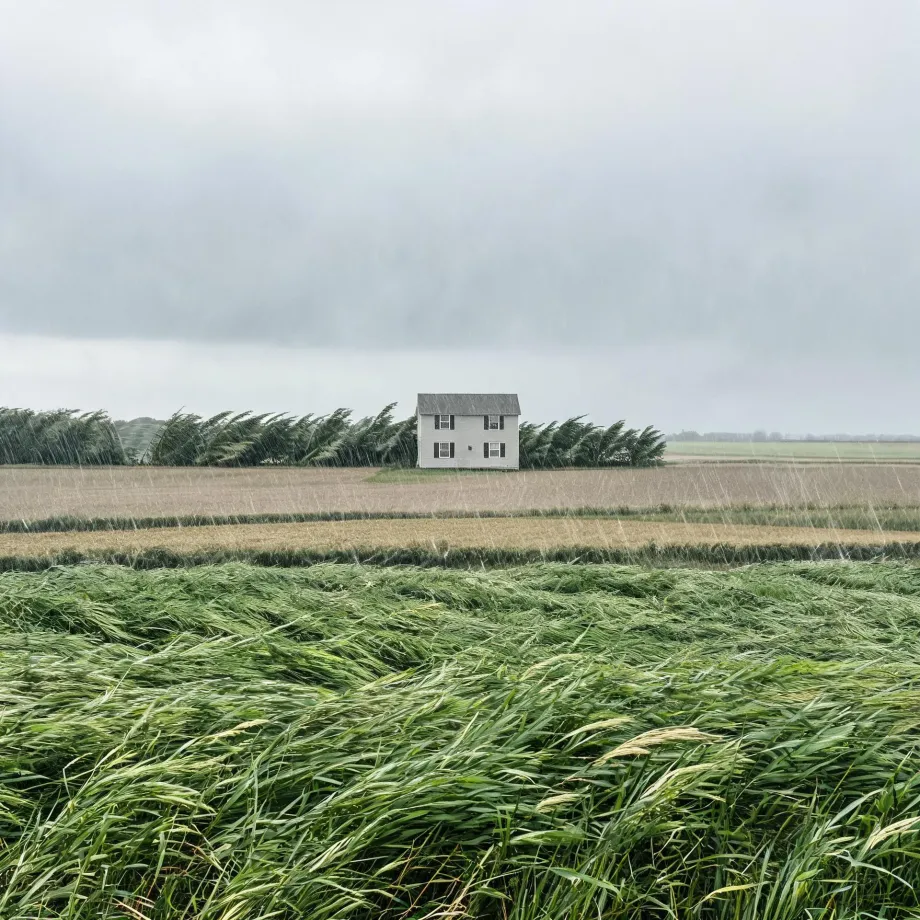
A contractor quoting a furnace installation in Clay County has to size for what this area actually runs against, and that means starting with the local weather record rather than a catalog default. 199 severe weather events were recorded in Clay County, Minnesota between 2015 and 2024. At that rate, severe weather is a regular condition of operating here, and the thermal and mechanical demands it places on heating equipment factor into which unit a contractor selects, how it gets installed, and what the home's load calculation actually requires. A furnace sized for average conditions in a milder place will be undersized for this one.
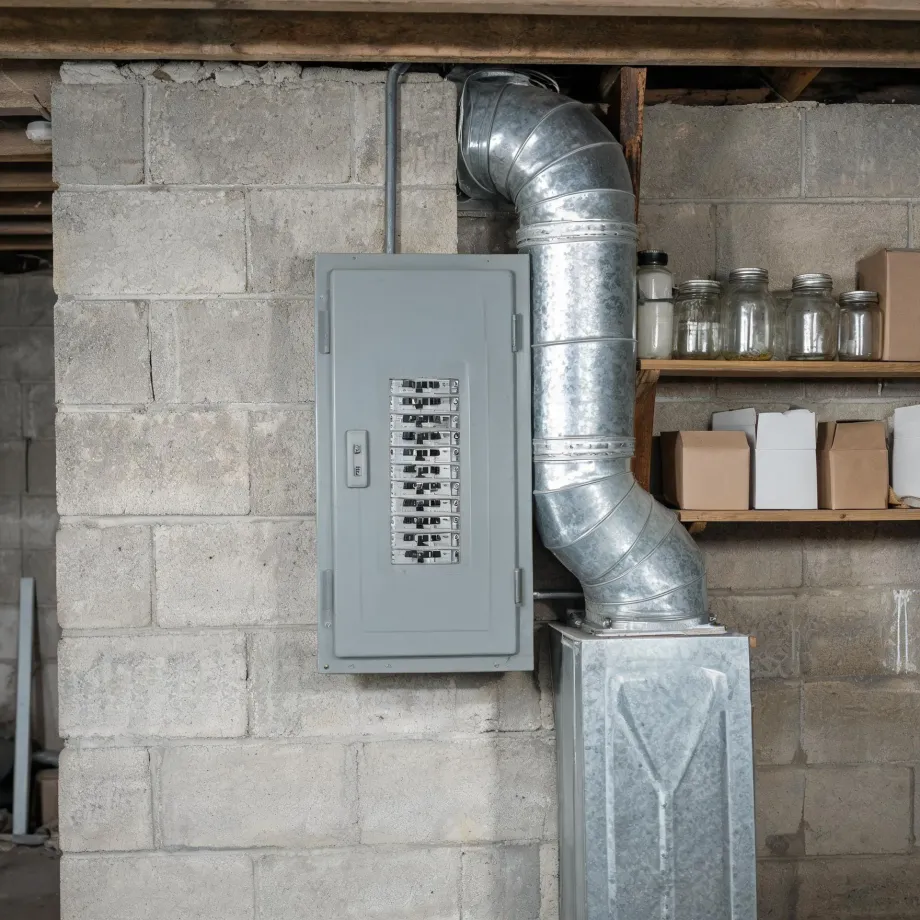
Ductwork laid down for a furnace of a previous generation was designed around that unit's airflow, its static pressure, and the way it distributed heat through the house. Half the homes in Clay County, Minnesota were built in 1981 or earlier (2020-2024 ACS 5-year). A contractor quoting a new furnace here has to assess whether those ducts will carry what a modern system delivers, and whether the electrical service meets what the new equipment requires. If the existing ductwork cannot handle the load, the installation scope changes before anyone prices the furnace itself.
What Gets Installed With a New Furnace
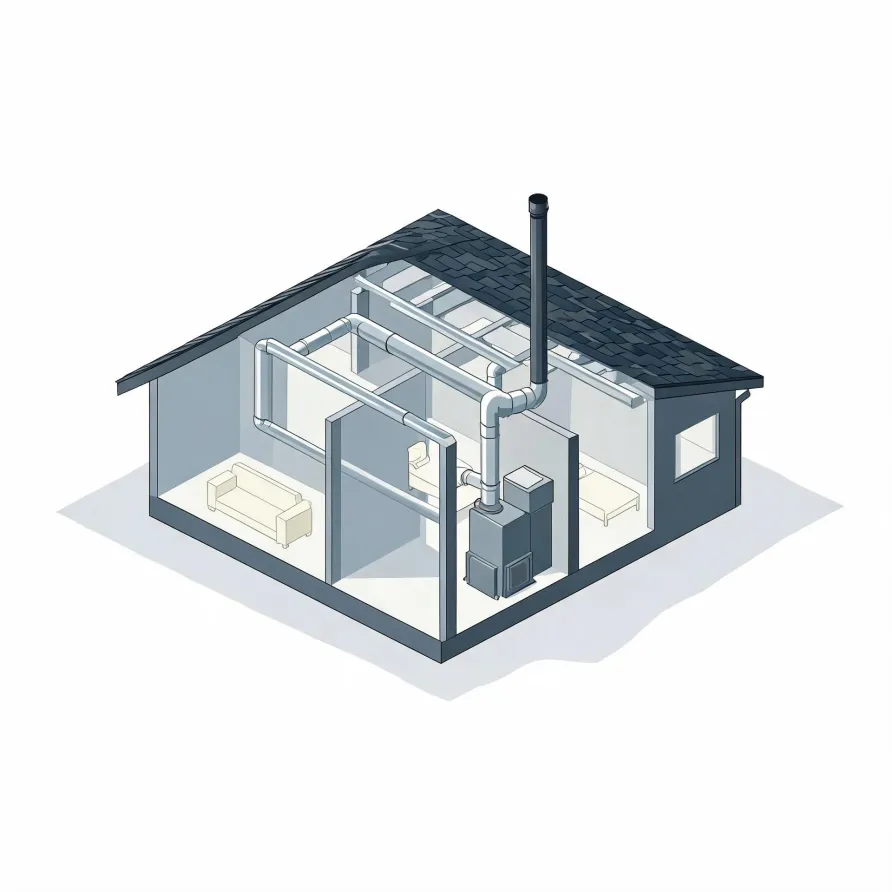
The furnace itself sits in the basement, utility room, or crawl space and is the core of what a contractor installs. It holds the heat exchanger, the burner assembly, and the blower in a single cabinet. The heat exchanger is the piece that separates combustion gases from the air your household breathes, and the blower pushes conditioned air out toward the rest of the house.
The flue pipe runs from the furnace cabinet up and out of the house, carrying exhaust gases away from the living space. Alongside it, the contractor installs a new air filter housing if one is needed, and connects the thermostat wiring that tells the furnace when to fire and when to stop.
The drawing shows a typical layout, and a licensed contractor determines what fits the specifics of your house.
Get matched in Clay CountyClay County by the Numbers
199 severe weather events were recorded in Clay County, Minnesota between 2015 and 2024.
NOAA National Centers for Environmental Information, Storm Events Database, bulk CSV export, events 2015-01-01 through 2024-12-31.Half the homes in Clay County, Minnesota were built in 1981 or earlier (2020-2024 ACS 5-year).
U.S. Census Bureau, 2020-2024 American Community Survey 5-Year EstimatesClay County, Minnesota holds 27,559 housing units (2020-2024 ACS 5-year).
U.S. Census Bureau, 2020-2024 American Community Survey 5-Year EstimatesOwners occupy 65.9% of the occupied homes in Clay County, Minnesota (2020-2024 ACS 5-year).
U.S. Census Bureau, 2020-2024 American Community Survey 5-Year EstimatesFurnace & HVAC Installation Rules for Clay County, Minnesota6 codes, standards & laws
What the Installation Looks Like
Non-weatherized gas furnaces manufactured on or after November 19, 2015 must reach 80.0 percent AFUE.
Non-weatherized oil-fired furnaces manufactured on or after November 19, 2015 must reach 83.0 percent AFUE.
Mobile home gas furnaces manufactured on or after November 19, 2015 must reach 80.0 percent AFUE.
Non-weatherized gas furnaces manufactured on or after December 18, 2028 must reach 95.0 percent AFUE, up from the 80.0 percent minimum that applies to units manufactured before that date.
Licensing Rules in Clay County, Minnesota
Minnesota defines a mechanical contractor as a business that installs, repairs or maintains heating, ventilating, cooling or refrigeration systems — the definition that carries the exemption from the residential contractor licence.
Minnesota's residential contractor licence does not reach HVAC work: the licensing section carries its own exemption list, and a mechanical contractor is exempt from the licence requirement by name.
Severe Weather Events in Clay County
Extreme weather puts furnaces under pressure that moderate climates never impose. How hard a heating system has to work, and how long it lasts, is shaped by what the local sky does year after year.
199 severe weather events, 2015–2024. Source: NOAA National Centers for Environmental Information, Storm Events Database.