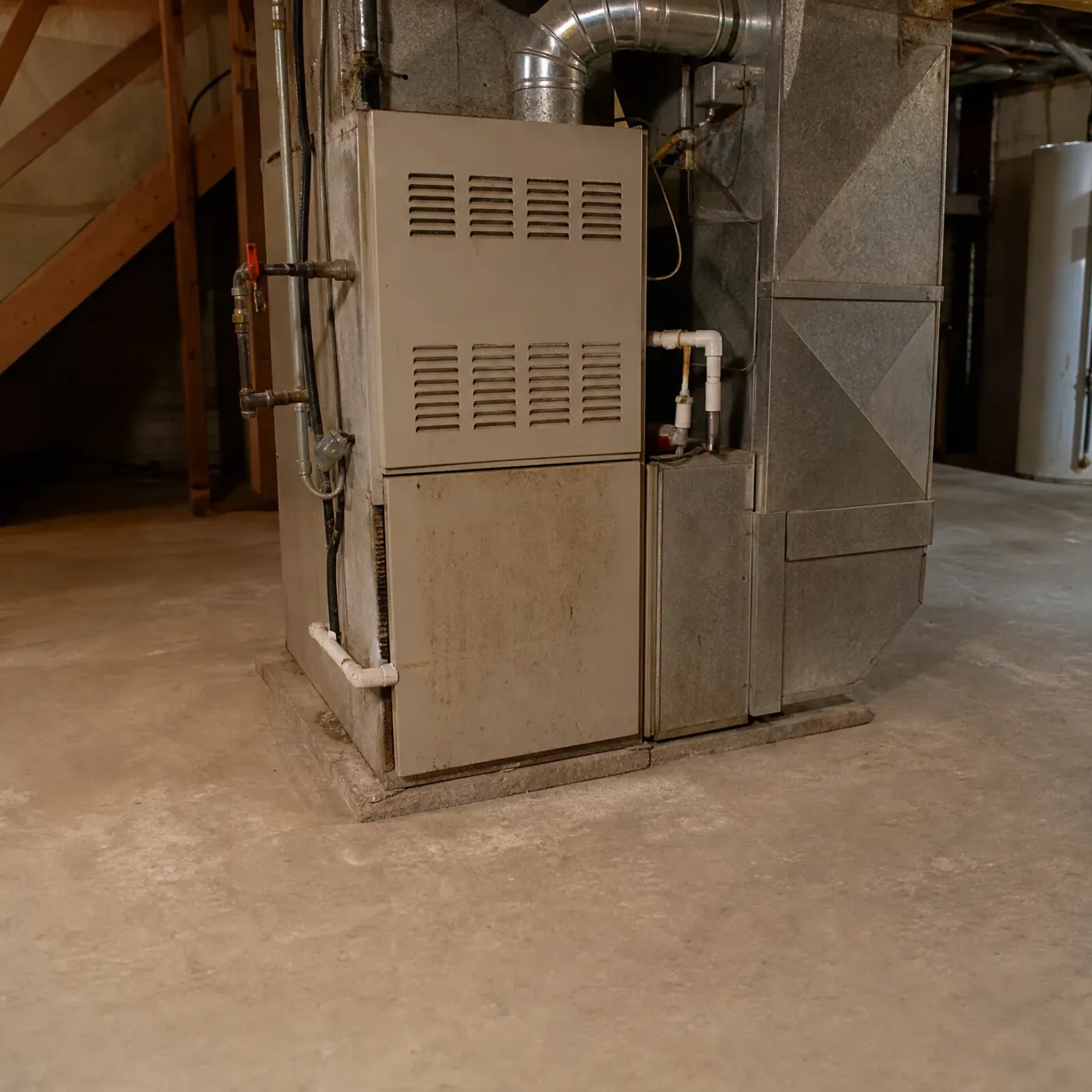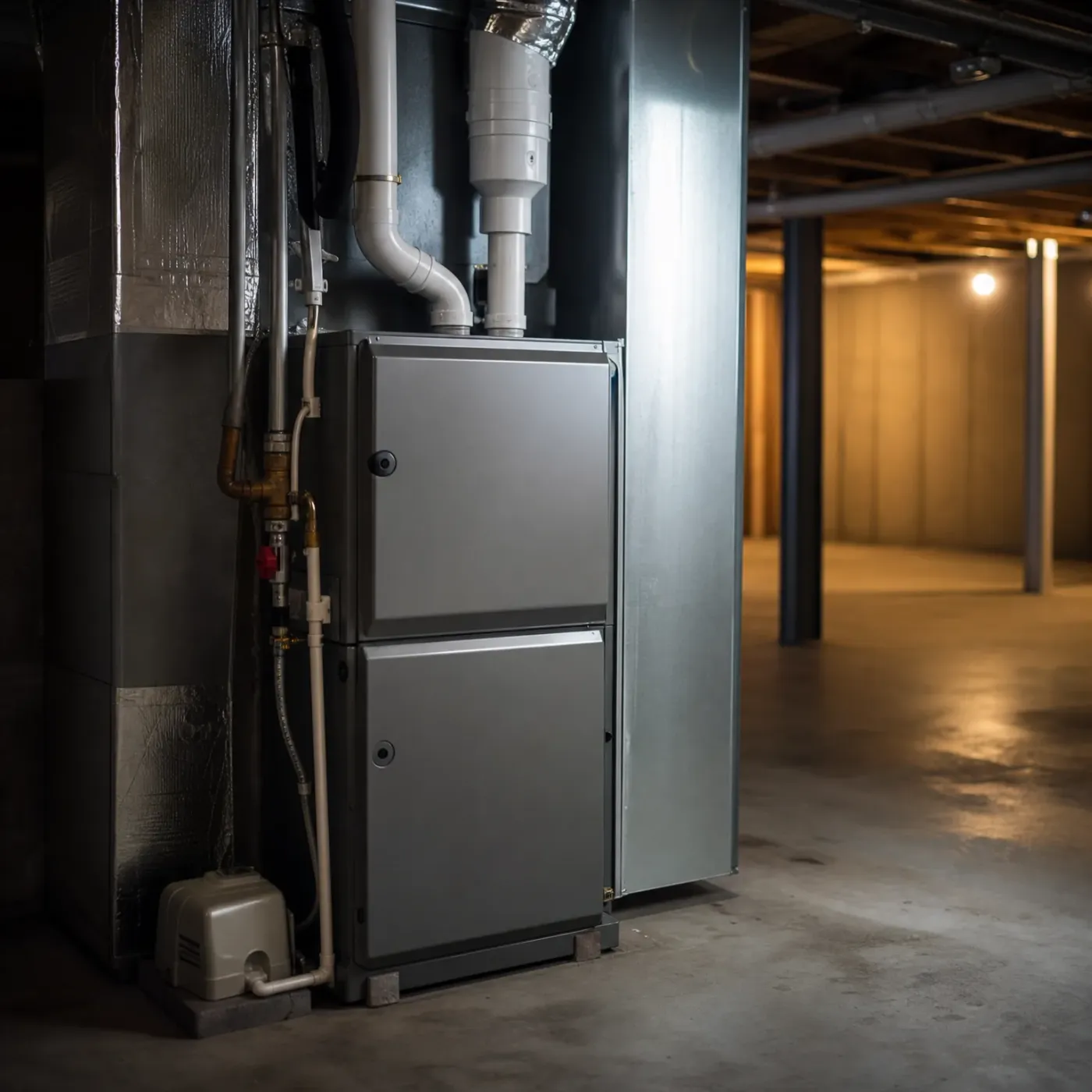
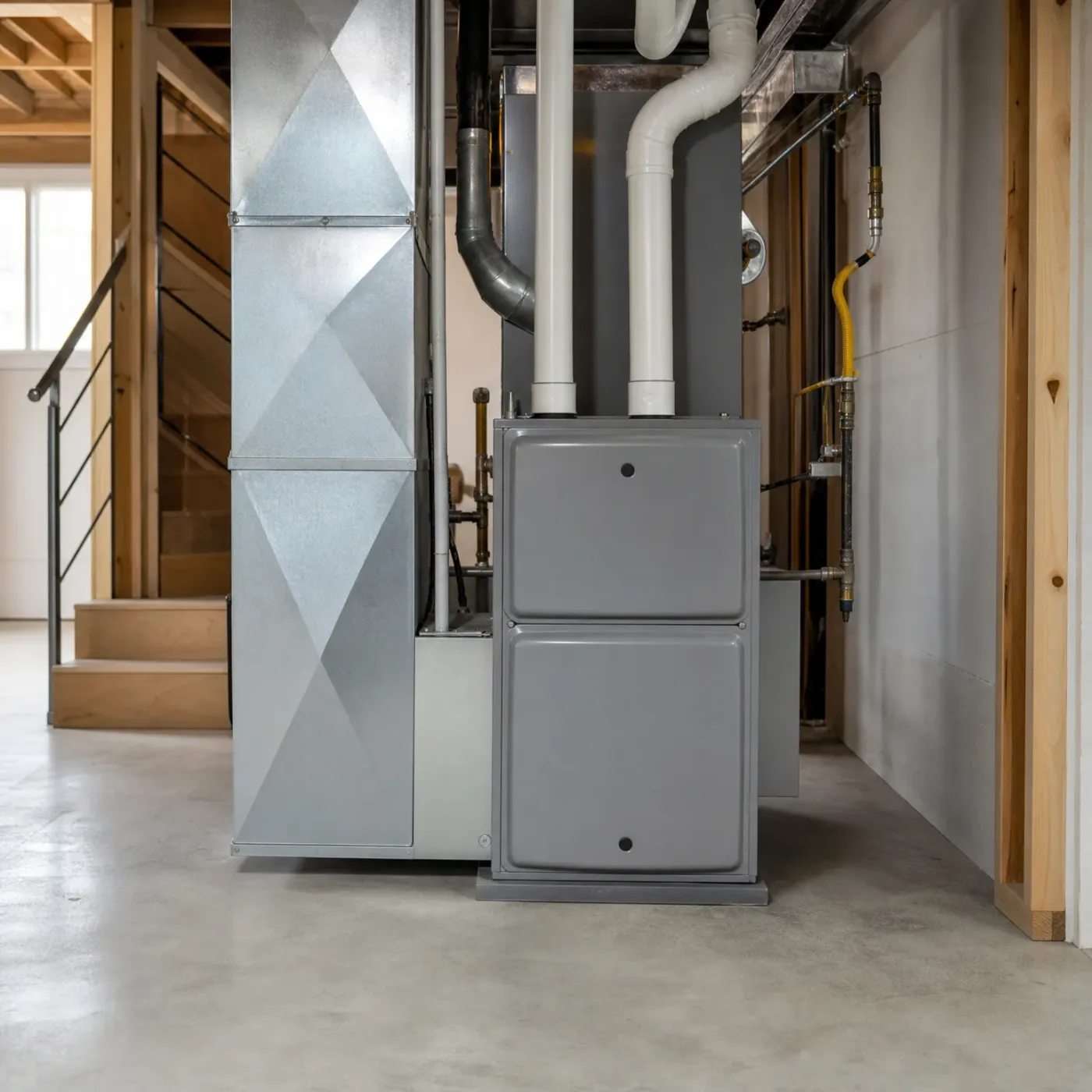
A gray high-efficiency furnace with PVC venting, copper and plastic piping, and a condensate pump sits beside sheet-metal ductwork in a concrete-floored basement.

Explain it one time

Furnace pilot light keeps going out in Minnesota

A pilot that won't stay lit usually comes down to a dirty or failing thermocouple, a draft hitting the flame, or a dirtier problem with the gas valve. This page gets into why it happens and what it takes to fix. Skip the search for a gas furnace repair company in your area, the calls to check who's available, and having to explain the problem more than once. A local contractor who works on furnaces like yours all winter can take it from here.

Start one form

A pilot light that won't stay lit almost always points to the thermocouple, the small rod that sits in the pilot flame and tells the gas valve it's safe to keep gas flowing. If the flame can't heat it enough, or if soot has built up on the tip, the valve reads that as no flame and shuts the gas off, even though the pilot was burning a minute ago. A draft from a nearby vent or a cracked flue can push the flame off the thermocouple the same way. Less often, the gas valve itself is failing and no amount of cleaning the thermocouple will hold the pilot lit. In a Minnesota winter, a furnace that keeps dropping its pilot isn't a small annoyance. It's your only heat going out on the coldest nights, and it needs a furnace technician to find which of these it actually is before it gets fixed.

A gray high-efficiency furnace with white PVC vent pipes stands in an unfinished basement beside sheet-metal ductwork, gas piping, and insulated stud walls on a concrete floor.

Pilot lit, flame steady

This is what it should look like. The pilot burns blue and holds still against the thermocouple, the gas valve stays open, and the furnace fires when the thermostat calls. No clicking off after a few minutes, no relighting with a match every other day.
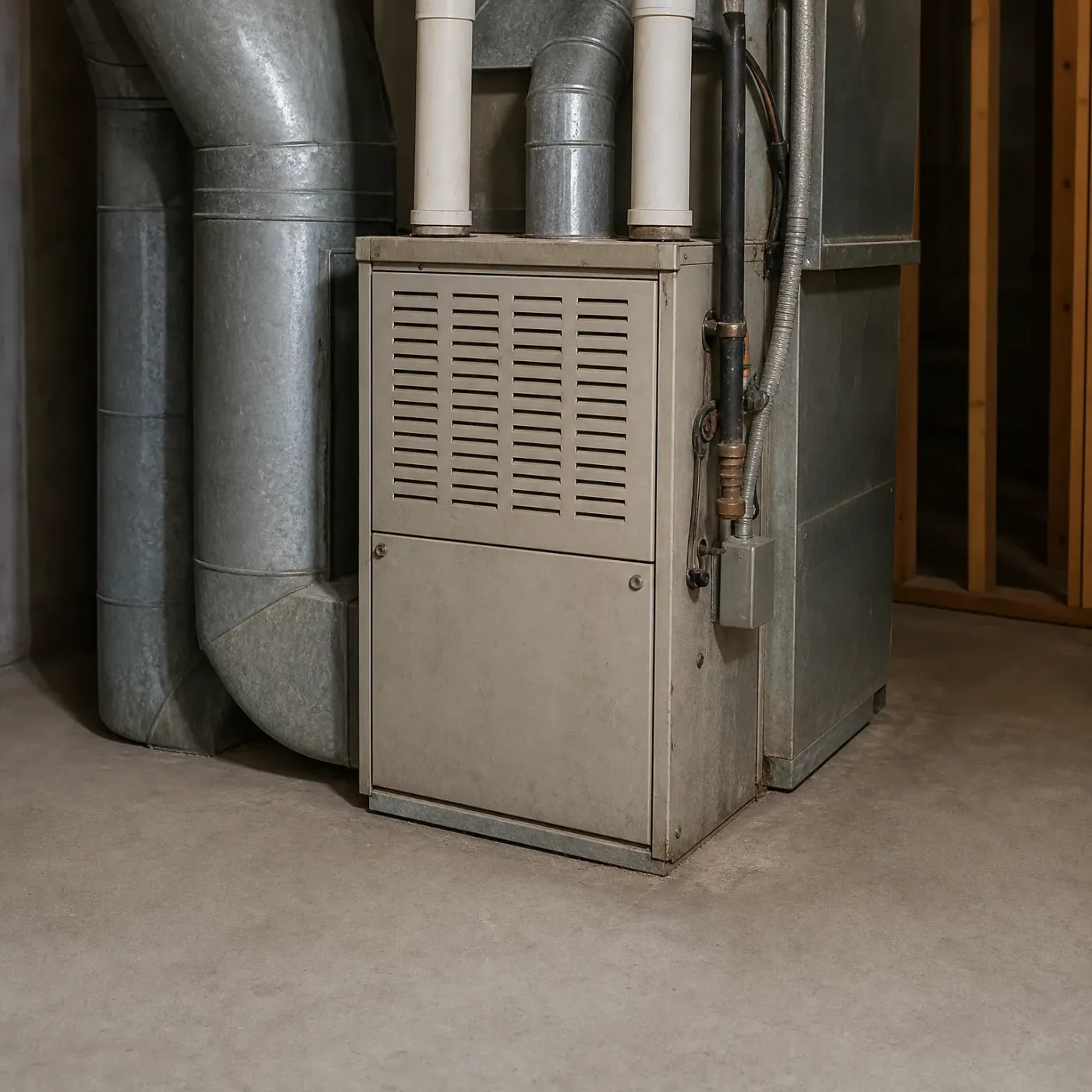
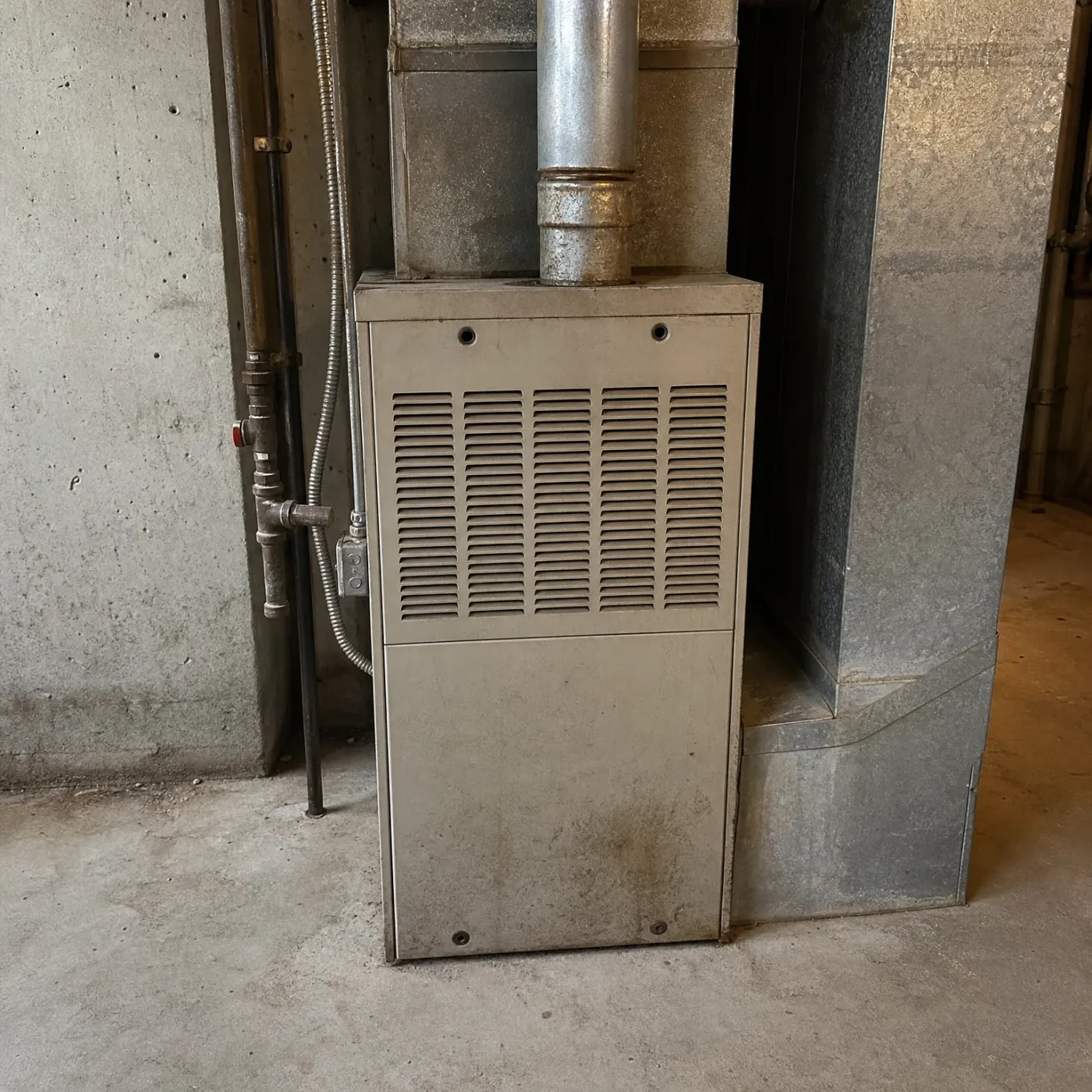
A beige sheet-metal furnace with a louvered upper panel stands on a concrete basement floor, connected to galvanized ductwork, white PVC vent pipes, and a metal gas line with an electrical box.

Pilot won't hold

Here the flame catches, then dies once you let go of the gas control knob, or it goes out on its own a few hours later. That pattern means the thermocouple isn't reading the flame right, or something is pulling air across it, or the gas valve itself is the problem underneath it.

Why does my furnace pilot light keep going out when it's windy?

A lot of Minnesota homes sit in open country or along a lake, and the wind gets into places you wouldn't expect, including the flue and the cabinet around the pilot assembly. If the pilot only goes out on a windy night, it's easy to assume the wind itself is snuffing the flame, but what's actually happening underneath is more specific than that.

Wind is pushing air down the flue or through a gap in the cabinet, and it's bending the flame off the thermocouple

A strong gust doesn't usually blow the pilot out directly. It pushes down the vent pipe or through a loose panel seam and deflects the flame sideways, off the thermocouple tip. Once the rod cools even for a few seconds, it reads the flame as out and shuts the gas valve. The furnace isn't broken in that moment, it's doing what it's supposed to do. But if this happens every time the wind picks up, something is letting outside air reach a part of the furnace that's supposed to stay sealed from it, often a cracked flue connection, a bad gasket on the burner compartment, or a draft hood that's not drawing the way it should.

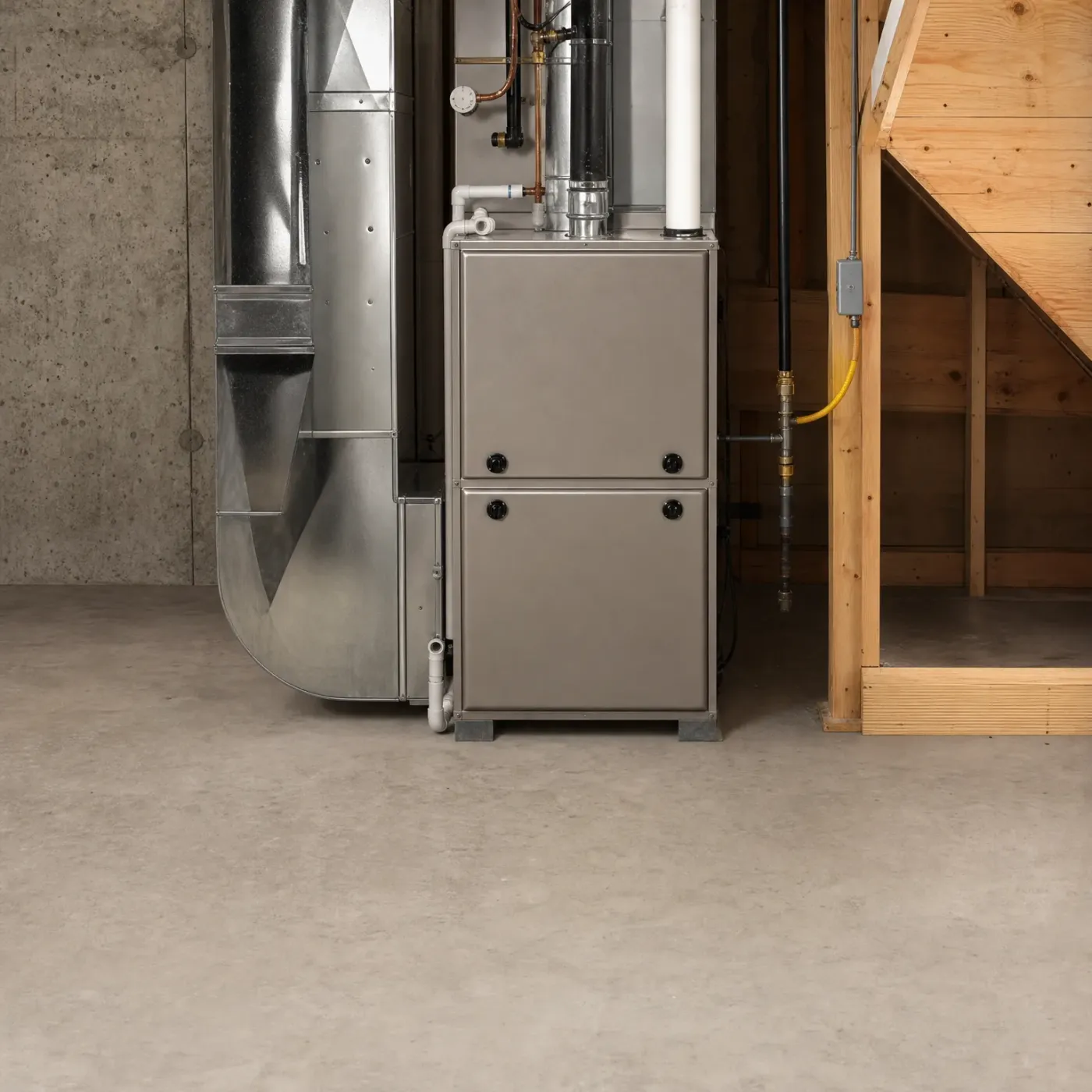
A gray high-efficiency furnace with white PVC vent pipes stands beside galvanized sheet-metal ductwork in a basement with a concrete floor, with a wooden staircase and railing at left.

Furnace running right

The furnace sits quiet most of the time, firing only when the thermostat calls. The pilot stays lit, the burners light clean, and warm air moves through the ducts without any clicking or delay. Nothing to check, nothing to relight.

An older gas furnace with louvered panels sits on a concrete pad in a basement, connected to sheet-metal ductwork and PVC and metal pipes, with a water heater and wooden stair framing in the background.

Furnace in trouble

The pilot won't hold. It lights, burns a minute or two, then dies, and the burners never catch. You're back at the valve with a lighter, and if the thermocouple or the gas valve is the real cause, it'll happen again the same day.

Why do you keep relighting the pilot yourself?

You've probably got the cover off and the long lighter within reach, because this has happened more than once. The furnace runs for a while, then the house starts cooling down and you go check, and the pilot's out again. Maybe you smell gas for a second when you open the panel. Maybe the flame looks small or yellow instead of a steady blue. On a cold January night in Minnesota, a furnace that won't hold its pilot means you're not getting heat when you need it most, and relighting it over and over isn't fixing whatever's actually wrong. Left alone, a failing thermocouple or gas valve can leave you without heat on the coldest night of the year, not just an inconvenient one.

An older gas furnace with a louvered front panel stands on a concrete basement floor beside galvanized sheet-metal ductwork, a metal flue pipe, gas piping and a flexible conduit along a concrete wall.
Before you get your furnace repair
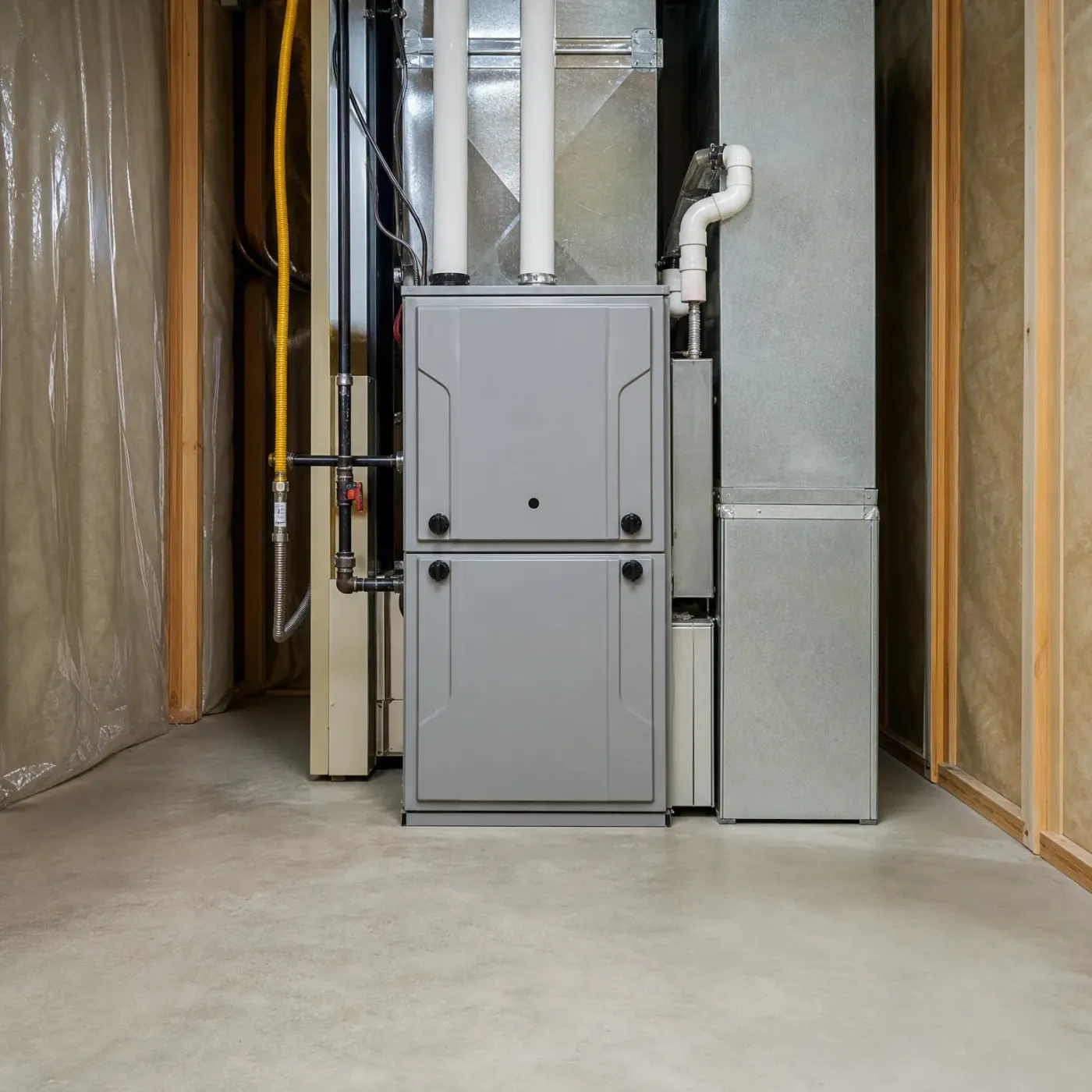
A gray furnace with sheet-metal ductwork, PVC vent pipes and a yellow gas line stands on a concrete basement floor beside wooden stair framing.
After you get your furnace repair

Skip the calls to every shop

A pilot that keeps dying on you isn't something to keep chasing yourself, especially with a Minnesota winter on the other side of it. Relighting it every few hours gets old fast, and it doesn't tell you whether you're dealing with a worn thermocouple, a draft problem, or a gas valve that needs replacing. Finding someone to look at it usually means searching around, calling a few places, explaining the same thing twice, then sitting on quotes trying to figure out who actually knows gas furnaces and isn't just going to swap the thermocouple and hope. That's the part this page skips. Your request goes to one local contractor, someone who works on furnaces like yours all season and has seen this exact pilot problem plenty of times before. No juggling calls from five different companies, no repeating yourself. You click the button, they get the details, and you go back to your day instead of relighting a pilot again tonight.

A thermocouple is a small part, but it has one job: generate just enough voltage to hold the gas valve open. It wears out the same way a light bulb does, through use, not damage.

So a furnace that ran fine last January can still have a pilot that won't hold this year. The part did its job for years, then it reached the end of it.

A gray-haired man in a dark sweater sits on a light gray sofa in a living room, looking toward a sunlit window with trees outside.
A gray-haired man in a dark blue sweater sits on a light gray sofa in a sunlit living room, looking off to the side, with a potted plant, shelving unit, and large glass doors behind him.
A bearded man with graying hair in a dark green sweater sits on a sofa in a living room, looking off to the side, with a sliding glass door and a dim kitchen doorway behind him.
A gray-haired man in a dark knit sweater sits on a light gray sofa in a living room, looking toward a sunlit window, with houseplants, a lamp, and framed art in the background.
  1. Pilot flame heats the thermocouple tip sitting inside it

  2. Thermocouple generates a small voltage from that heat

  3. Voltage holds the gas valve open to let gas flow

  4. Soot or a weak flame drops that voltage too low

Winter nights average 8°F statewide

At 8 below overnight, your furnace is running long stretches to keep up, and it can't afford a pilot that quits partway through. A flame that goes out at that temperature means the house starts losing heat fast, not slowly.

NOAA nClimDiv 1991-2020 county normals weighted by homes

Where This Leaves You

  • A pilot that won't hold almost always traces back to the thermocouple, a draft, or a gas valve problem.
  • The thermocouple wears out from normal use over time, not from anything you did wrong.
  • Soot on the tip or a weak flame can drop the thermocouple's voltage below what the gas valve needs.
  • Wind reaching the pilot through the flue or cabinet can blow out a flame that otherwise burns fine.
  • Relighting the pilot yourself fixes the symptom for a few hours but leaves the actual cause in place.
  • A licensed furnace repair tech can test the thermocouple's voltage and check for drafts to find which one is failing.

A pilot that keeps going out has one of three causes, and all three show up the same way to you: the flame dies, the house cools, you go relight it. The thermocouple is the usual answer. It sits in the pilot flame, makes a small voltage from that heat, and holds the gas valve open. Years of normal firing wear it down, or soot collects on the tip, and the voltage drops below what the valve needs to stay open. A draft reaching the pilot through the flue or the cabinet can blow out a flame that would otherwise burn fine, which is its own problem with its own fix. And sometimes the gas valve itself is misreading a signal that's actually fine. None of these get better on their own, and none of them show you which one you've got just by looking. Relighting the pilot gets the furnace running again for a while, but it doesn't touch whatever is actually failing, so you're back at it again in a few hours or a day. Minnesota winters don't leave much room for a furnace that quits on its own partway through a cold night. A tech who checks the thermocouple's voltage and looks for where cold air is getting at the pilot can tell you which of the three it is, and what it takes to fix it for good.

A middle-aged woman with shoulder-length dark hair, wearing a gray cardigan over a cream top, sits in an upholstered armchair and looks toward a sunlit window, with a shelf holding framed pictures and a plant behind her.
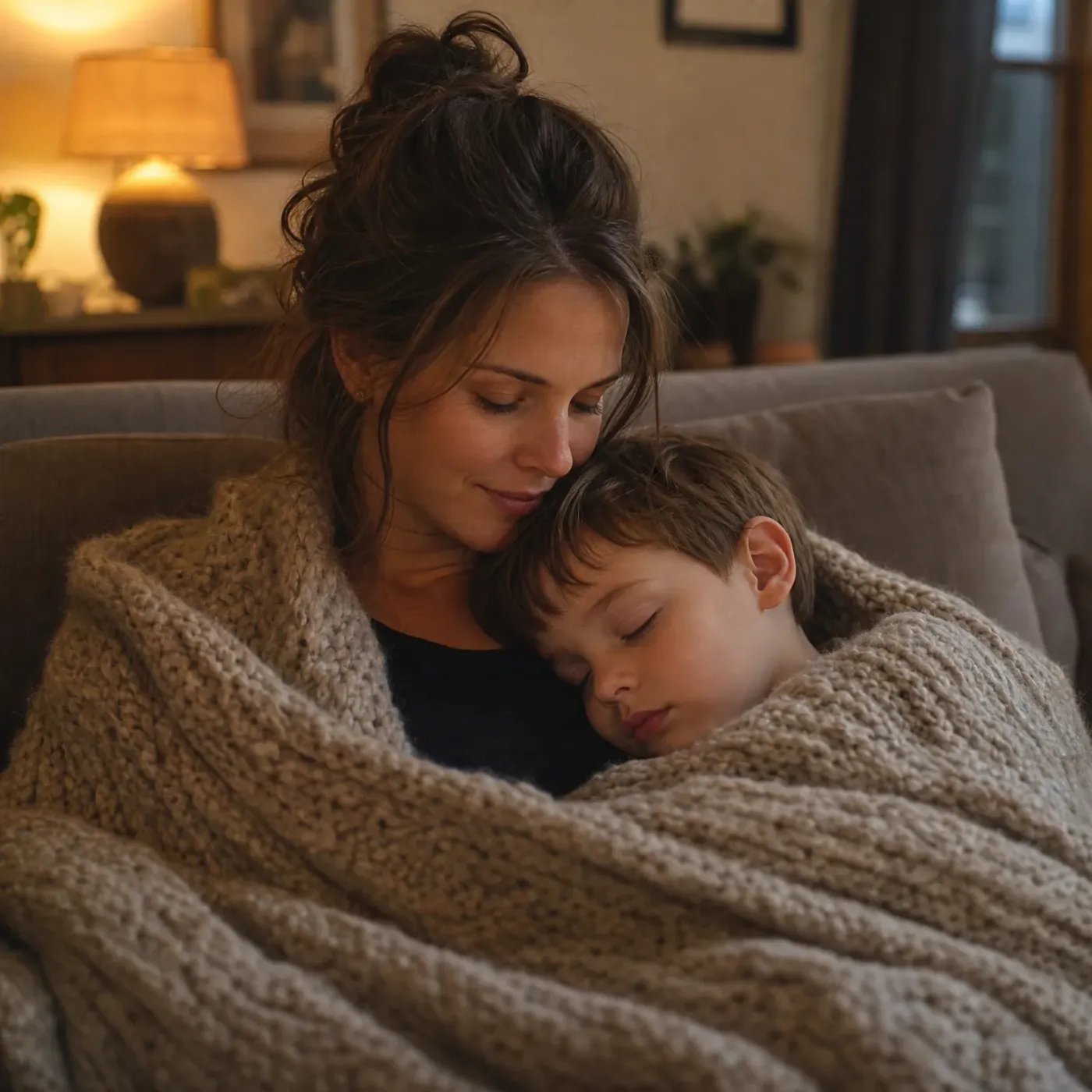
A woman and a child wrapped together in a thick knitted blanket on a sofa, both with eyes closed, with a lit table lamp and houseplant in the dim background.

Furnace Repair

Skip calling around

Only one pro gets your request, so you hear from one company.

A black-framed smartphone standing upright against a plain light gray background, its screen filled with solid green.
Step 1 of 3: Equipment