Tell us about the job
Takes about a minute. No obligation.
A furnace repair call in Benton County rarely traces back to weather load. 51 severe weather events were recorded in Benton County, Minnesota between 2015 and 2024. At that rate, severe weather is an event here, not a constant condition, so a contractor arriving at a struggling furnace is more likely to find a worn heat exchanger, a failing inducer motor, or a neglected filter situation than a system that simply ran out of runway against the elements. Age and service history are what a contractor prices around first.
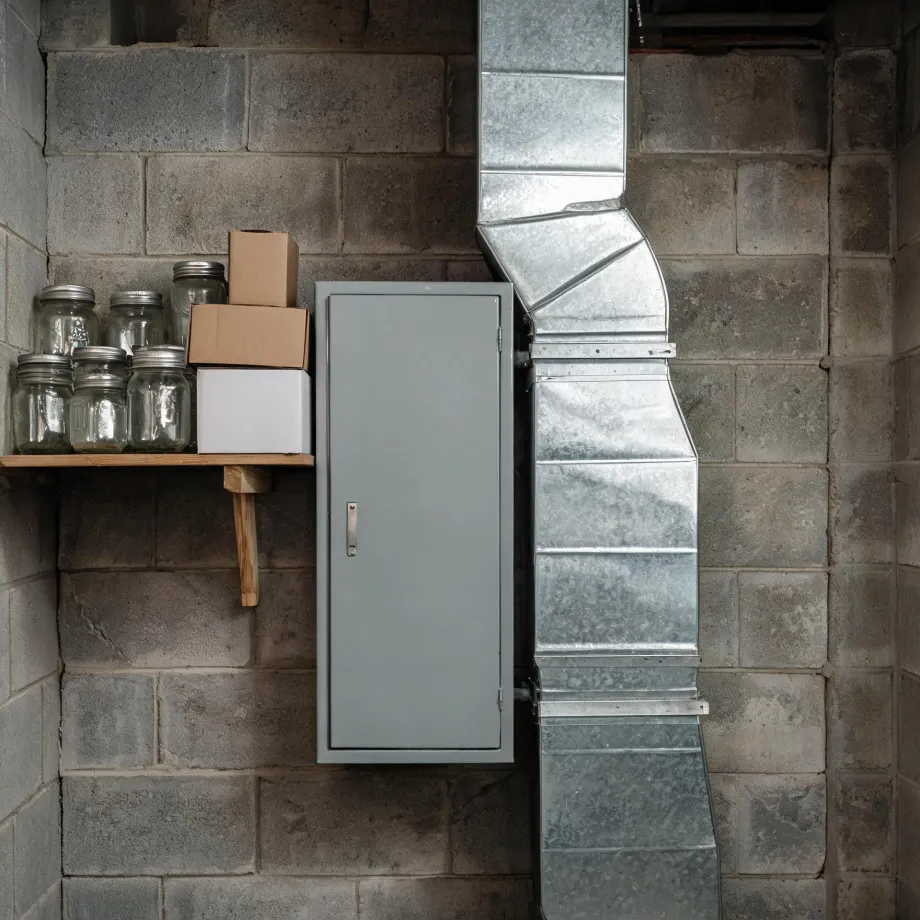
Older ductwork in a house carries its own history, but in Benton County the repair call itself is where that history surfaces. Half the homes in Benton County, Minnesota were built in 1986 or earlier (2020-2024 ACS 5-year). A furnace running in stock that old has likely been replaced at least once, and the unit in the house now has its own age on it. When a contractor opens the equipment, what decides the scope and the price is whether the parts that system takes are still being made. Heat exchangers, inducer motors, and control boards for units a generation old sit at the edge of what distributors stock, and some have dropped off entirely.
The Parts of a Furnace a Contractor Checks First
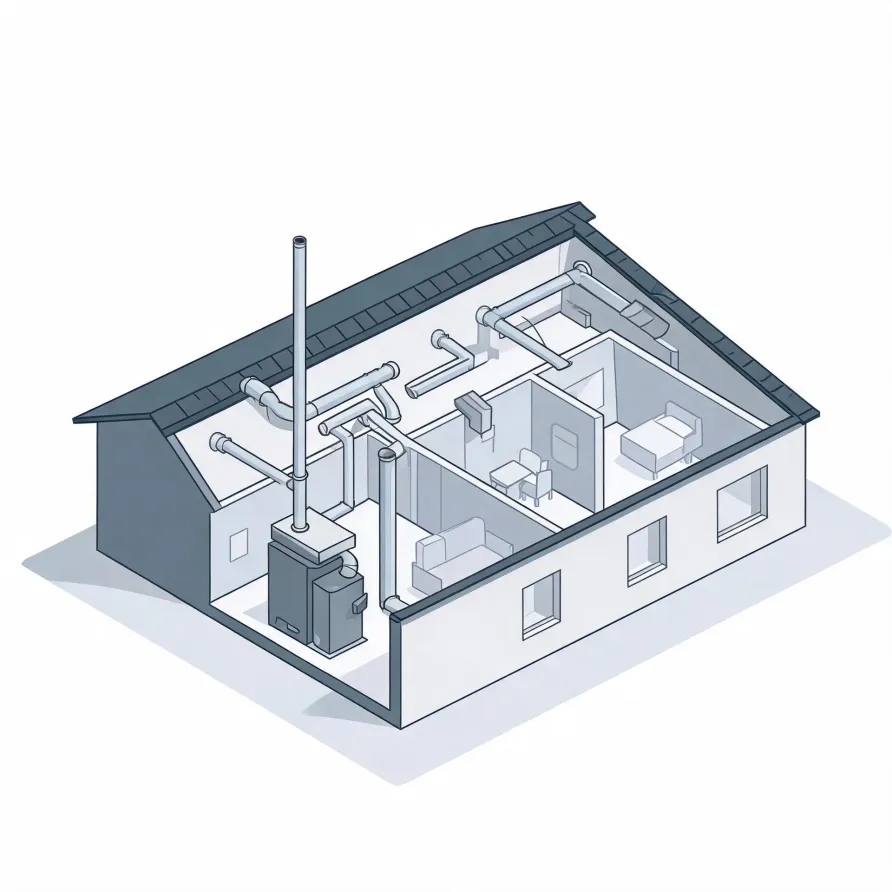
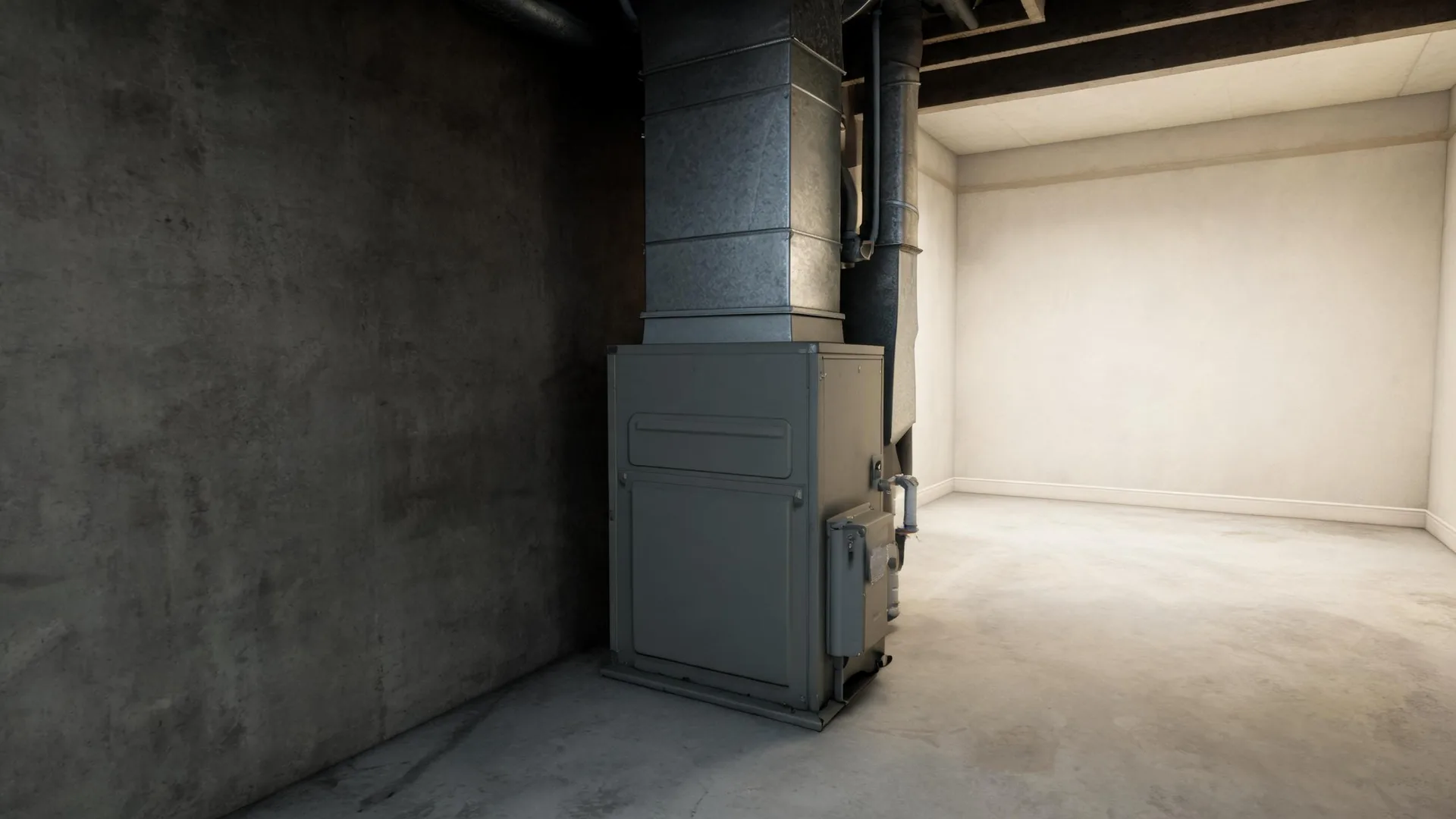
The furnace itself sits in a basement, utility room, or closet and burns fuel to produce heat. Inside it, the heat exchanger is the piece a contractor reaches for early: cracks or buildup there let combustion gases into the airstream. The burners and the igniter are the other usual suspects when a furnace stops firing or fires unevenly.
The blower motor and its fan wheel sit at the base of the furnace cabinet and push conditioned air out through the supply side of the system. The flue pipe runs from the top of the furnace up and out of the house, and the draft inducer motor pulls exhaust through it. Both get checked when combustion or airflow problems point away from the burner assembly.
The drawing shows a typical furnace layout, and a licensed contractor determines what applies to your specific equipment and installation.
Get matched in Benton CountyBenton County, by the numbers
51 severe weather events were recorded in Benton County, Minnesota between 2015 and 2024.
NOAA National Centers for Environmental Information, Storm Events Database, bulk CSV export, events 2015-01-01 through 2024-12-31.Half the homes in Benton County, Minnesota were built in 1986 or earlier (2020-2024 ACS 5-year).
U.S. Census Bureau, 2020-2024 American Community Survey 5-Year EstimatesBenton County, Minnesota holds 17,608 housing units (2020-2024 ACS 5-year).
U.S. Census Bureau, 2020-2024 American Community Survey 5-Year EstimatesOwners occupy 66.7% of the occupied homes in Benton County, Minnesota (2020-2024 ACS 5-year).
U.S. Census Bureau, 2020-2024 American Community Survey 5-Year EstimatesCodes & Standards Governing Furnace and HVAC Repair in Benton County, Minnesota6 sourced rules and standards
What the repair visit looks like
Non-weatherized gas furnaces manufactured on or after November 19, 2015 must reach 80.0 percent AFUE.
Non-weatherized oil-fired furnaces manufactured on or after November 19, 2015 must reach 83.0 percent AFUE.
Mobile home gas furnaces manufactured on or after November 19, 2015 must reach 80.0 percent AFUE.
Non-weatherized gas furnaces manufactured on or after December 18, 2028 must reach 95.0 percent AFUE, up from the 80.0 percent minimum that applies to units manufactured before that date.
Licensing Rules That Apply in Benton County, Minnesota
Minnesota defines a mechanical contractor as a business that installs, repairs or maintains heating, ventilating, cooling or refrigeration systems — the definition that carries the exemption from the residential contractor licence.
Minnesota's residential contractor licence does not reach HVAC work: the licensing section carries its own exemption list, and a mechanical contractor is exempt from the licence requirement by name.
Severe Weather Events in Benton County
Benton County winters put real load on furnace components, and storm activity compounds that wear. How hard the weather pushes here is part of what determines how often heating equipment needs attention.
51 severe weather events, 2015–2024. Source: NOAA National Centers for Environmental Information, Storm Events Database.