Tell us about the job
Takes about a minute. No obligation.
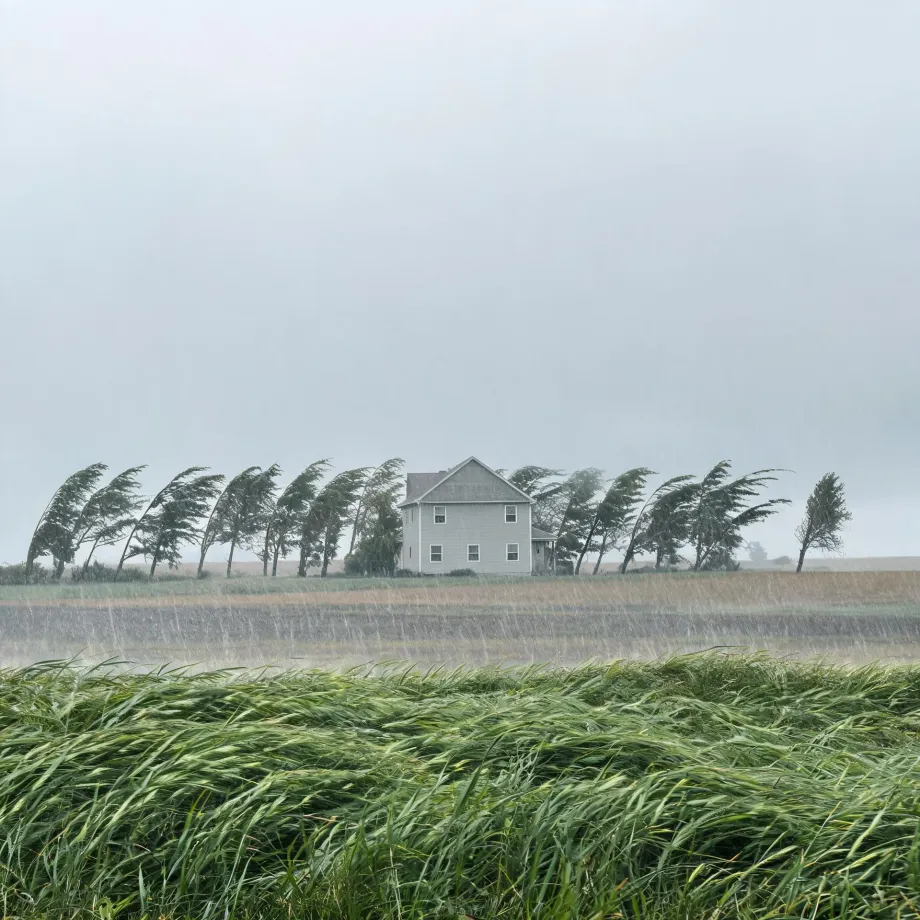
A furnace in Fillmore County has been running against real weather pressure for as long as it has been in the ground. 144 severe weather events were recorded in Fillmore County, Minnesota between 2015 and 2024. At that rate, a contractor diagnosing a failed furnace looks hard at components that absorb sustained thermal and mechanical load: heat exchangers for fatigue cracks, ignition assemblies for cumulative stress, blower motors for wear that builds quietly across seasons. A system that has been pushed this regularly tends to show it in more than one place, and a repair scope here reflects that.
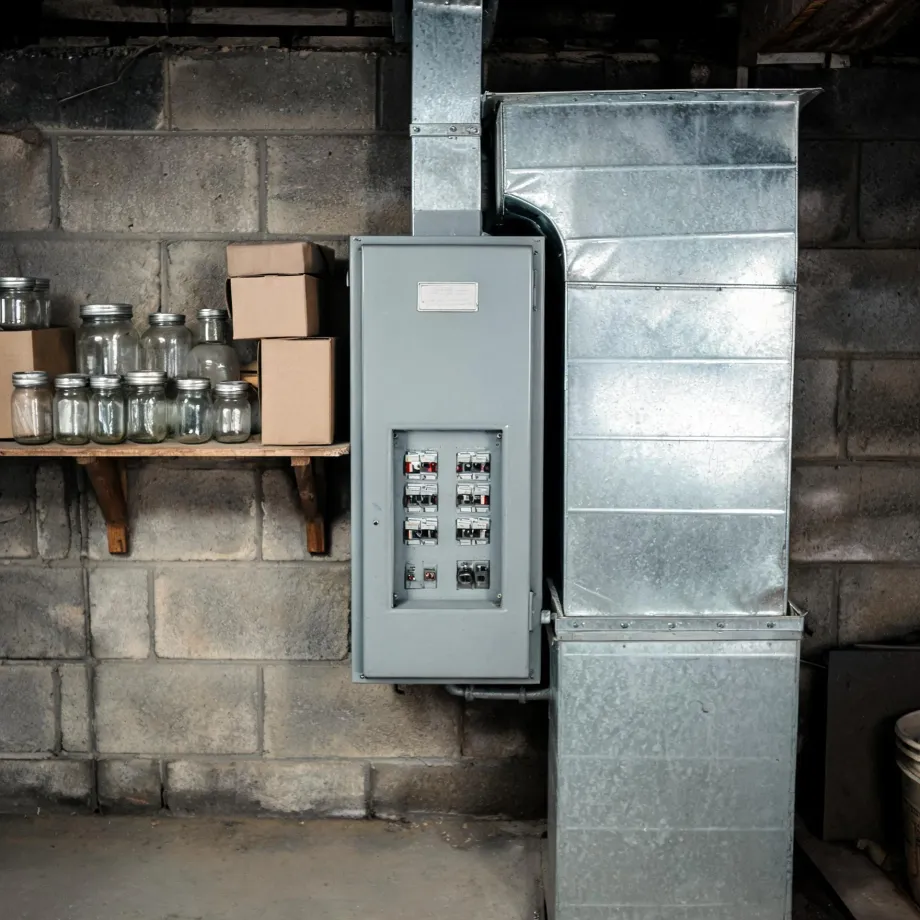
Half the homes in Fillmore County, Minnesota were built in 1966 or earlier (2020-2024 ACS 5-year). A furnace that has heated a house through that many winters leaves evidence inside: cracked heat exchangers, corroded burner assemblies, and control boards whose replacement parts a contractor has to hunt for rather than order from a current catalog. That is what changes about repair work in stock this old. The opened system tells a contractor whether a part is still made, and that answer shapes the repair as much as the failure itself does.
The Parts of a Furnace a Contractor Checks First
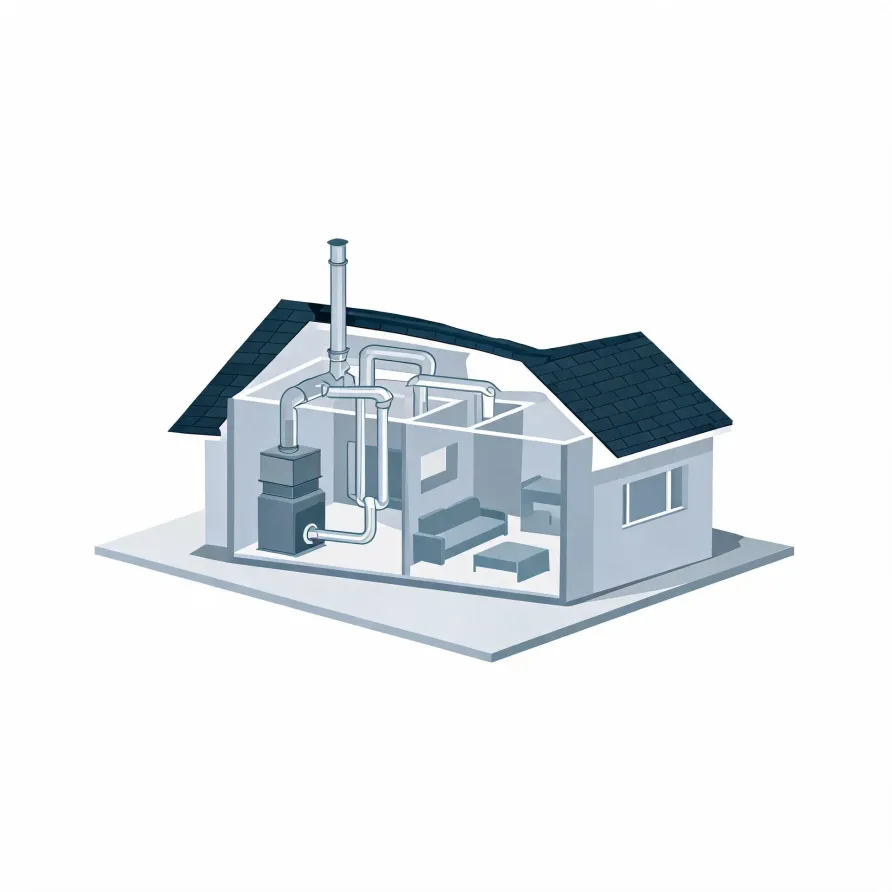
The furnace itself sits in the basement, utility room, or mechanical closet and is the piece a contractor goes to first. Inside it, the heat exchanger is the part most worth understanding: cracks or failures there let combustion gases into the air supply, so it gets a close look on any repair call. The burners, which sit just below the heat exchanger, are checked next for carbon buildup or uneven flame.
The blower motor sits at the base of the furnace cabinet and pushes conditioned air into the duct system. Alongside it, the control board acts as the system's brain, reading signals from the thermostat and telling each component when to fire. The flue pipe runs from the furnace to an exterior wall or chimney and is checked for blockages or separation at the joints.
The drawing shows a general layout, and a licensed contractor determines which components are the source of the problem in your specific setup.
Get matched in Fillmore CountyFillmore County, by the numbers
144 severe weather events were recorded in Fillmore County, Minnesota between 2015 and 2024.
NOAA National Centers for Environmental Information, Storm Events Database, bulk CSV export, events 2015-01-01 through 2024-12-31.Half the homes in Fillmore County, Minnesota were built in 1966 or earlier (2020-2024 ACS 5-year).
U.S. Census Bureau, 2020-2024 American Community Survey 5-Year EstimatesFillmore County, Minnesota holds 9,692 housing units (2020-2024 ACS 5-year).
U.S. Census Bureau, 2020-2024 American Community Survey 5-Year EstimatesOwners occupy 82.6% of the occupied homes in Fillmore County, Minnesota (2020-2024 ACS 5-year).
U.S. Census Bureau, 2020-2024 American Community Survey 5-Year EstimatesFurnace Repair Rules & Codes for Fillmore County, Minnesota6 sourced standards and regulations
What the repair visit looks like
Non-weatherized gas furnaces manufactured on or after November 19, 2015 must reach 80.0 percent AFUE.
Non-weatherized oil-fired furnaces manufactured on or after November 19, 2015 must reach 83.0 percent AFUE.
Mobile home gas furnaces manufactured on or after November 19, 2015 must reach 80.0 percent AFUE.
Non-weatherized gas furnaces manufactured on or after December 18, 2028 must reach 95.0 percent AFUE, up from the 80.0 percent minimum that applies to units manufactured before that date.
Licensing Rules for HVAC Repair in Fillmore County, Minnesota
Minnesota defines a mechanical contractor as a business that installs, repairs or maintains heating, ventilating, cooling or refrigeration systems — the definition that carries the exemption from the residential contractor licence.
Minnesota's residential contractor licence does not reach HVAC work: the licensing section carries its own exemption list, and a mechanical contractor is exempt from the licence requirement by name.
Severe Weather Events in Fillmore County
Extreme weather puts real load on furnace systems, forcing equipment to run harder and longer than it was sized for under normal conditions. How much stress that adds depends on what the local record actually looks like, which is why the data below is specific to this area.
144 severe weather events, 2015–2024. Source: NOAA National Centers for Environmental Information, Storm Events Database.