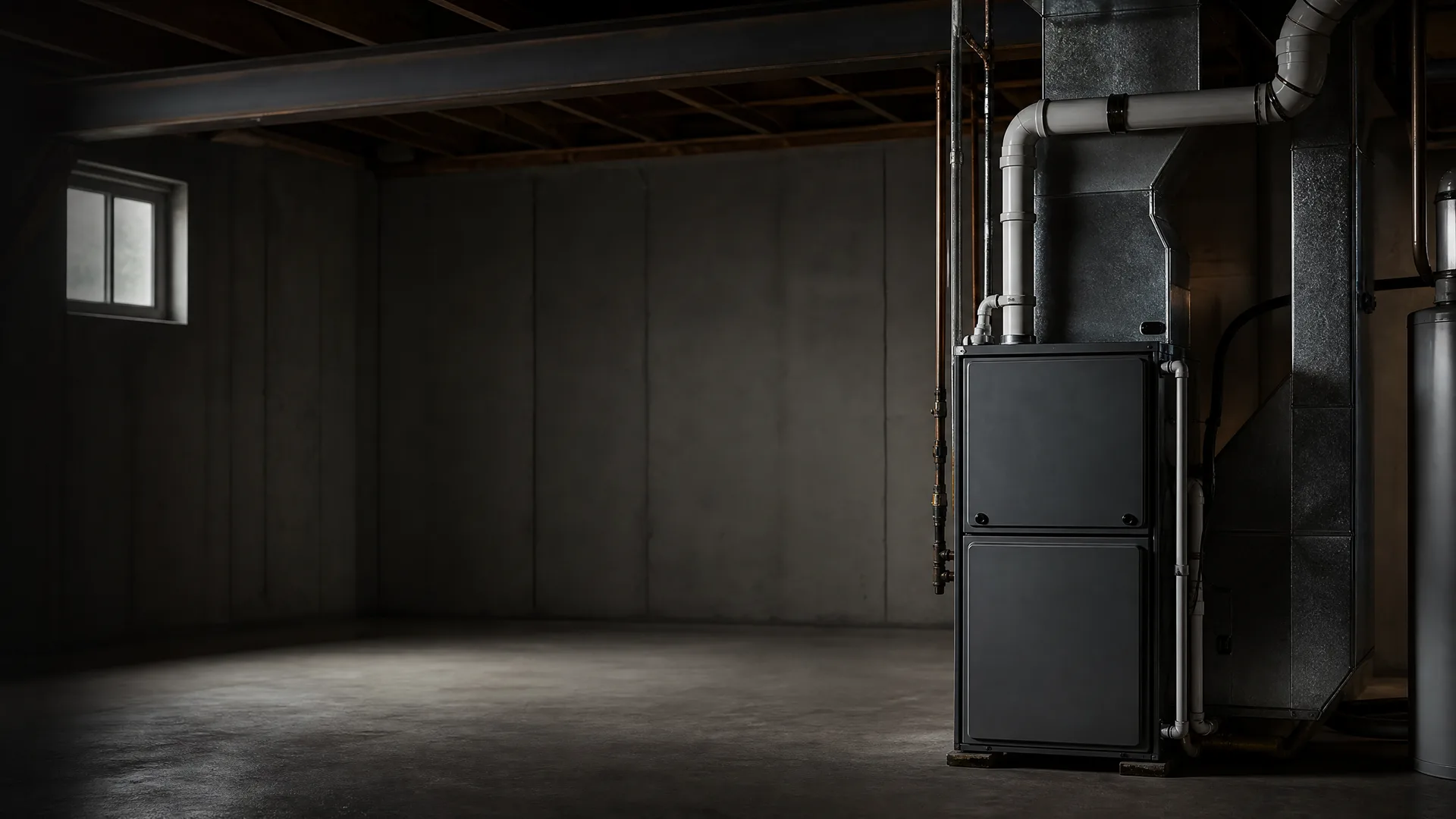
A local installer who puts in furnaces gets your project.
A furnace in Minnesota runs harder than almost anywhere else in the country. Most homes here heat with gas, and that furnace is working from the first cold snap in fall through the last frost in spring. Winters are long and hard here, and the furnace doesn't get much of a break.
Most gas furnaces last somewhere between 15 and 20 years. Where yours falls in that range depends on how it was installed, how it's been maintained, and how hard your particular winters have pushed it. A furnace that's run 18 Minnesota winters has earned every bit of that age.
If yours is getting up there, the question isn't just how many years are left. It's whether it's still heating evenly, whether the bills have crept up, whether it's started making noises it didn't used to make. Those are the signs that matter more than the birth date on the nameplate.
When a furnace is near the end, the smart move is figuring out the replacement before the old one quits in January. That means getting someone out to look at your actual setup: your home, your ductwork, your gas line, what size unit you actually need. No two installs are the same, and a furnace sized for someone else's house isn't sized for yours.
This is where it helps to talk to a contractor who installs furnaces for a living and knows what a Minnesota winter asks of one. Once you send the details, the work of tracking someone down is off your plate. A local contractor who handles installs like yours gets your information and reaches out to you directly. You won't be chasing anyone down or starting from scratch with a search. You just wait to hear from someone who already knows what you're dealing with.
A furnace in Minnesota lasts about 15 to 20 years. The number swings that much because of how hard the unit runs here. Winters are long, and a furnace in a Minnesota home can see six or seven months of real use a year, far more than units in milder states ever see. That kind of run time wears on the heat exchanger and the blower motor years before a furnace in a warmer climate would show the same wear. Age isn't the only sign to watch. A furnace nearing the end often runs longer cycles to hold the same temperature, or the burner flame turns yellow instead of blue. If your furnace came with the house and you don't know its age, a technician can read it off the data plate in a few minutes. Knowing where it stands matters most here, where a failure in January isn't something that waits.
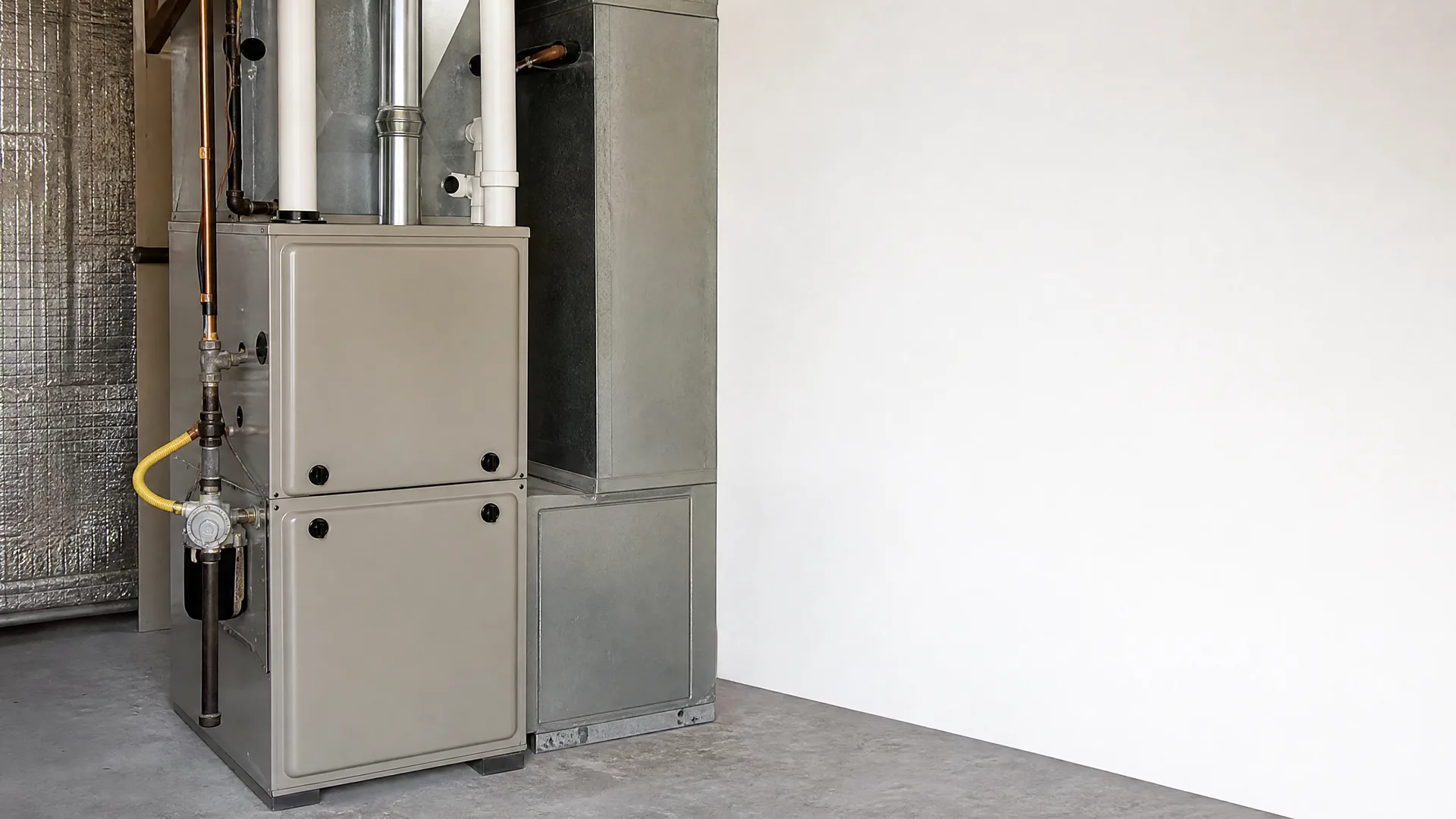
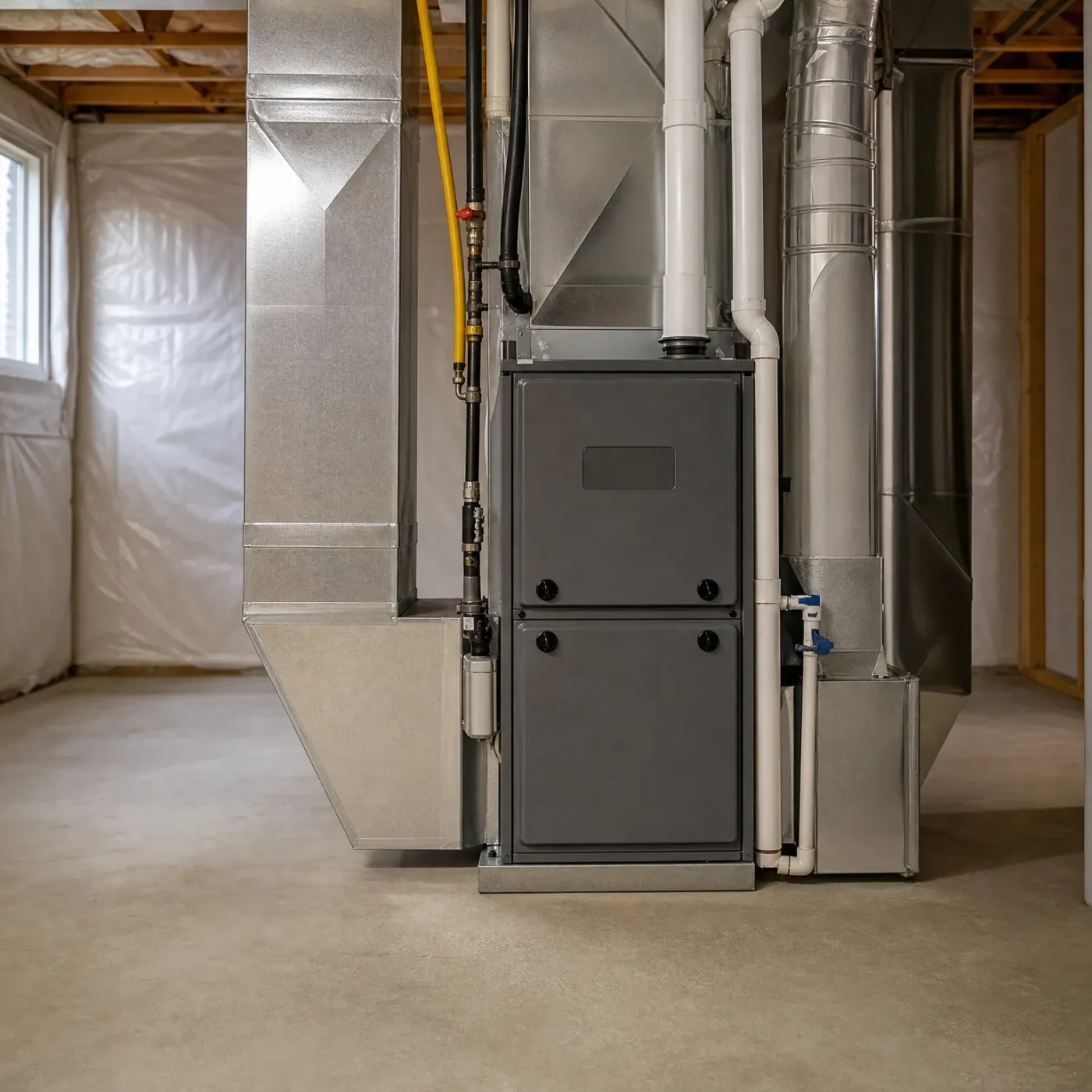
A furnace still inside its expected years, running clean with a clear flue and solid ductwork.
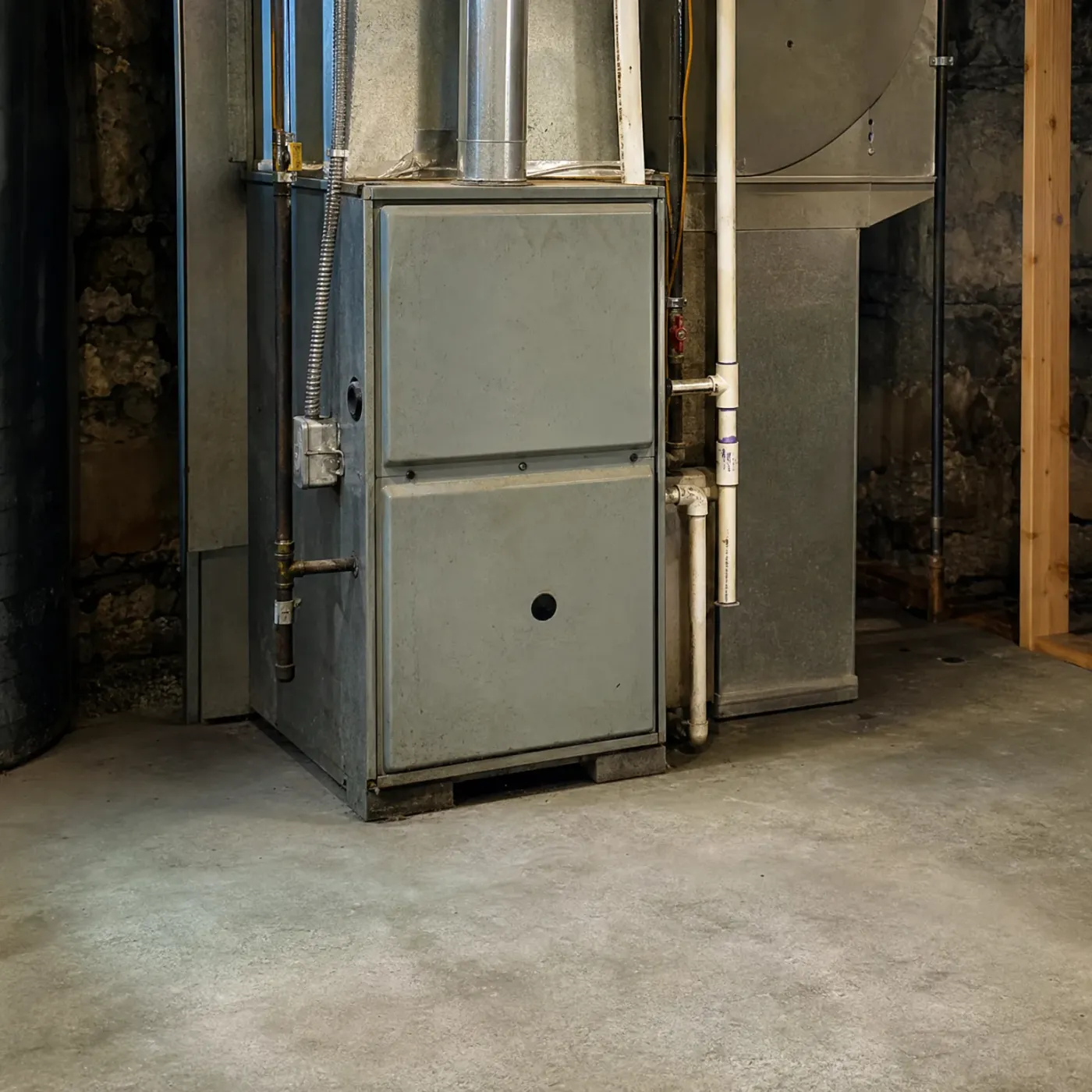
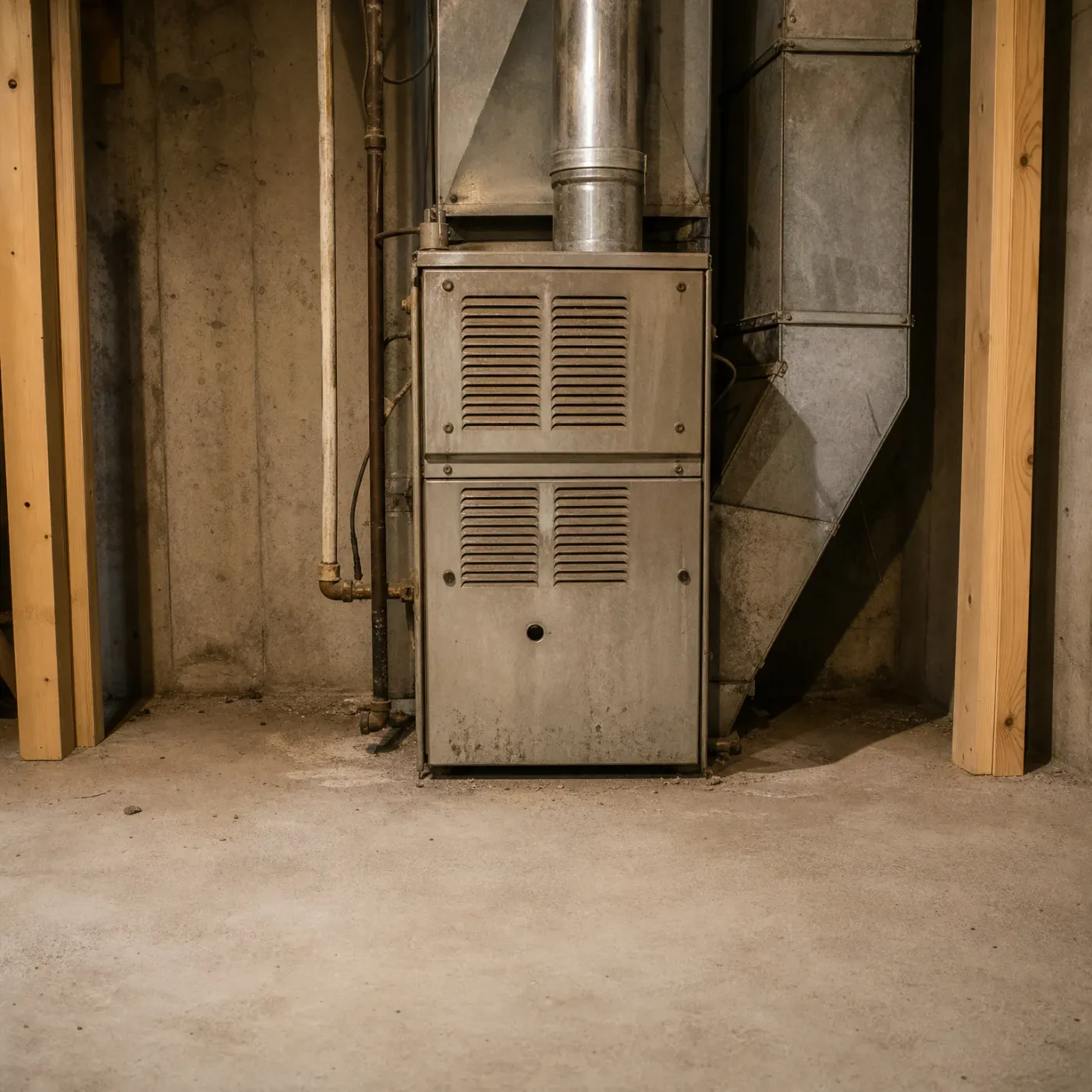
A furnace well past 20, in an older basement, worth a second look before another winter.
It isn't the cold that kills a furnace. It's the number of times it starts up and shuts off. A Minnesota winter runs long enough that a furnace can cycle on and off thousands of extra times compared to one in a milder state, and that start-up stress adds up faster than the temperature outside does. The part that actually ends a furnace's life is the heat exchanger. Once it cracks, combustion gases can mix with the air moving through your ducts, and at that point the unit gets replaced, not repaired. Before that happens, other parts give out first. The igniter and the blower motor tend to fail years earlier, and swapping either one out is routine, not a sign the furnace is on its way out. A furnace sized too big for the house makes all of this worse, since it short-cycles no matter how sound its parts are. That's why annual service carries more weight here than it would somewhere with a shorter winter. More hours running means more chances for something to go wrong, and a furnace past 20 years can still check out fine on a safety inspection, but the odds of that cracked heat exchanger go up with every winter it adds.
What Actually Wears a Furnace Out
A furnace wears out from cycling on and off far more than from the cold itself, and a Minnesota winter means thousands of extra cycles each year.
The heat exchanger is the part that ends a furnace's life, since a crack there lets combustion gases mix with the air moving through your ducts.
The igniter and the blower motor usually fail years before the heat exchanger does, and replacing either one is routine rather than a sign the unit is done.
A furnace sized too big for the house short-cycles constantly, and that shortens its life even if every part is otherwise sound.
Annual service matters more in Minnesota than in a mild state, since a furnace here logs more hours and more starts every single season.
A furnace running past 20 years can still pass a safety check, but the odds of a cracked heat exchanger climb with every winter added.
A furnace that has run a Minnesota winter for close to 20 years has earned a careful look before the next one starts. Cracked heat exchangers don't announce themselves. You won't smell anything or see a warning sign until a carbon monoxide detector goes off, and by then the furnace has already been running compromised. An inspection now, in warm weather, catches that before it becomes a January emergency with no heat and a family needing somewhere to stay. If yours is in that range, or if it's needed more repairs the last couple of winters than it used to, it's worth having someone look at the exchanger, the cycling, and the ductwork before the cold sets in again. Getting matched with a contractor who knows these furnaces and these winters means one person looking at your situation, not a scramble in December. You're not committing to a new furnace by asking the question. You're finding out where yours actually stands before it decides for you.
Short cycles add up fast
Every time the thermostat calls for heat, the igniter fires, the burners light, and the blower kicks on. In a mild climate that might happen a few thousand times a year. In Minnesota, where the furnace answers a call on a zero-degree night just as often as it rests on a warm afternoon, that count climbs well past what the same furnace would see in Kansas or Ohio.
What the flue tells you
A furnace venting properly pushes combustion gases straight out through the flue pipe, and that pipe should feel warm to the touch when the furnace runs, not hot and not cold. A flue that's gone cold while the burners are on, or one with rust streaks around the joints, points to a draft problem worth having a contractor check before the exchanger underneath it takes the damage.
Winter nights average 8°F statewide
At 8 below, your furnace doesn't cycle gently, it runs long stretches just to hold the house at setpoint. That kind of demand night after night wears on the burners and the heat exchanger faster than a mild cold snap ever would.
NOAA nClimDiv 1991-2020 county normals weighted by homes
Running the way it should
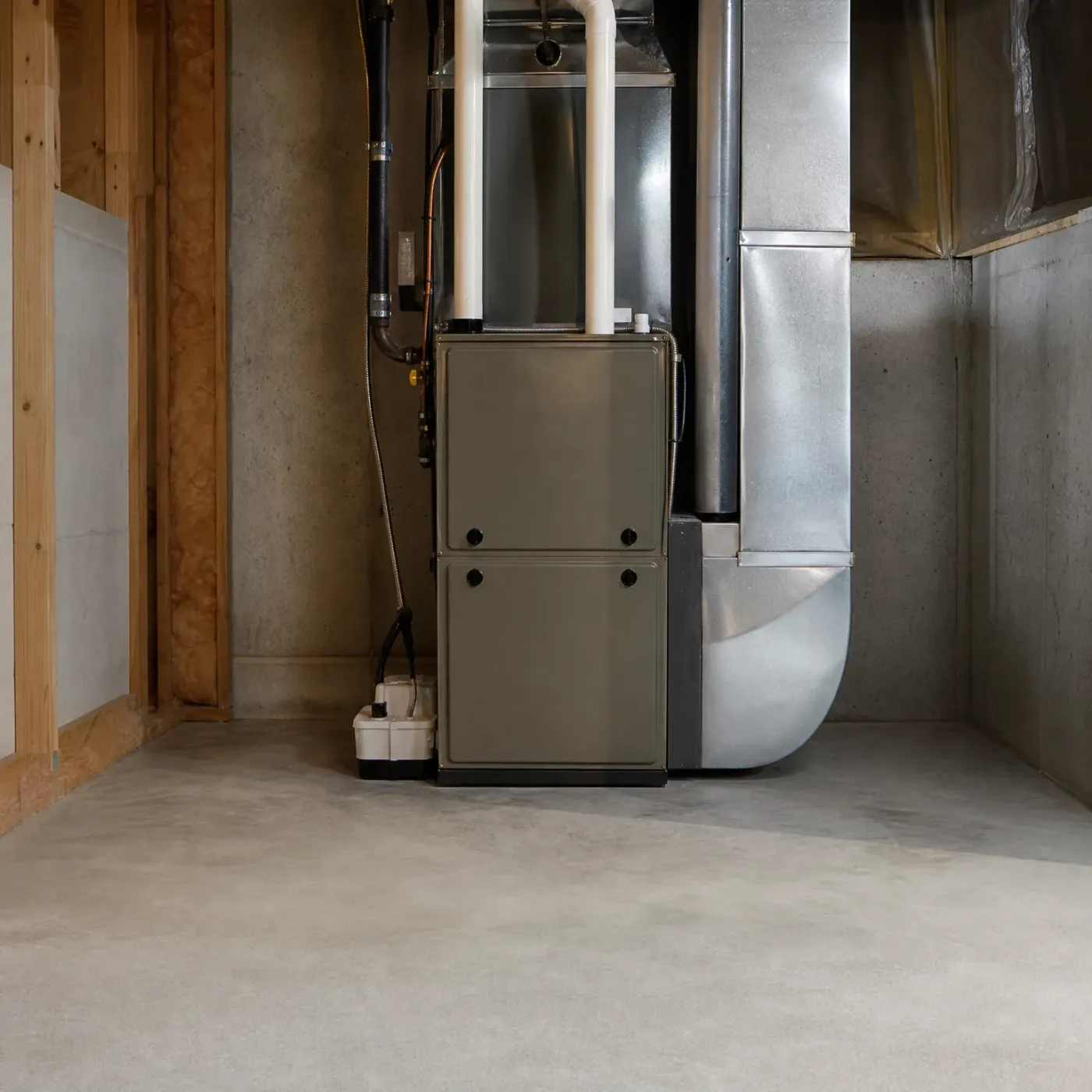
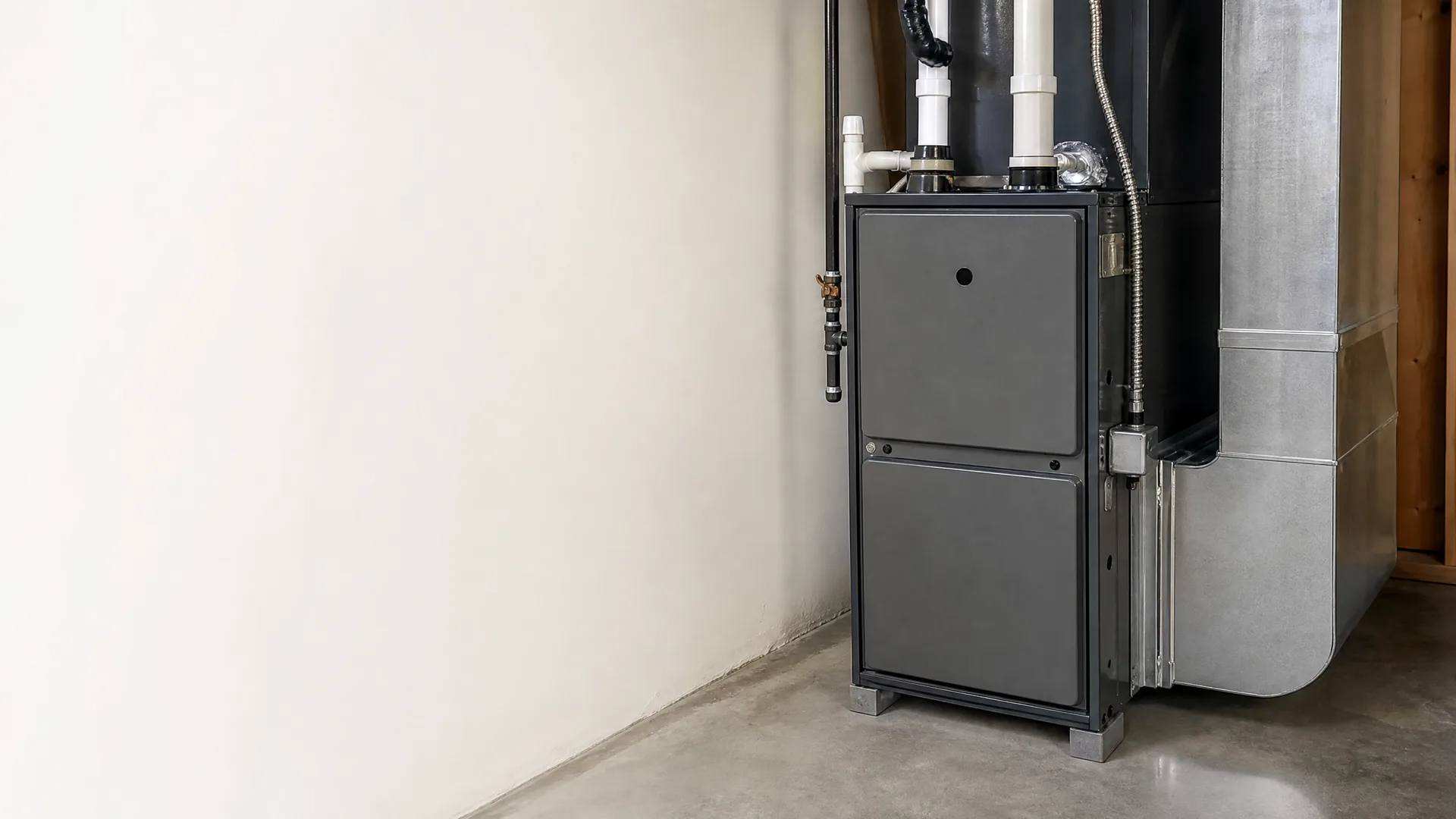
This is a furnace doing its job without a fight. The ductwork is tight, the gas line and vent pipes are clean, and nothing around it shows wear. A setup like this should get you through a Minnesota winter without a second thought.
Worth a second look
Dust like this collects over years of steady running. Copper gas pipes and older ductwork tell you this unit has been through a lot of winters already. Before the cold sets in again, it's worth having someone check what's left in it.
Fifteen to twenty years, less if the winters have been hard on it
A Minnesota furnace earns its wear. Fifteen to twenty years is the range, and where a given unit falls in that range comes down to the cycles it's run and the condition of the heat exchanger more than the birthday on the nameplate. A furnace installed the same year as the one next door can be in better or worse shape depending on how it's been run and looked after.
If yours is getting up toward 20, or you've seen any of the signs covered above, it's worth having someone look at it before the next cold snap rather than during one. A local contractor can tell you where your furnace actually stands and what your options are, and once you've sent in your information, that part isn't something you have to chase down yourself.
Matched to your furnace job
After this form, you can stop searching for a furnace pro.