Is a high-efficiency gas furnace worth it in Minnesota
Send the form and the search for an installer is over.
Your furnace runs a long stretch here, November through March at least, and it's the biggest gas bill you have every winter. So the question of whether a high-efficiency model is worth the extra cost is a fair one to stop and ask, especially with a Minnesota winter on the other side of the answer.
A furnace rated 95 percent or higher pulls more heat out of the gas it burns than an older 80 percent unit does. Over a winter that runs cold for months, not weeks, that difference shows up on the gas bill every single month, not just on the coldest days.
Where you live matters here more than it would in a place with a short, mild winter. Minnesota summers are warm but easy, so your gas furnace is doing almost all the heavy work your heating system will ever do. A furnace that wastes less gas is working at full output for a long season, not an occasional one.
There's also the install itself to think about. A high-efficiency furnace vents differently than your current one, often through PVC pipe instead of a metal flue, and that changes what a contractor has to run and where. It's not a straight swap, and getting that part wrong matters more here, with a Minnesota winter waiting if the job needs to be redone.
None of that is something to sort out alone, and it isn't something you need to sort out alone. Once you send the form, you're done calling around, done explaining your furnace and your house to five different companies, done trying to guess which quote is actually comparing the same furnace. A licensed contractor who installs these in Minnesota homes takes it from there. You get to stop carrying it.
What's below walks through what changes with a high-efficiency furnace in your house, and what to weigh before you decide.
Is a high-efficiency gas furnace worth it in Minnesota
You've seen the price difference at the counter between an 80% furnace and a 95% one, and you're trying to figure out if the gap pays for itself here, where the furnace runs most of the year and gas is the main heating fuel. It's a real number to weigh against a real winter, not a hypothetical.
Yes, if you're keeping the house long enough to use it
A furnace rated 95% or higher turns almost all the gas it burns into heat, where an 80% model loses about a fifth of it out the flue. In a Minnesota winter that runs November through March, that difference shows up on every bill for months at a stretch, not just on the coldest nights. The payback depends on how long you stay in the house and what you were paying before, but the furnace itself will earn its keep over a normal lifespan here. The one thing to check first is venting: a high-efficiency furnace vents through PVC pipe out a side wall instead of a metal flue, so the install involves more than swapping one box for another.
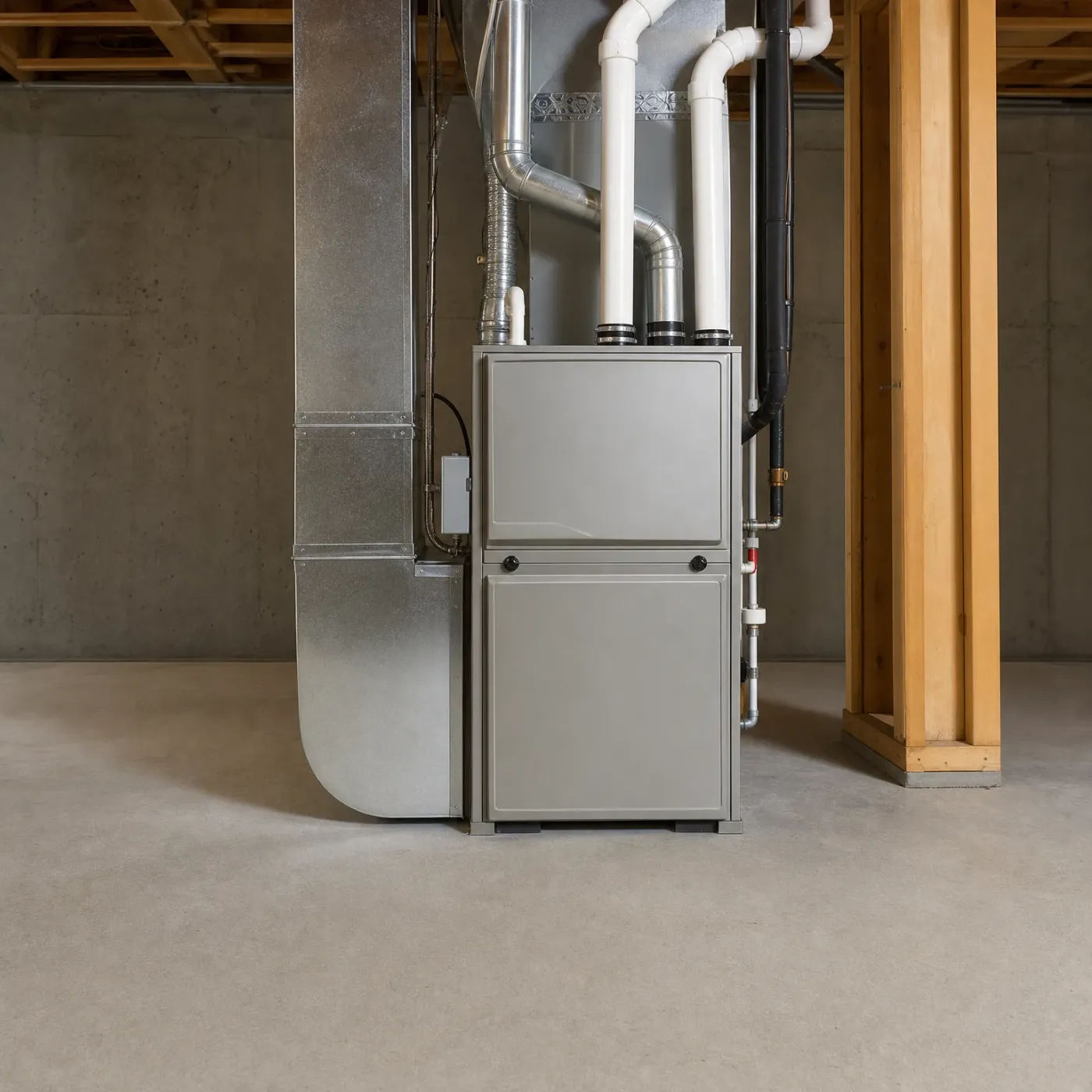
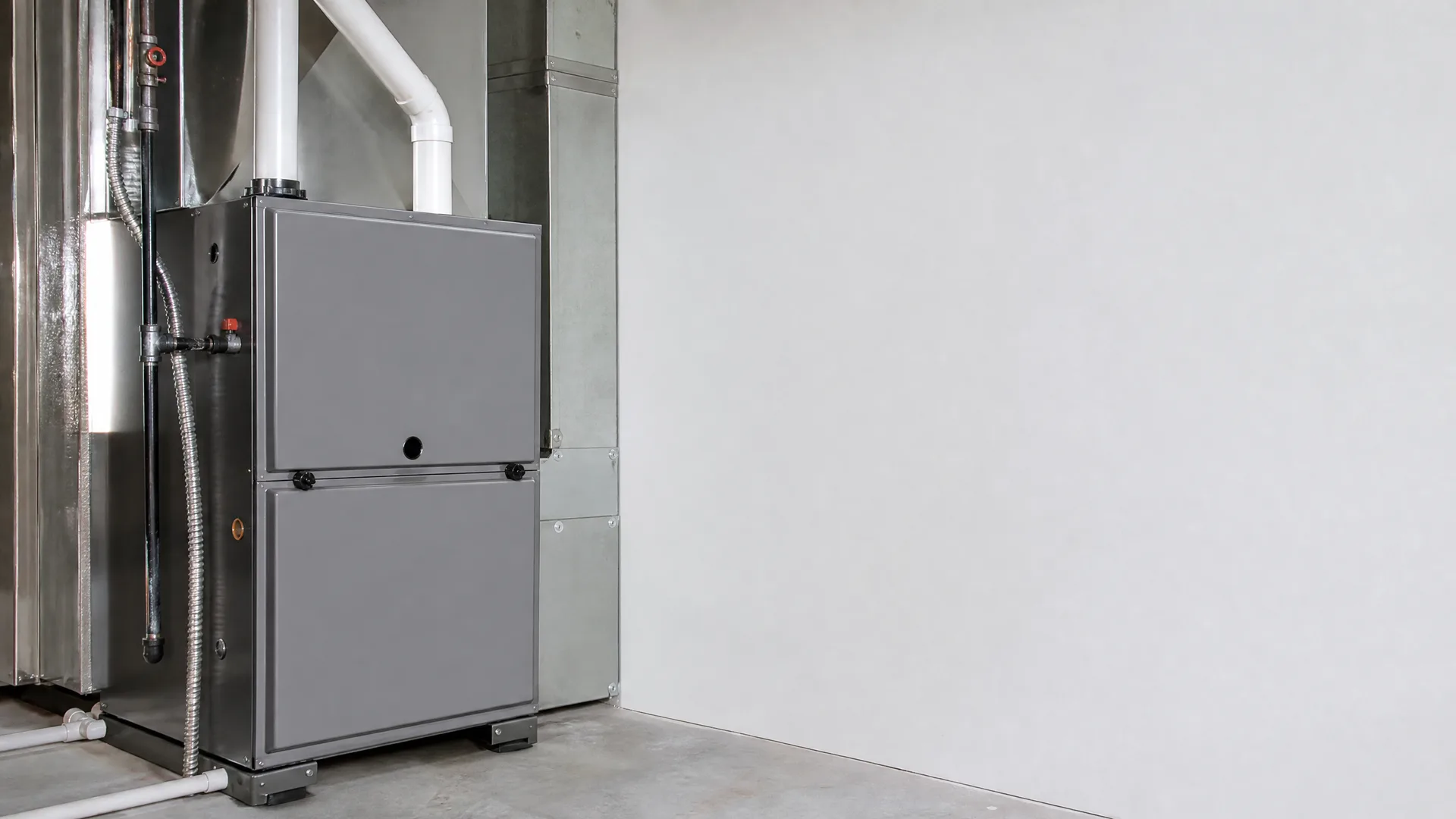
A 95% furnace in a Minnesota basement
That PVC pipe on top is the flue. A high-efficiency furnace vents through plastic pipe instead of a metal chimney because the exhaust is cool enough to handle it. It pulls more heat out of the gas before sending the rest outside.
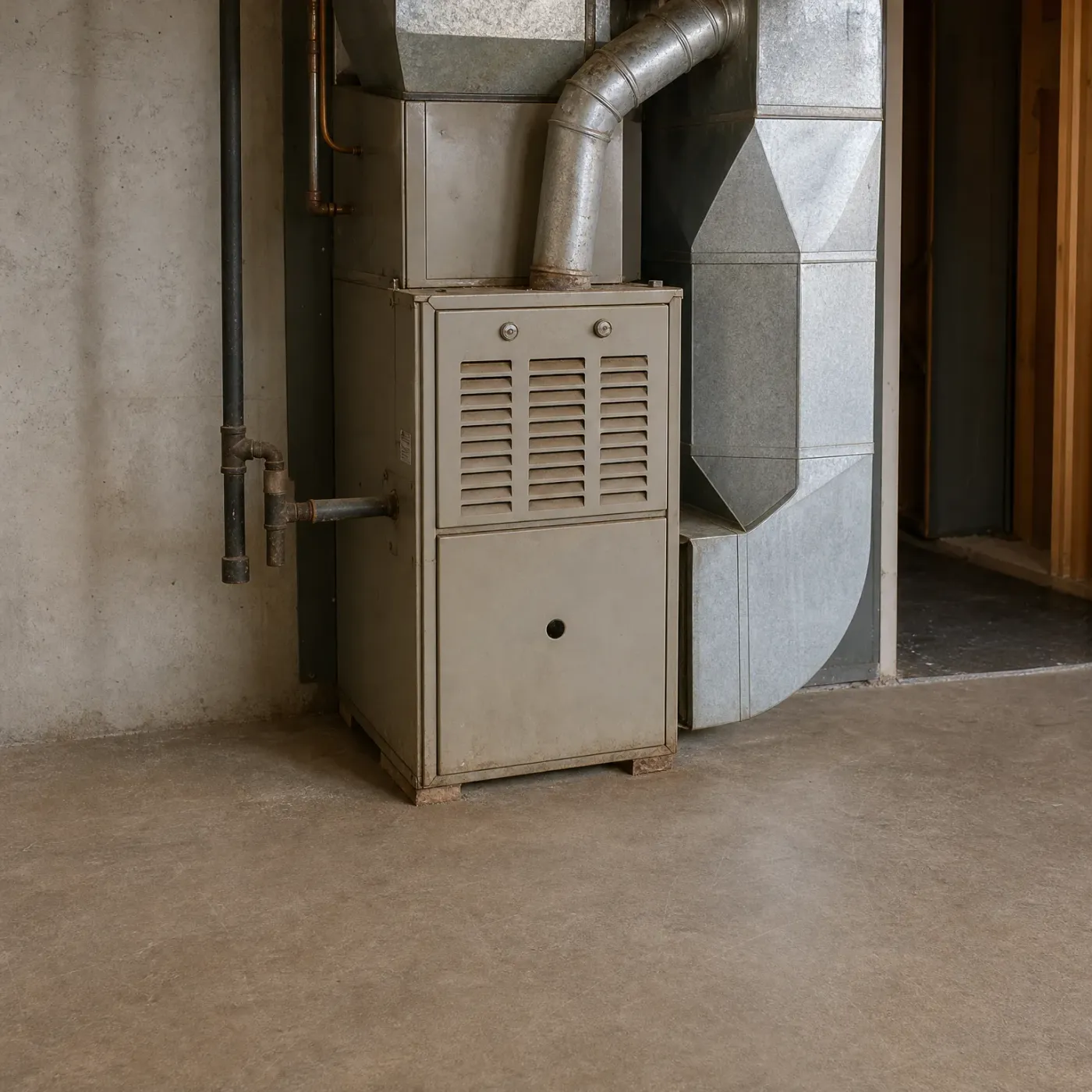
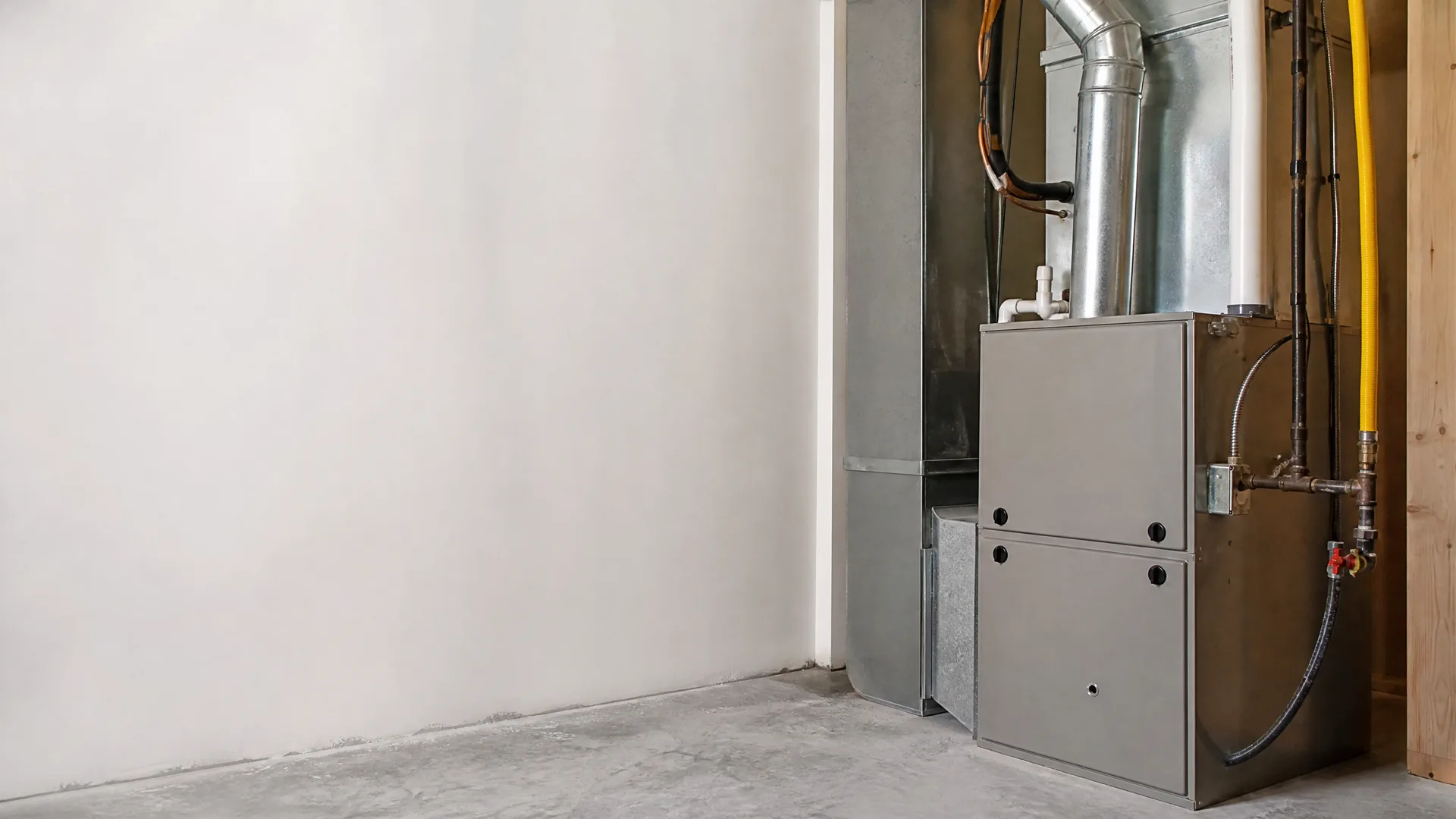
An older furnace nearing the end
That round metal flue pipe means this furnace vents hot exhaust the old way, through metal, not PVC. If yours looks like this and it's original to the house, ask whoever you call to check its age and condition before you decide anything.
Describe the project once instead of to every installer.
Asking costs nothing, and the choice to hire stays yours.
How a 95% furnace actually works
A second heat exchanger pulls heat from the exhaust before it leaves the furnace, which is why the flue runs cool enough for PVC pipe.
That second pass drops the exhaust temperature enough to form water vapor, so the furnace needs a condensate line and a drain, same as an AC coil.
A draft inducer motor pushes exhaust out through the PVC instead of letting it rise on its own the way it does in a metal chimney.
An 80% furnace sends roughly a fifth of the gas it burns straight out the flue as heat, a 95% furnace sends out about a twentieth.
The inducer and the condensate drain are two extra things that can fail, so a high-efficiency furnace has more parts a technician checks during a service call.
Because the exhaust is cool, it can't vent up an old masonry chimney, it has to run sideways through a wall or up through the roof in new pipe.
An 80% furnace burns gas, pulls heat off it once, and sends the rest up a metal flue while it's still hot enough to rise on its own. A 95% furnace doesn't let go of the exhaust that easily. It runs the exhaust through a second heat exchanger first, squeezing out most of the heat that would otherwise leave the house. By the time that exhaust reaches the flue, it's cool enough to condense, cool enough that metal pipe would corrode from the inside out. That's why you see PVC on a high-efficiency furnace instead of sheet metal. It's also why there's a condensate line running to a drain or a pump, the same setup you'd find under an AC coil, because the furnace is now producing water as a byproduct of burning gas efficiently. And because that cool exhaust won't rise up a chimney by itself, the furnace needs a draft inducer motor to push it out through the wall or roof.
None of this is better or worse than an 80% furnace, it's just a different machine doing the same job with an extra step. That extra step is where the efficiency comes from, and it's also where the extra maintenance points live. A technician servicing a 95% furnace is checking the inducer motor and clearing the condensate trap in addition to everything they'd check on an 80% unit. If your basement has a masonry chimney and no clear path to an outside wall, that's worth asking about before you decide, since the venting itself is part of the job.
Winter nights average 8°F statewide
At 8°F, your furnace is firing most of the night, every night, from December through February. That's the stretch where an 80% model burns a lot more gas than a 95% one to hold the same temperature. The colder it gets outside, the more that efficiency gap shows up on the bill.
NOAA nClimDiv 1991-2020 county normals weighted by homes
Two stages instead of one
An 80% furnace usually runs one speed, full blast until the thermostat is satisfied, then off. Most 95% furnaces run two stages, a low setting for the mild days and a high setting for the cold snaps. That low stage runs longer but burns less gas per hour, which matters in a Minnesota house where the furnace is often holding steady at a moderate setting rather than slamming on and off.
The blower changes too
A variable-speed blower moves air at whatever rate the furnace needs, not just full on or full off. It ramps up slowly instead of kicking on hard, so the air coming out of your vents doesn't feel like a cold draft before it warms up. Over a Minnesota winter, that steadier airflow is part of why the house holds temperature more evenly between furnace cycles.
A high-efficiency furnace is worth it in Minnesota, where a furnace runs from November through March and sometimes longer, and where the cold snaps that hit in January make that second heat exchanger earn its keep night after night. The gas savings add up over a season like that, and the two-stage operation keeps the house steadier through the swing from a mild 30 degree day to an 8 degree night. None of that changes the work of finding someone qualified to install one. You'd still be searching for contractors, calling a few, explaining the same thing about your current setup each time, then laying quotes side by side to figure out who's actually worth hiring. Sending the form here means that part is done. You're not sorting through names or repeating yourself to the next person on the list. You just wait to hear from someone who can do the job, and go from there.
Furnace Installation
Finding a pro stops being your job
Step 1 of 3: Equipment
Get in touch with a local installer about a new furnace.
A local installer who puts in furnaces gets your project.
One request and the search for a pro is handled.
Send it once and finding someone is no longer on you.
Fill out one short form instead of calling around.
Explain the job once and skip repeating it on every call.
One installer gets your project, so there's no bidding war over it.
Your request goes to one pro, not a list of companies.