
Signs your furnace won't last a Minnesota winter

Send the request today and stop worrying about who to call.

Hand it off

What are the signs my furnace won't make it through a Minnesota winter?

You're probably asking because something about your furnace already feels off, and you'd rather find out now than get a call in January saying it's done. A furnace that struggles in November usually fails outright once it has to run for hours at a stretch against real cold. The signs are there before that happens, if you know what to check.

Short cycling, a yellow flame, or a furnace over 15 years old are the warning signs

If your furnace turns off and on every few minutes instead of running steady, the heat exchanger or the flame sensor is likely struggling, and that gets worse as it gets colder. A flame that burns yellow instead of blue means incomplete combustion, and that's not something to wait on. Rooms that won't hold heat even with the thermostat turned up point to a furnace that can't keep pace with demand, and Minnesota winters will find that limit fast. Age matters too. A gas furnace pushing past 15 years is working harder for the same heat, and a part failure in February leaves you without heat exactly when you need it most.

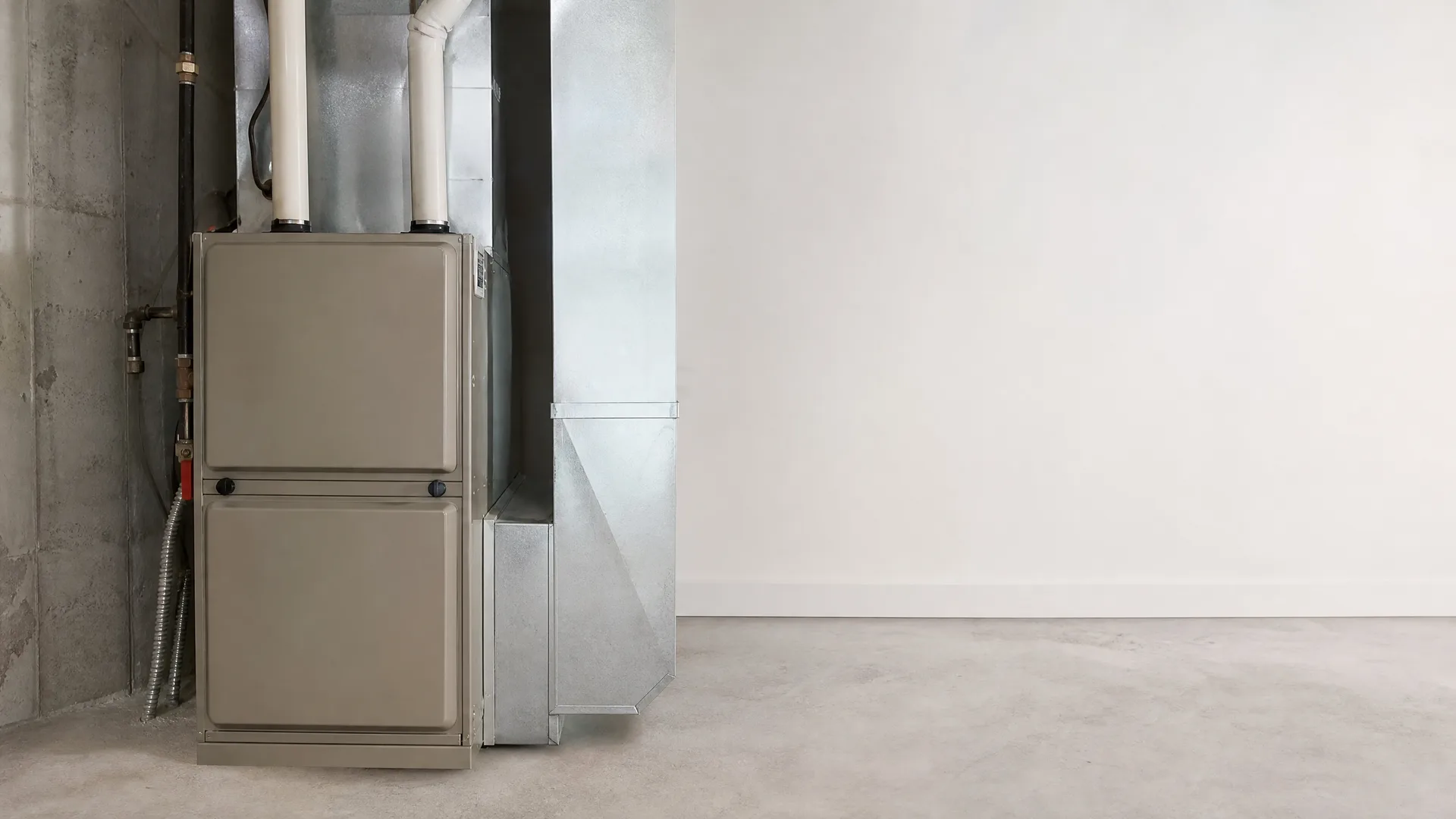
A beige high-efficiency furnace with two white PVC pipes stands beside sheet-metal ductwork and a concrete wall in an empty basement with a bare light-colored wall and concrete floor.

What short cycling tells you

A furnace that turns on and off every few minutes isn't resting between cycles, it's struggling to hold the house at temperature. The heat exchanger heats up and cools down faster than it was built to, and that stress cracks metal over time. If yours is doing this on a 10 degree day in January, it's telling you it can't keep pace with what Minnesota is asking of it.

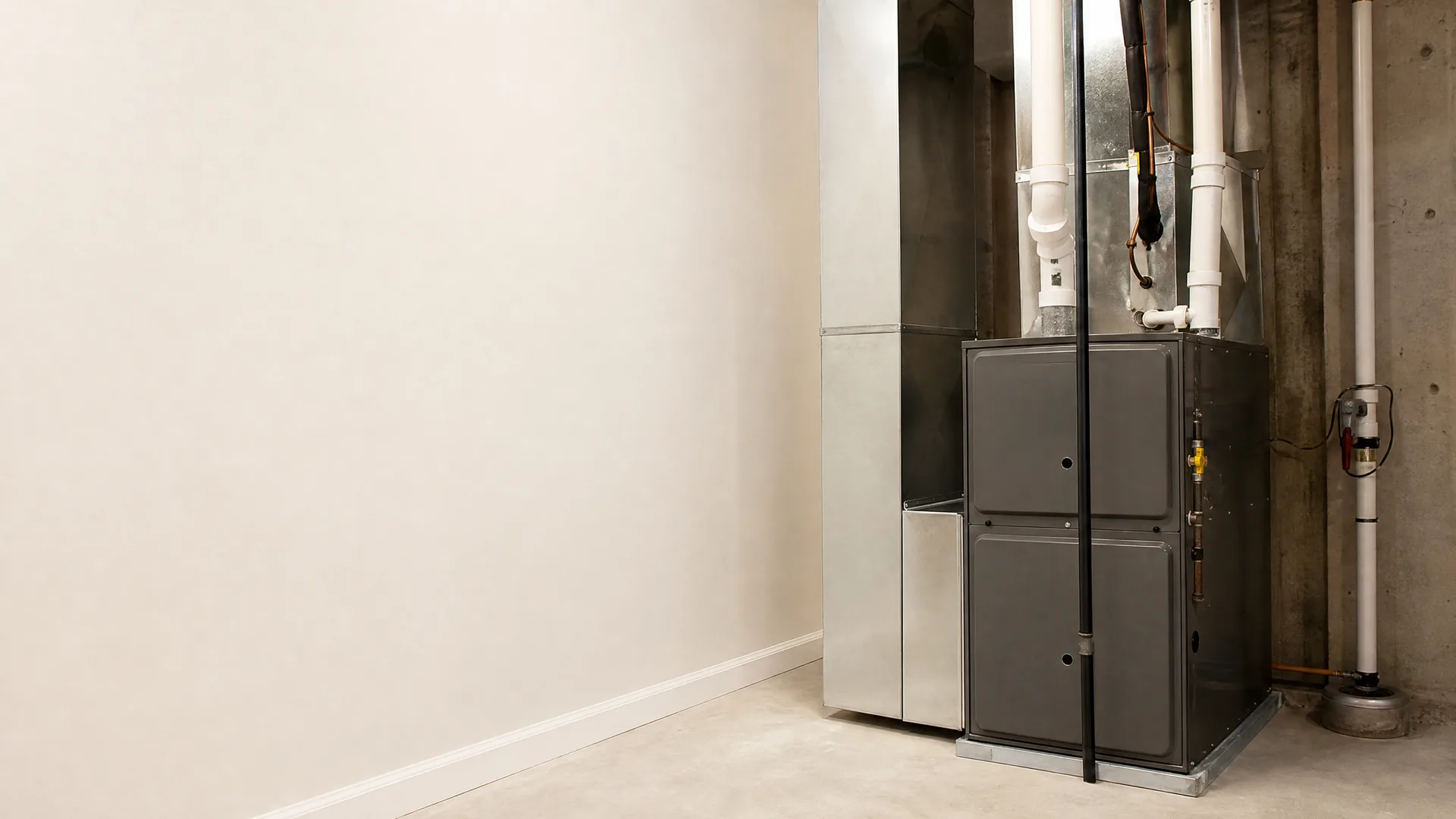
A gray furnace with sheet-metal ductwork and white PVC vent pipes stands in the corner of a finished basement room with a blank beige wall and concrete floor.

What the burner flame shows

A healthy gas burner flame is blue, steady, and even across each burner. If it's flickering, yellow, or leaning to one side, the furnace isn't burning gas cleanly, which points to a dirty burner or a bigger problem in how it's drawing air. A furnace running a bad flame through a Minnesota winter is working harder for less heat, and it won't hold up to months of hard use.

Repair the Furnace or Replace It

Repair

  • A furnace under ten years old with one failed part, like an igniter or a flame sensor, is usually worth fixing.
  • If the cabinet and heat exchanger are sound and only a control board or blower motor quit, repair gets you through the winter.
  • A repair makes sense when this is the first breakdown you've had, not the third one this season.
  • Parts for furnaces under fifteen years old are still easy for a contractor to find and install quickly.
  • If the furnace has been maintained every year, one failure doesn't mean the rest of it is going too.

Replace

  • A cracked heat exchanger means replacement, not repair, because that part isn't meant to be patched.
  • If you've paid for three or more repairs in the last two winters, the next failure is likely to cost less to replace than to fix again.
  • A furnace past fifteen or twenty years is working harder for the same heat than a new one would.
  • Rust around the burner or moisture pooling near the unit points to a cabinet that's breaking down, not just a part inside it.
  • When a contractor tells you a repair costs close to half of a new furnace, that number is telling you something.
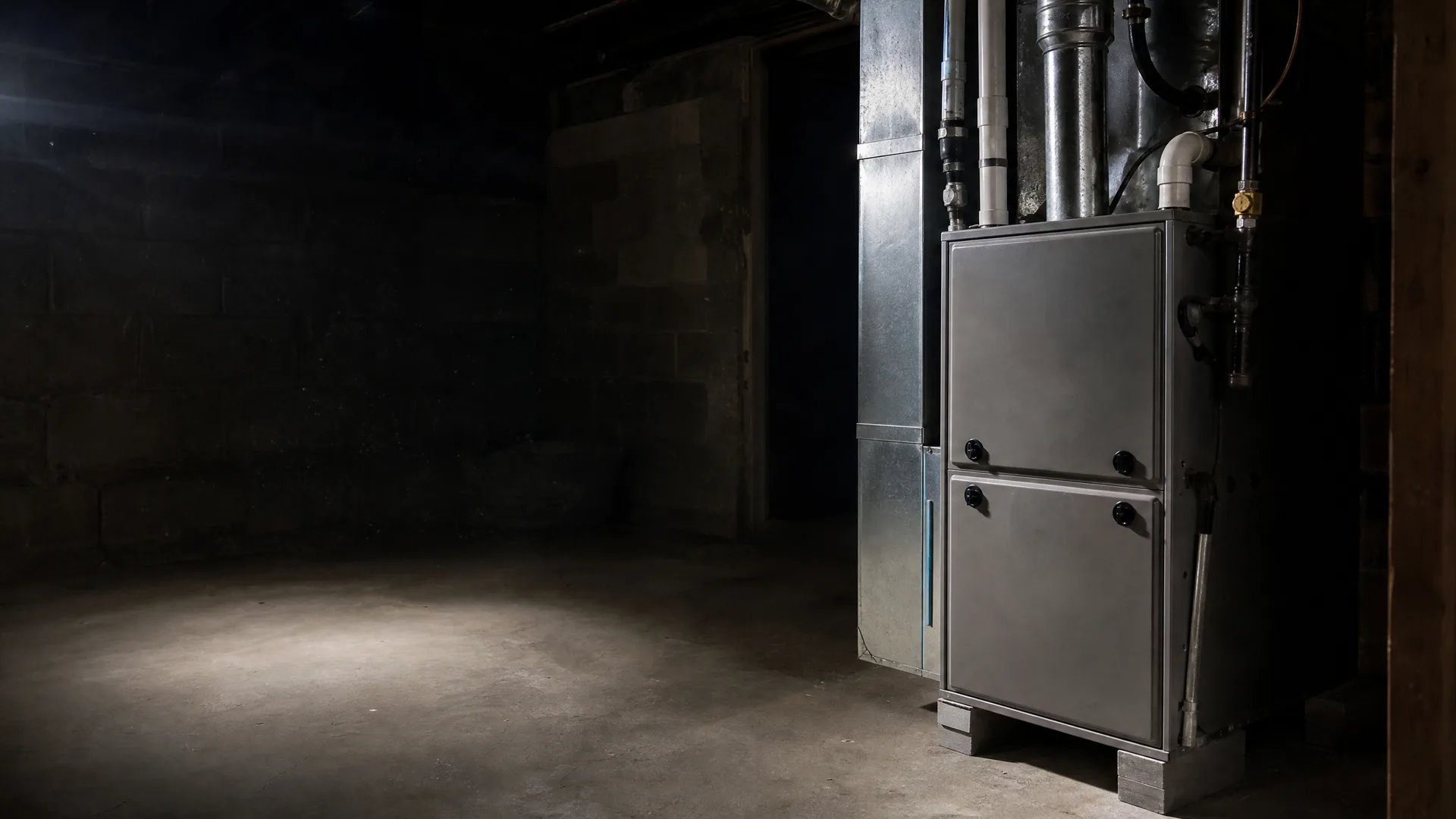
A gray furnace with ductwork and pipes stands against the wall of a dim concrete-block basement with a bare concrete floor lit by a single light.

It's past seven on a November evening, and the basement is quiet in a way it shouldn't be. You went down to grab something off the shelf and felt it first, the cold air settling around your ankles instead of the usual warmth from the vent. The furnace sits dark. No hum, no blower, nothing. A thin haze of dust still hangs in the light near the cabinet, kicked up from when it last kicked on and gave up partway through. You stand there a second, hand on the cold metal, doing the math on how many hours until morning and how fast a house loses heat in Minnesota once the furnace just stops.

It's off your list after this

Explain the job once and skip repeating it on every call.

It costs nothing to send, and you don't have to hire anyone.

Wait until spring

If the furnace is still heating and nothing's grinding, sparking, or shutting off on its own, you can hold off and watch it through the winter. A furnace that's limping along but keeping the house at temperature will usually make it to March. You lose the chance to fix things on your schedule, though. If it quits on a night when it's ten below, you're calling for emergency service instead of a planned repair, and you're doing it with a house that's getting colder by the hour.


Get it looked at now

Having someone check it before the cold really sets in means any repair happens on a day that works for you, not a 2 a.m. emergency. A tech can tell you whether what you're hearing or smelling is minor or something that's going to leave you without heat. It also means you're not stuck calling around in a panic, explaining the same problem to three different companies and waiting on quotes while the house drops into the 50s. You find out where you stand while you still have options.

A smiling bearded man in a dark blue henley shirt sits leaning back on a light grey sofa in a living room, with a bowl of popcorn on a wooden coffee table and a large window behind him.
A bearded man in a dark quarter-zip sweater sits smiling on a brown sofa in a dimly lit living room, with a bowl of popcorn and a mug on a table in the foreground and a potted plant near a window behind him.
A smiling man with graying dark hair and a beard, wearing an olive sweater, sits on a sofa in a living room beside a bowl of popcorn on a wooden table.
A smiling man in a dark green henley shirt sits on a gray sofa in a living room with a lit table lamp, wooden shelving unit, and a bowl of popcorn in the foreground.

Repair it now

If the furnace is still under warranty or the fix is a single part, a repair tonight means you're not without heat while you decide anything else.

Send my request

Get a second opinion

If a contractor quoted a full replacement off one visit, another set of eyes on the heat exchanger and blower can tell you if that's really the only option.

Send my request
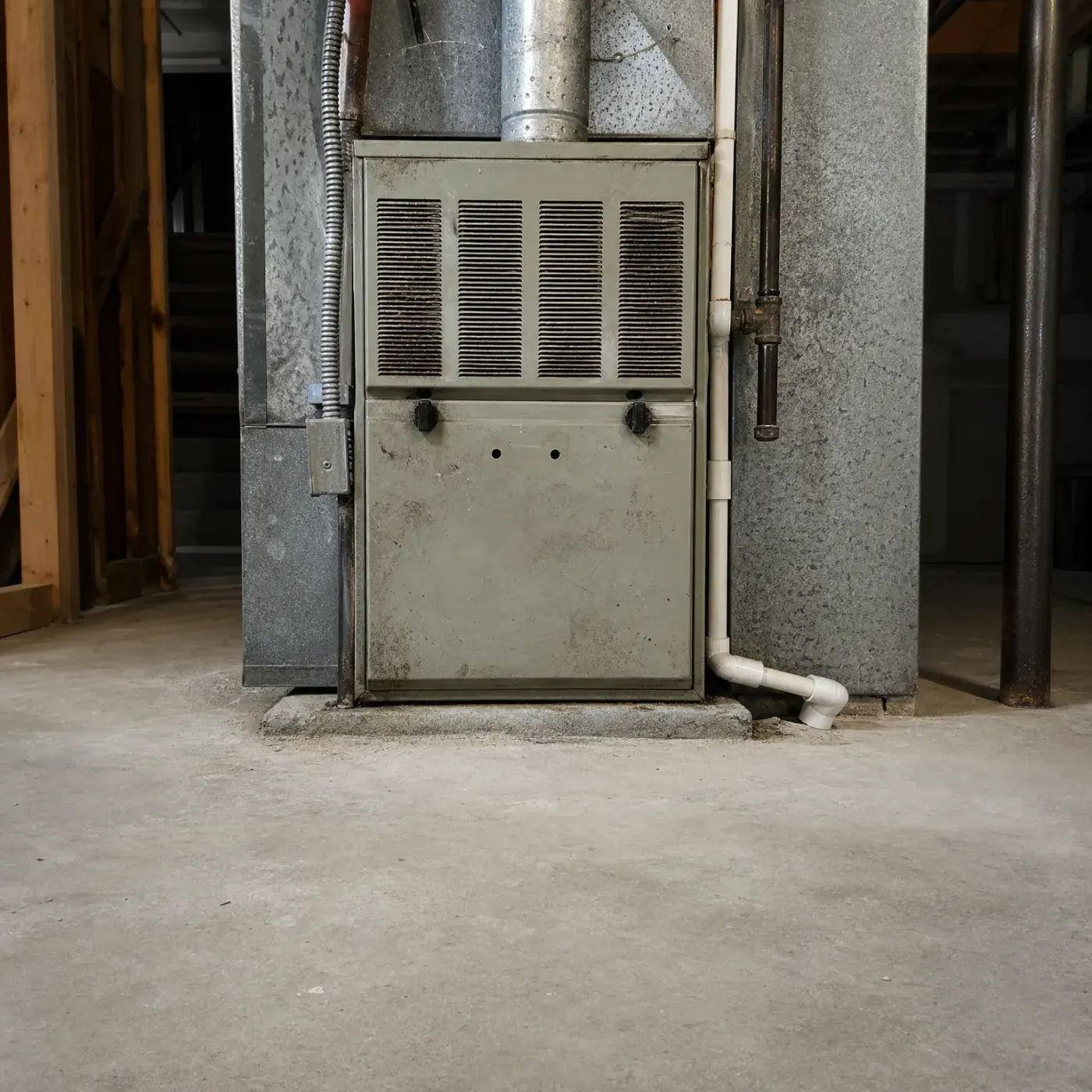
A gas furnace with a louvered upper panel stands on a concrete pad in a basement, flanked by sheet-metal ductwork, white PVC and metal pipes, and insulated columns.
Before you get your furnace repair
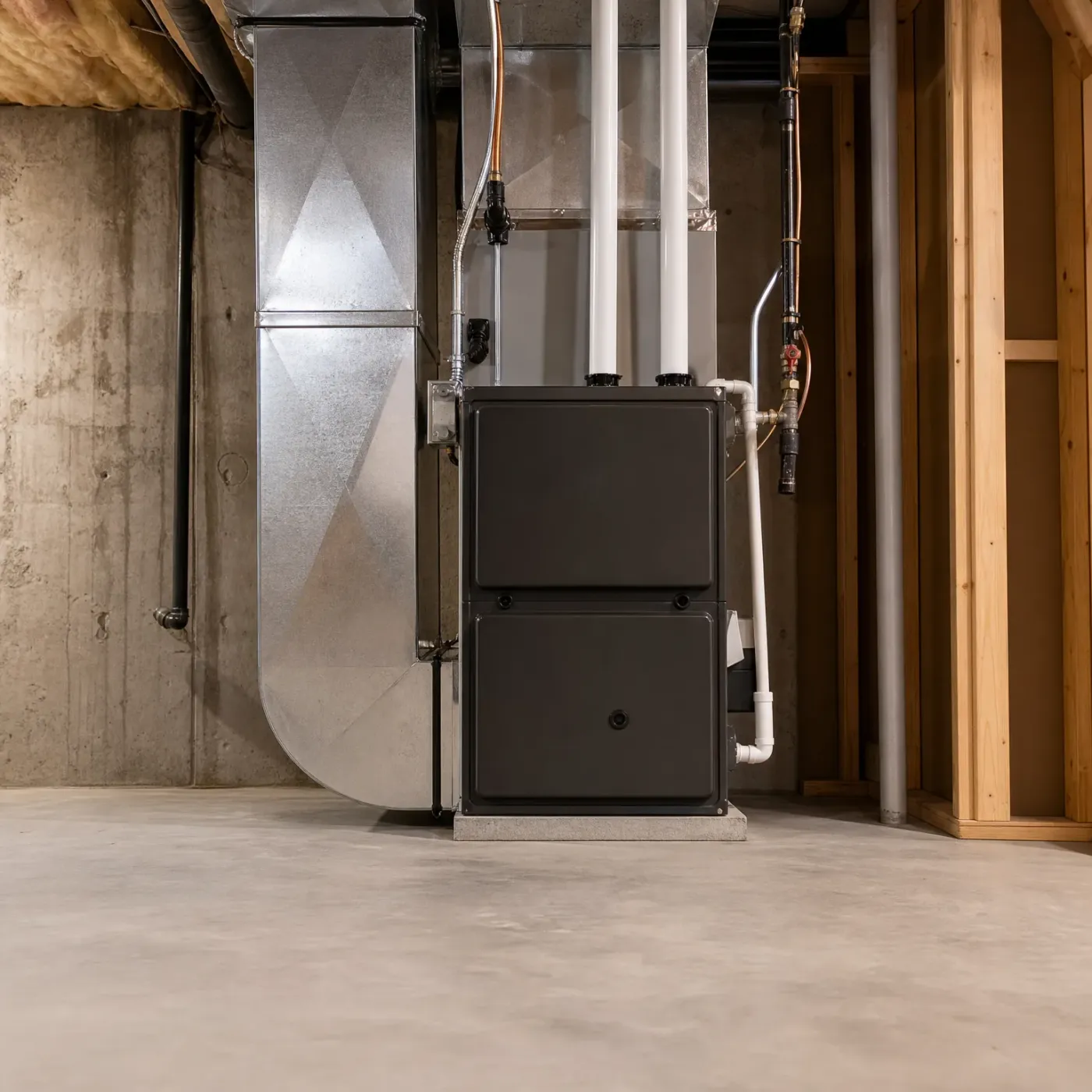
A dark high-efficiency furnace on a concrete pad in a basement, connected to galvanized ductwork, white PVC vent pipes, and copper and black gas piping, with concrete walls and wood framing nearby.
After you get your furnace repair

A furnace that's already down tonight means a cold house, kids in extra layers, and a contractor's voicemail you're waiting on while the temperature keeps dropping outside.

Send the form once and the search ends there. No calling around to see who answers on a weeknight, no repeating what the furnace is doing to three different people.

Winter nights average 8°F statewide

That's a statewide average, but it tells you what your furnace is up against most winter nights: a 70 or 80 degree gap between the air in your basement and the air outside your walls. A furnace that's already struggling has no slack left on a night that cold.

NOAA nClimDiv 1991-2020 county normals weighted by homes

  1. Cold air pulls heat from the basement into the ducts first.

  2. The gas valve opens and the igniter glows hot enough to catch.

  3. The burners light and heat climbs through the cracked heat exchanger.

  4. The blower pushes that heated air up through the supply ducts.

A furnace that's short cycling, rattling at startup, or leaving one room cold tells you something real about where it stands, and so does one that's just quietly keeping up. If yours is doing the second, you've got time to decide without the cold making the decision for you. If it's doing the first, the question isn't whether to call someone, it's how fast you can get someone out. Either way, you don't have to spend tonight searching contractor sites, reading reviews you can't verify, and calling around to find out who even answers this late. You don't have to explain the rattling noise and the pilot light history to three different people before one of them can tell you what's wrong. Send the form once and that part of this is done. Someone who can look at the actual furnace, in your actual basement, takes it from here. What you know now is what shape the problem has. What happens next is someone qualified looking at it in person.

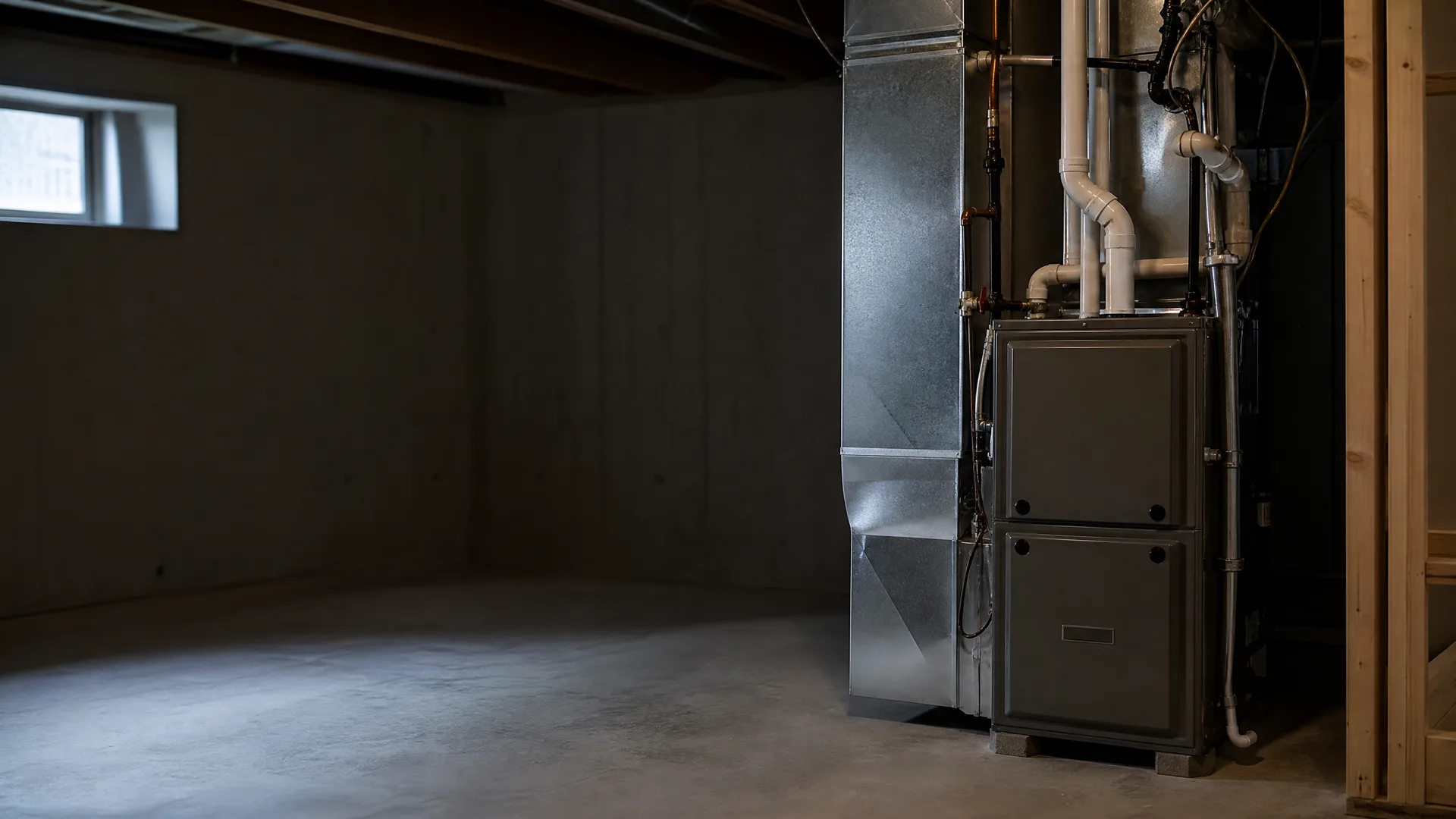
An unfinished basement with bare concrete walls and floor, a small window at upper left, exposed joists overhead, and a furnace with sheet-metal ductwork and pipes along the right side.

Stop chasing a furnace pro

One form replaces the calls you'd make to find a furnace pro.

Step 1 of 3: Equipment