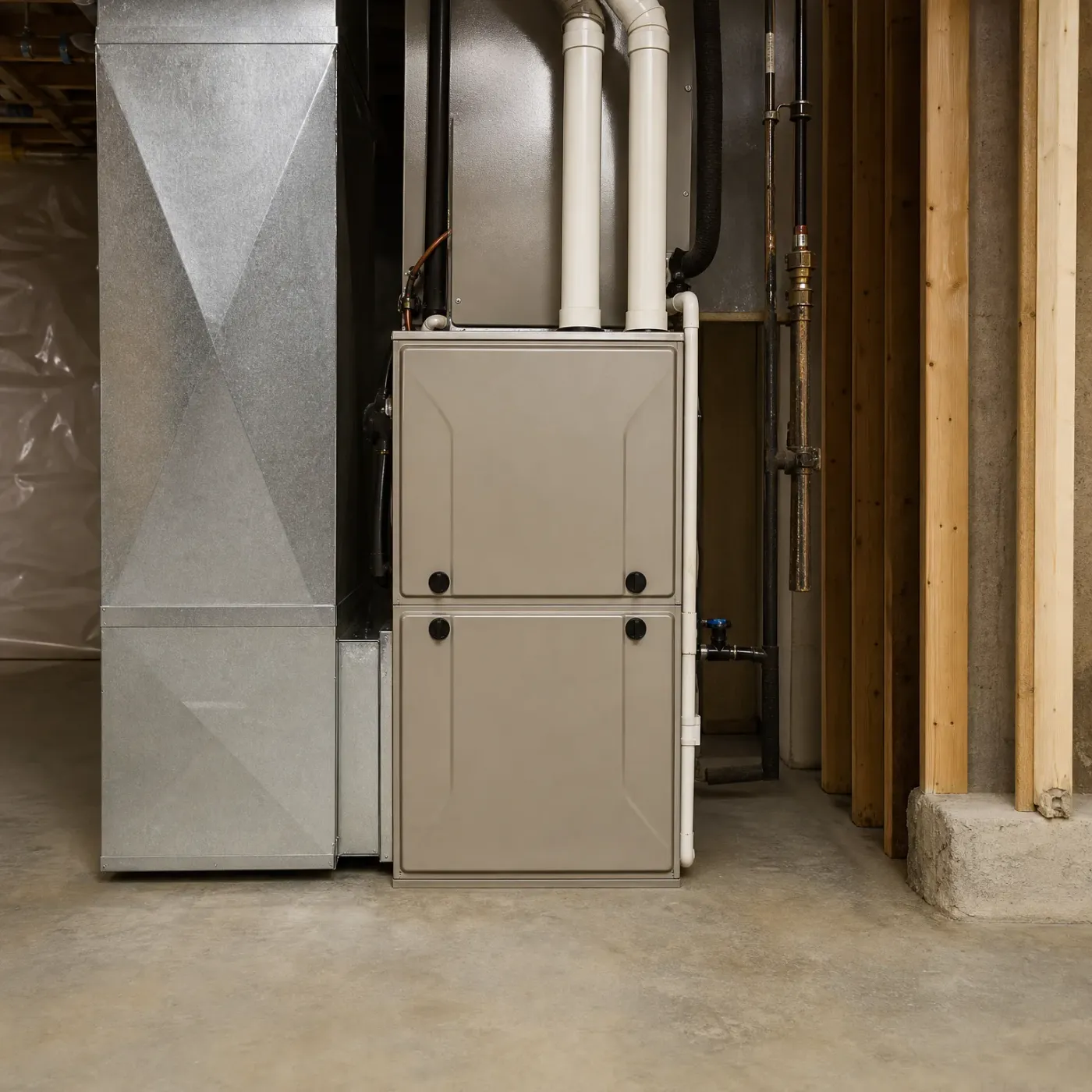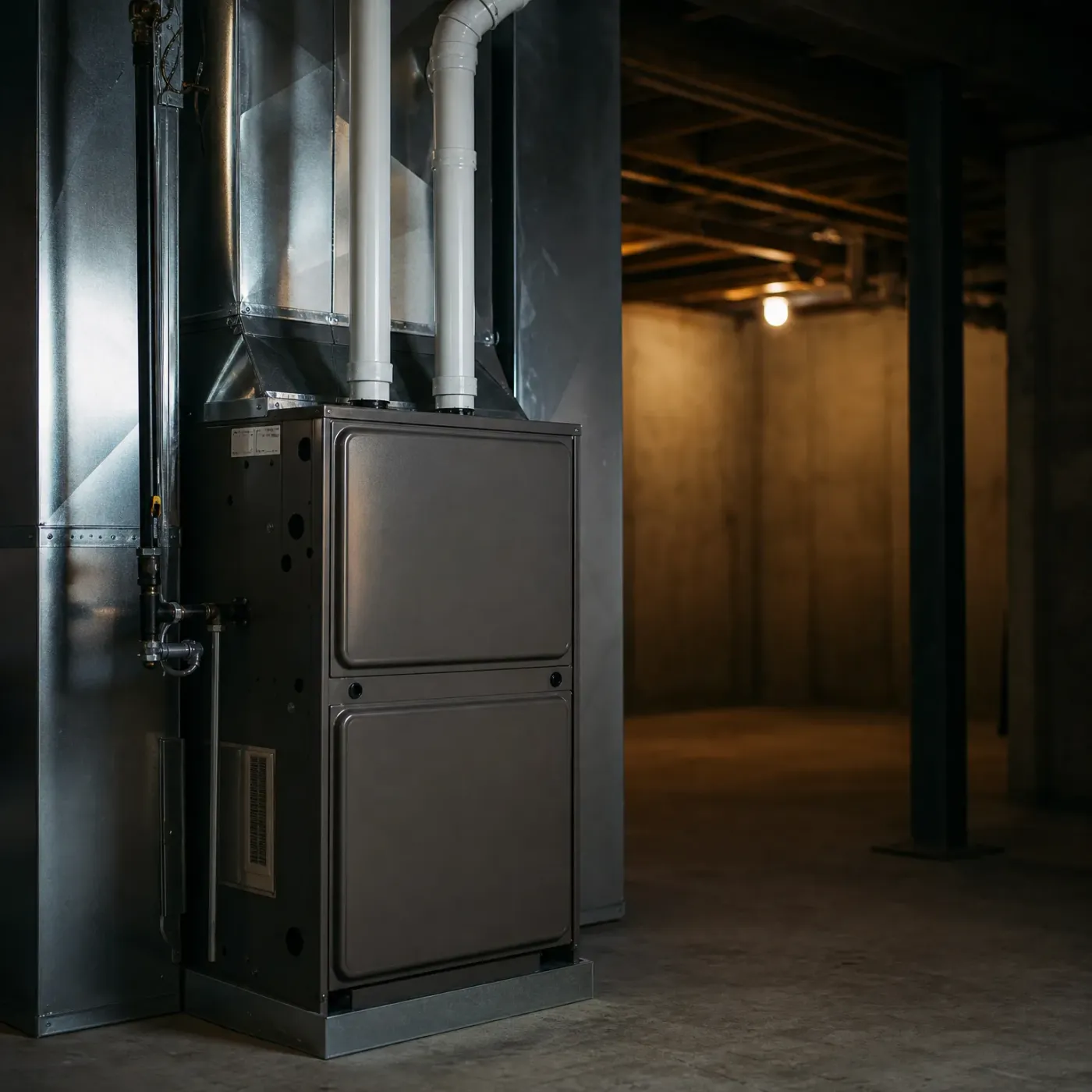




A gray high-efficiency furnace with two white PVC vent pipes stands beside galvanized sheet-metal ductwork in a dim basement with exposed joists and a concrete floor.

A furnace pro near you

What a furnace tune-up covers before a Minnesota winter

Before the cold sets in, you want to know what a furnace tune-up actually checks, and whether it's enough to keep your furnace running through a Minnesota winter. This page walks through what gets inspected and tested. From there, you can get matched with a local contractor who works on furnaces all winter and knows what tends to go wrong.

Find a pro near me

A furnace tune-up before winter means a technician checks the parts that cause no-heat calls once it's below zero. That includes the igniter or pilot assembly, the flame sensor, the burners, the heat exchanger, and the blower motor. The flame sensor and igniter get cleaned or tested because a dirty sensor is one of the most common reasons a furnace shuts itself off mid-cycle. The heat exchanger gets inspected for cracks, since a cracked one can let exhaust mix with the air moving through your ducts. The technician also checks gas pressure, tests the thermostat response, and swaps or checks the air filter. None of this is make-work. A furnace that short-cycles or won't fire in January usually failed at one of these points, and most of those points show warning signs weeks earlier if someone looks. In Minnesota, where the furnace runs hard from first frost through spring, catching a weak part in October costs you an appointment. Catching it in January costs you heat.

A woman in a cream cowl-neck sweater sits by a window with snow outside, in a dimly lit living room with a sofa, lit lamp, mirror, candles and a fireplace.
A woman in a gray turtleneck sweater sits beside a large window looking out at snow-covered evergreen trees, in a dimly lit living room with a lit fireplace, lamps, couch and houseplant.
A woman in a cream turtleneck sweater stands beside a large window with snow-covered ground and bare trees outside, in a dimly lit living room with lamps, a sofa and framed art.
A woman in a grey cowl-neck sweater stands indoors near a window, looking out at falling snow, with a lamp, framed picture and couch in the warmly lit room behind her.

The heat exchanger check matters most

A technician looks at the heat exchanger for cracks or corrosion because that's the part that separates the combustion gases from the air moving through your ducts and into your rooms. A cracked heat exchanger can let those gases mix with your household air. It's not something you can see yourself without pulling the furnace apart, which is why this gets checked every year rather than left until something seems wrong. A furnace can run and heat the house fine while this problem is already there.


Carbon monoxide testing is part of it

Along with the heat exchanger, the tune-up includes a carbon monoxide test near the furnace and a check of the vent pipe to confirm exhaust is actually leaving the house instead of backing up. Minnesota homes run the furnace for months at a stretch, so a vent that's partly blocked or a connection that's worked loose matters more here than it would somewhere the furnace only runs occasionally. This test takes a few minutes and tells the technician whether the exhaust side of the system is doing its job.

A bearded man in a blue and brown plaid flannel shirt stands indoors looking out a window at snow-covered trees, with a ceramic mug on the windowsill.
A man in a blue T-shirt sits on a light gray sofa, laughing while looking at an open laptop in the foreground, with a framed picture, lamp and potted plant behind him.

What the testing actually finds

  • A technician pulls the burners to check for rust or a yellow flame, since a burner flame should be mostly blue.
  • The pressure switch gets tested because a stuck switch stops the furnace from firing even when everything else is fine.
  • Checking static pressure in the ductwork shows whether the blower is working harder than it should against a dirty filter or closed vents.
  • The inducer motor gets checked for noise or slow startup, since that motor has to run before the igniter can light.
  • Gas pressure to the burners gets measured and adjusted, because pressure that drifts low or high changes how the furnace burns fuel.
  • Wiring and electrical connections get checked at the control board, since a loose connection can cause a furnace to shut down mid-cycle.

A furnace that lights every time can still be working harder than it should, and most of that shows up in the testing, not in what you can see. The burners get pulled so a technician can look at the flame itself. A clean gas burn is mostly blue with maybe a touch of yellow at the tip. A lot of yellow means something is burning dirty, and rust on the burner tells the same story a different way. The pressure switch is small and easy to overlook, but it is what keeps the furnace from firing if the inducer motor and venting aren't doing their job first. If it sticks, the furnace won't start at all, even though the igniter and burners are fine. Static pressure readings in the ductwork tell a technician whether the blower is moving air the way it should, or whether a dirty filter or a closed vent somewhere is making it push harder than it was built to. The inducer motor runs before anything else happens, clearing the exhaust path before the igniter gets a signal to light, so noise or a slow start there points to a problem that shows up as a no-heat call later. Gas pressure gets measured and adjusted at the burners themselves, since pressure that has drifted changes how the fuel burns. Loose wiring at the control board gets checked too, since that's a common reason a furnace shuts off mid-cycle for no obvious reason.

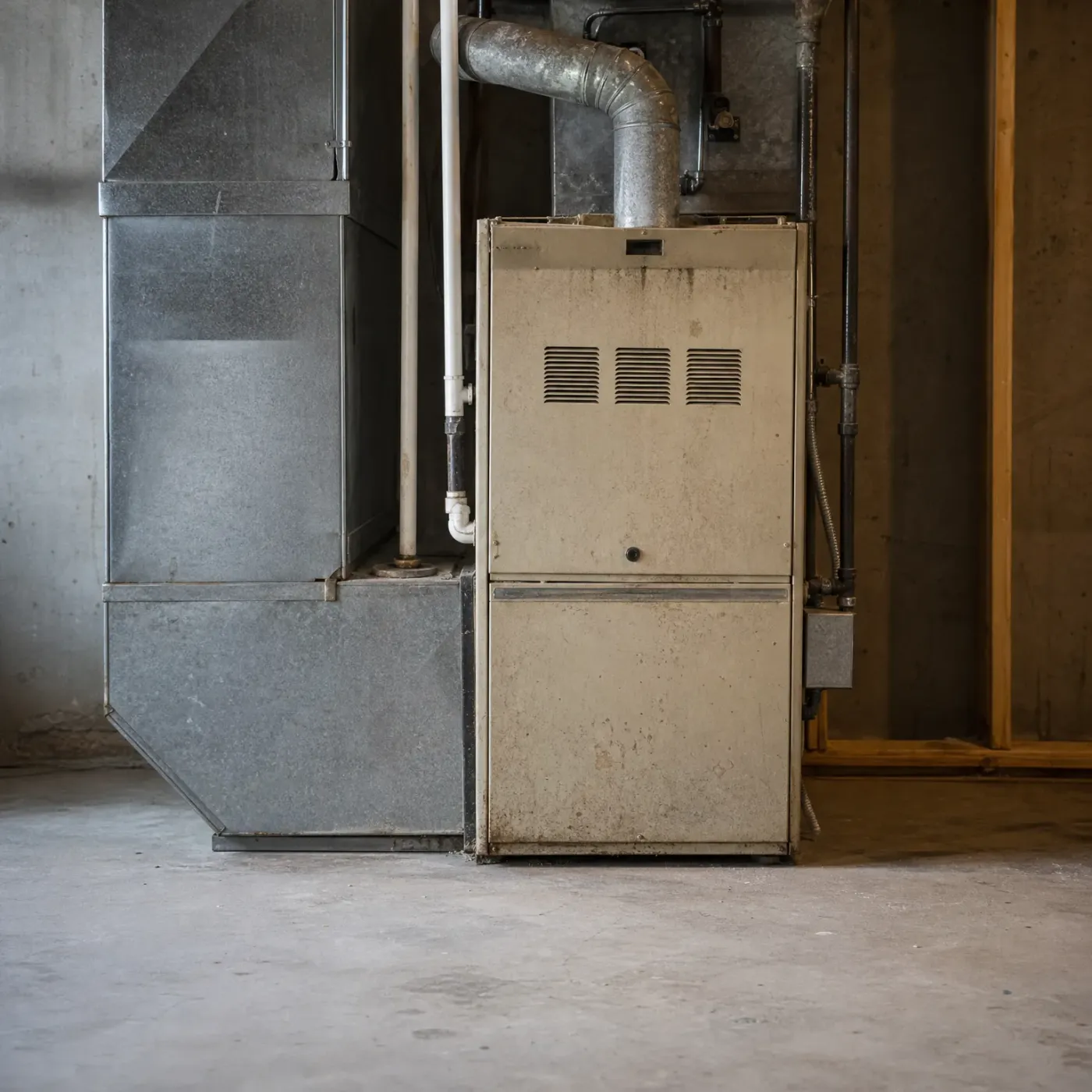
An older beige furnace with a louvered vent panel stands on a concrete basement floor beside galvanized sheet-metal ductwork, a metal flue pipe and vertical pipes along a concrete wall.
Before you get your furnace maintenance
A beige high-efficiency furnace with white PVC vent pipes stands beside galvanized sheet-metal ductwork in a basement with a concrete floor, exposed wood studs, and metal piping along the wall.
After you get your furnace maintenance

A local pro for your furnace maintenance

A licensed local pro takes the request for your furnace tune-up.

Asking costs nothing, and the choice to hire stays yours.

What a skipped tune-up costs you

A furnace that hasn't been checked tends to fail on the parts a tune-up would have caught: a cracked flame sensor, a dirty igniter, a clogged burner. None of those announce themselves ahead of time. The furnace runs fine in November, then won't fire on the morning it's ten below. You're left calling for an emergency repair instead of a scheduled one, and that call comes on the coldest day of the year, when every other furnace in your neighborhood is failing for the same reasons. A tune-up doesn't guarantee nothing breaks. It catches the parts most likely to break before they do.

What you'd notice without one

Short cycling, a furnace that runs longer than it used to, rooms that take longer to warm up. These show up gradually, so you adjust to them instead of calling someone. A dirty flame sensor makes the furnace shut off a few seconds after it starts. A weak blower motor means the air coming out of your vents feels cooler than it should, even though the furnace is running. None of these stop your furnace outright, which is exactly why they go unnoticed through December and January, right up until the part finally fails and you're without heat.

Winter nights average 8°F statewide

At 8°F, a furnace that short cycles or struggles to hold a flame doesn't give you much room to wait on a repair. That's the kind of night a dirty igniter or a weak flame sensor turns into a no-heat call, which is exactly what a tune-up catches first.

NOAA nClimDiv 1991-2020 county normals weighted by homes

  1. The technician checks the thermostat calls for heat correctly

  2. Gas valve opens and the igniter or pilot lights the burners

  3. Flame sensor confirms a steady flame within seconds

  4. Burners get pulled and cleaned, then checked for a blue flame

A smiling man in a denim shirt and white t-shirt stands in an open dark doorway of a stucco house, facing a woman with long brown hair and a green jacket seen from behind in the foreground.

A tune-up now means fewer surprises in January

A furnace tune-up before winter checks the igniter, the flame sensor, the burners, the heat exchanger, and the blower, because those are the parts that fail on a cold night and leave you without heat. That's the answer. Everything else on this page is detail on how a technician gets there.

Minnesota winters don't leave much room for a furnace to be working with a dirty igniter or a cracked flame sensor. If you'd rather have someone local look at your furnace before that night comes than find out the hard way, you can get matched with a licensed contractor in your area who works on furnaces all winter and knows which parts tend to go first in homes like yours. It's one contractor reaching out to you, not several companies competing for the call.

A gray upholstered sofa with a matching cushion sits beside a potted plant and a wooden table holding a small green plant in a stone pot, near a curtained window.
At dusk, a dark board-and-batten house with a standing-seam metal roof and lit entry walkway of stone pavers, with two large outdoor heat pump units on a stone-walled pad at right and trees and hills in the background.

Furnace Maintenance

Get the right pro for your furnace

Step 1 of 3: Equipment
  • A ceramic vase holding leafy green branches and a shallow wooden bowl sit on a wooden window ledge beside a sunlit window, with a cream upholstered chair and knit throw in the foreground.
    • Say what's going on with your furnace, and a pro who works on them reaches out.
    • A local pro who knows furnaces gets your details and gets in touch.
  • Sunlit living room corner with a beige upholstered sofa, a round wooden side table holding a ceramic vase of olive branches, linen curtains at a window, a floor vent in the baseboard, and a woven jute rug on hardwood flooring.
    • Send the form, and lining up the furnace tune-up stops being yours to chase.
    • Send the form and the furnace tune-up stops being something to remember.
  • A wooden side table with a single drawer holds a shallow carved wood bowl and a white ceramic vase of green eucalyptus stems, beside a window and an upholstered chair draped with a cream knit throw.
    • Fill out one form instead of calling around for a furnace tune-up.
    • Skip calling around to set up a furnace tune-up.
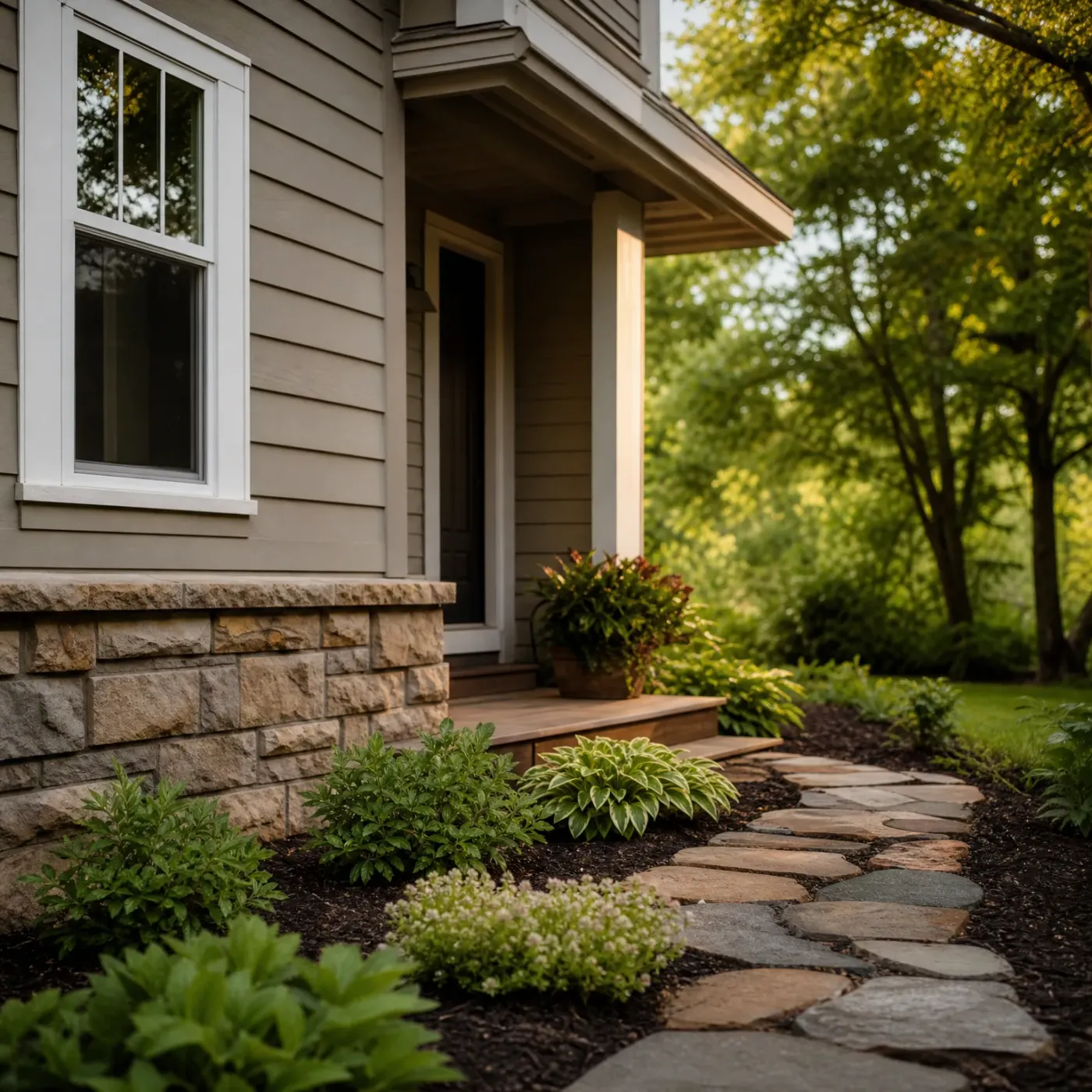
  • Corner of a house with horizontal siding, a white-framed window and stone veneer base, beside a covered entry with wooden steps, a potted plant, mulched beds of green shrubs and a flagstone path.
    • Your request stays with one local pro.
    • Your request goes to one pro, not a list of companies.