



Furnace Pros MN
Profile view of a bearded man wearing a black baseball cap and a dark gray T-shirt against a plain light background.

What size furnace a Minnesota home needs

Step 1 of 3: Equipment

What size furnace do I need for my house in Minnesota?

Winters in Minnesota ask a lot of a furnace, and picking the wrong size means living with it for years. Too small and it runs constantly without ever catching up on the coldest days. Too big and it short cycles, wearing out parts faster and leaving rooms uneven. The right answer isn't a number off a chart, it comes from a load calculation done for your house.

It comes from a Manual J load calculation, not your square footage alone

A furnace sized right for a Minnesota home is based on a room by room heat loss calculation, called a Manual J, that looks at your square footage along with your insulation, window count, and how much cold air gets in. Two houses the same size can need different furnaces because one loses heat faster than the other. Minnesota winters push outdoor temperatures well below zero for stretches, so the calculation has to account for that real cold, not an average. A furnace sized off square footage alone often ends up oversized, which means it heats fast then shuts off before warming the house evenly, or undersized, which means it runs nonstop and still can't keep up on the coldest nights.

A man with grey hair and stubble in a dark sweater sits on a grey sofa indoors, looking off to the side, with a potted plant and a sunlit window behind him.
A man with gray hair, a beard and glasses, wearing a dark green sweater, sits on a gray sofa in a sunlit living room with a potted plant, table lamp and wooden sideboard behind him.
A middle-aged man with graying hair and a short beard sits on a blue sofa in a living room, looking toward a window, with a bookshelf, lamp and framed picture in the background.
A man with graying curly hair and a dark green sweater sits on a gray sofa in a sunlit living room, looking off to the side, with a framed picture, shelving, an armchair and a window with sheer curtains behind him.

Undersized vs. Oversized Furnace

Undersized

  • It runs nearly nonstop once temperatures drop below zero, and still loses ground on the coldest nights.
  • Rooms farthest from the furnace stay noticeably colder than the rest of the house.
  • The blower and burners wear faster from running long cycles with little rest.
  • Your gas use climbs because the furnace is working past what it was built to handle.
  • On a January cold snap it may not recover overnight, leaving the house below your thermostat setting by morning.

Oversized

  • It heats the house quickly, then shuts off, so it cycles on and off far more than it should.
  • Short cycling leaves cold spots because the air never circulates long enough to even out room to room.
  • The extra starts and stops put more wear on the ignition system and blower motor over time.
  • Humidity stays higher indoors in winter since the furnace isn't running long enough to settle it out.
  • It costs more to install than a furnace sized to your house actually needs.
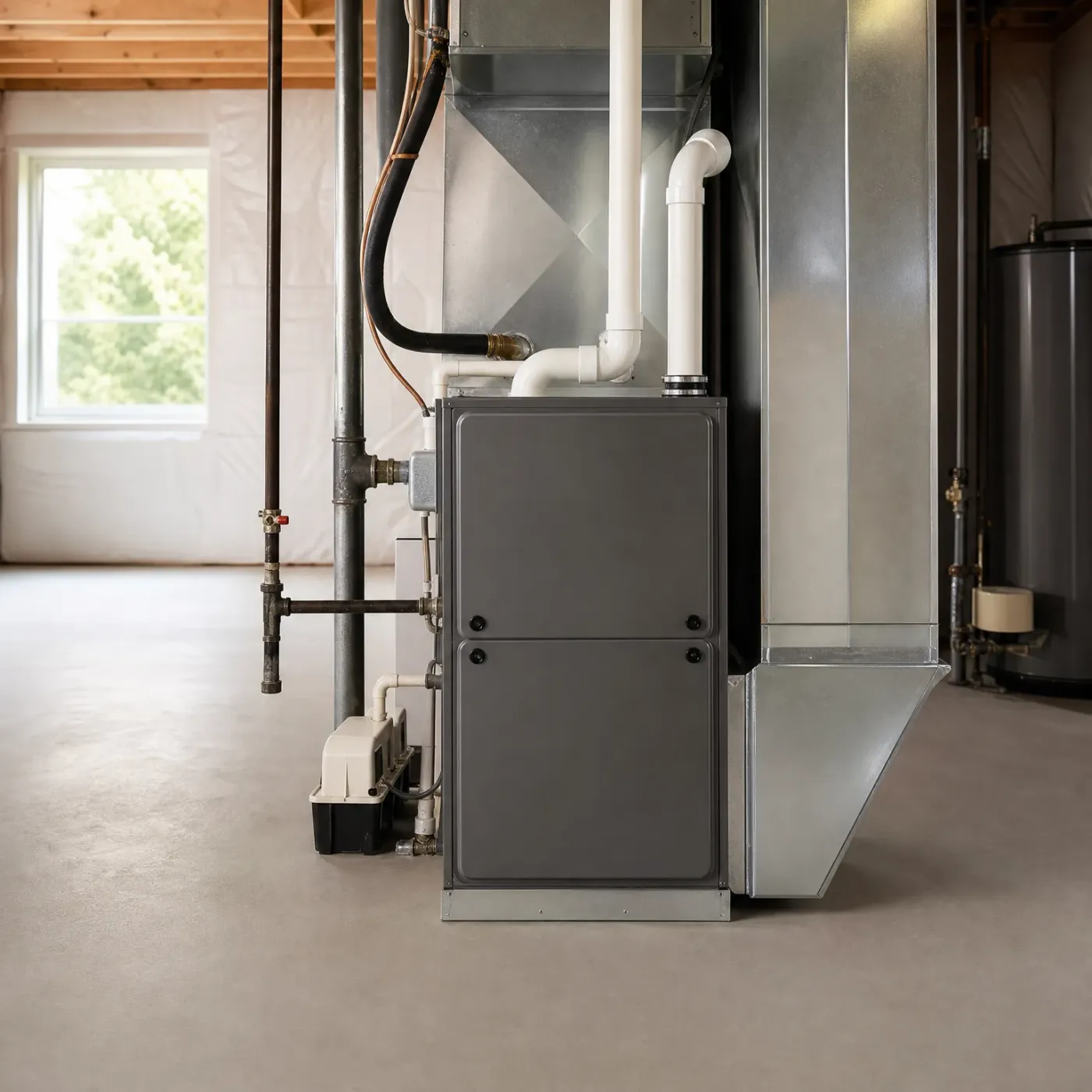
A gray high-efficiency furnace in a basement with sheet-metal ductwork, white PVC vent pipes, metal plumbing lines, a condensate pump on the floor, and a window showing green trees outside.

Sized right

A properly sized furnace runs steady cycles even at ten below. The ductwork carries enough air to every room, the burners shut off when the thermostat is satisfied, and the flue and condensate lines do their job without strain on any single part.
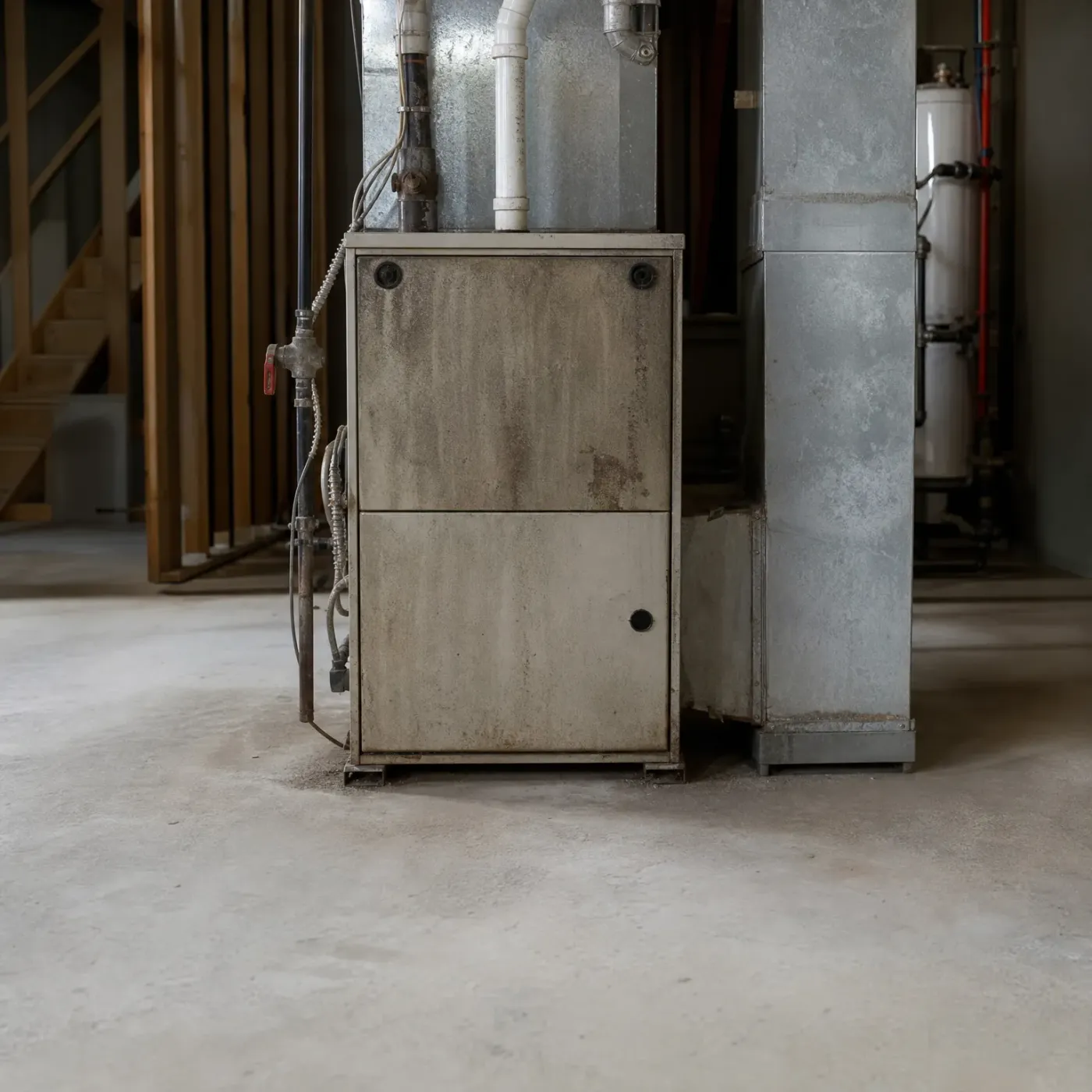
An older metal furnace with PVC and metal pipes stands on a concrete basement floor beside galvanized ductwork, with wooden stairs and a water tank in the background.

Struggling to keep up

A furnace that's wrong for the house shows its age fast. Dust builds up around a unit that cycles too often or runs too long, and the parts around it, the gas lines, the condensate pipes, work harder than they should just to get the house through a Minnesota winter.

Is your furnace struggling to keep up this winter?

Walk through the house on a cold night and check what you feel. A bedroom at the end of the hall that never warms up like the rest. The furnace kicking on, running a long stretch, then kicking on again a few minutes later. A thermostat that says 68 while the room reads closer to 62. Some households notice the gas bill climbing past what the weather alone explains. These aren't small annoyances that fix themselves. A furnace fighting a mismatch between its size and the house runs harder, wears out its parts sooner, and on the coldest stretch of January may not keep the house at a safe temperature at all.

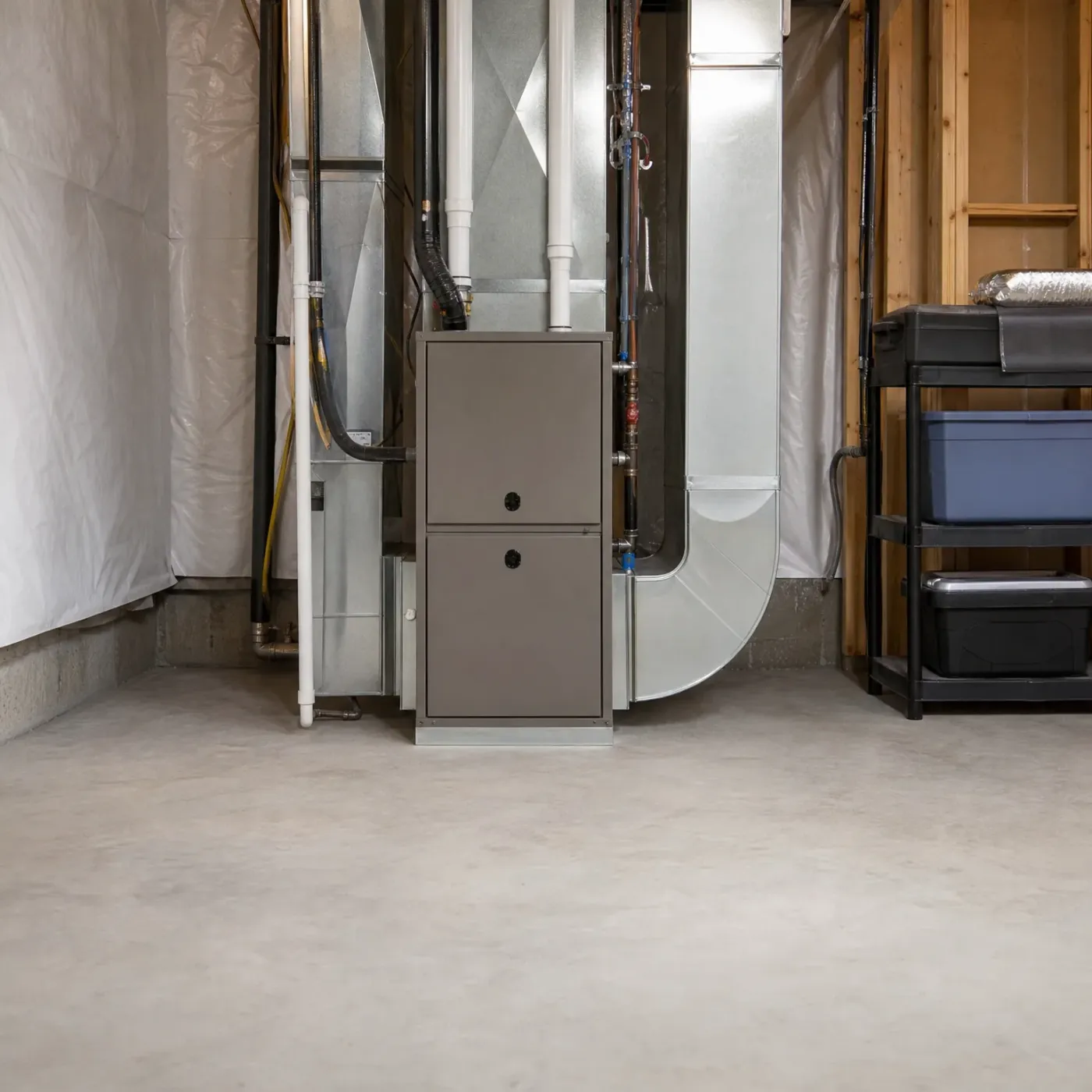
A basement utility area with a gray furnace, sheet-metal ductwork, pipes, plastic-covered walls, a concrete floor, and a black shelving unit holding storage bins.

Properly sized

A furnace sized to the house and sealed off with PVC intake and exhaust runs clean, steady cycles. The cabinet stays free of rust, the gas line and condensate piping sit where they should, and nothing strains to keep the house warm at ten below.

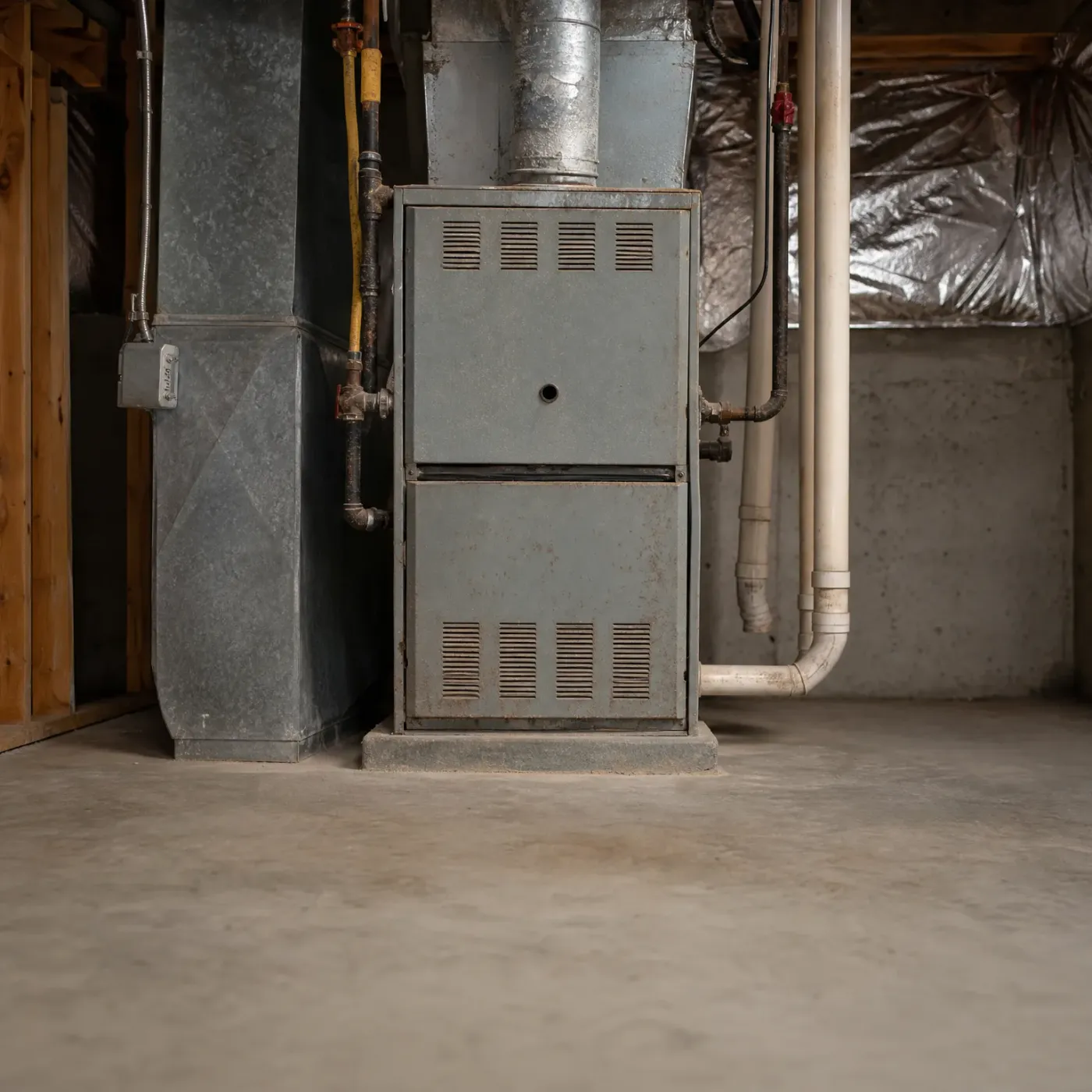
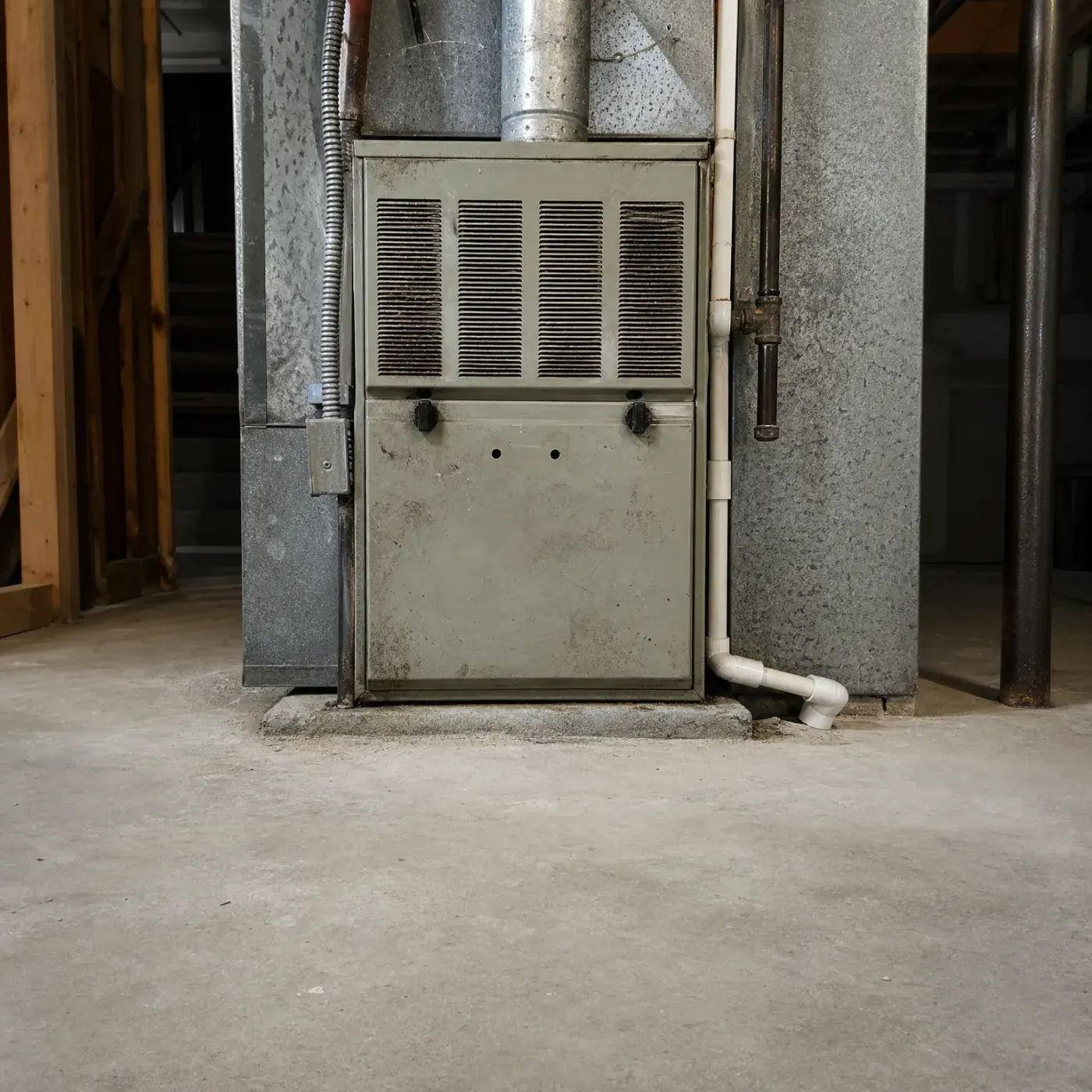
A gray metal furnace with louvered vent panels stands on a concrete basement floor beside galvanized ductwork, gas and plastic pipes, and foil-faced insulation along the ceiling and wall.

Wrong size, aging unit

An undersized or old furnace works harder than it should, cycling long and often. Surface rust on the cabinet is a sign of years of condensation and strain. A new install sized to your square footage and your Minnesota winters replaces that guesswork with a unit built for the load.

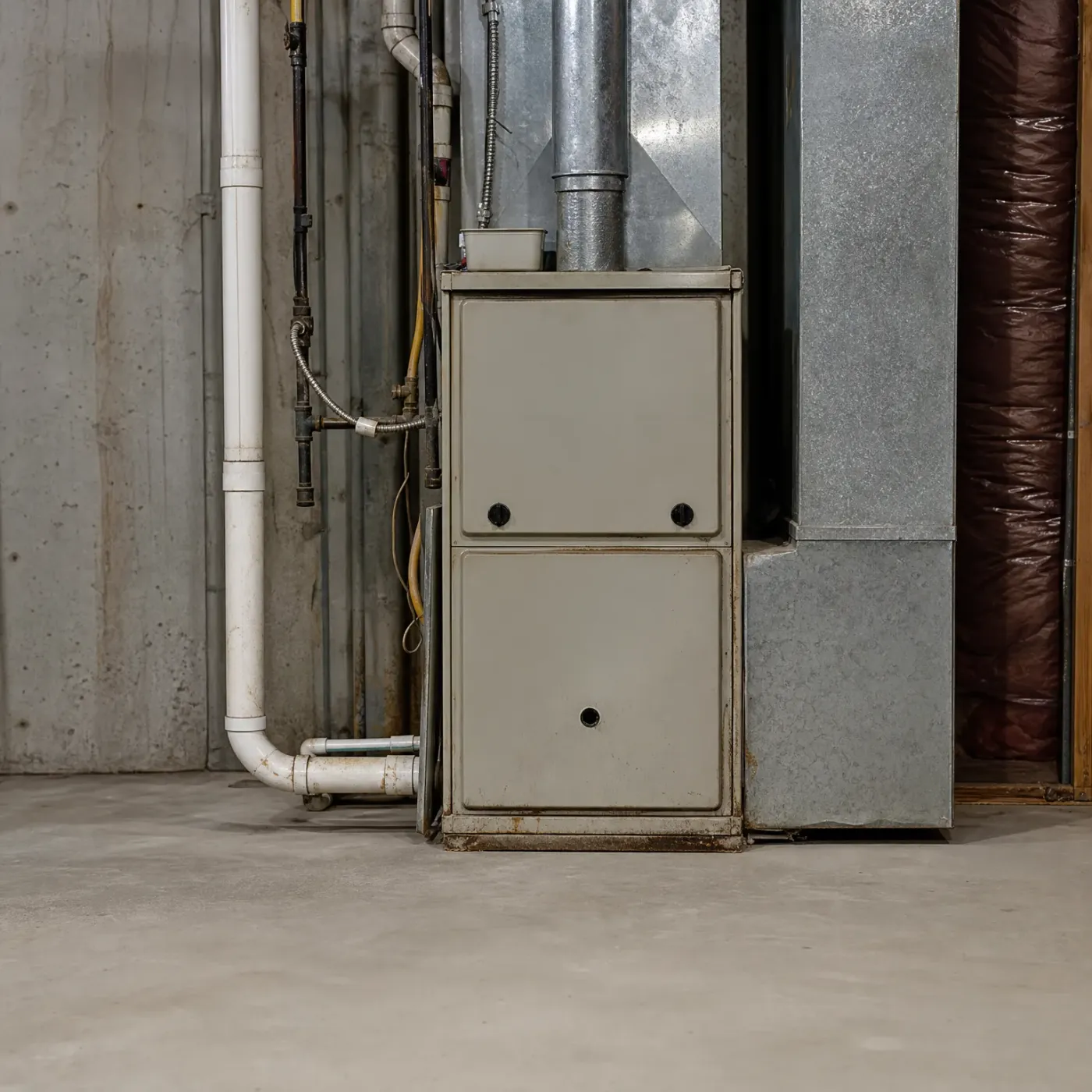
A beige furnace with two access panels stands against a concrete basement wall, with galvanized sheet-metal ductwork, a white PVC pipe, flexible conduit and insulated ducting around it.
Before you get your furnace installation
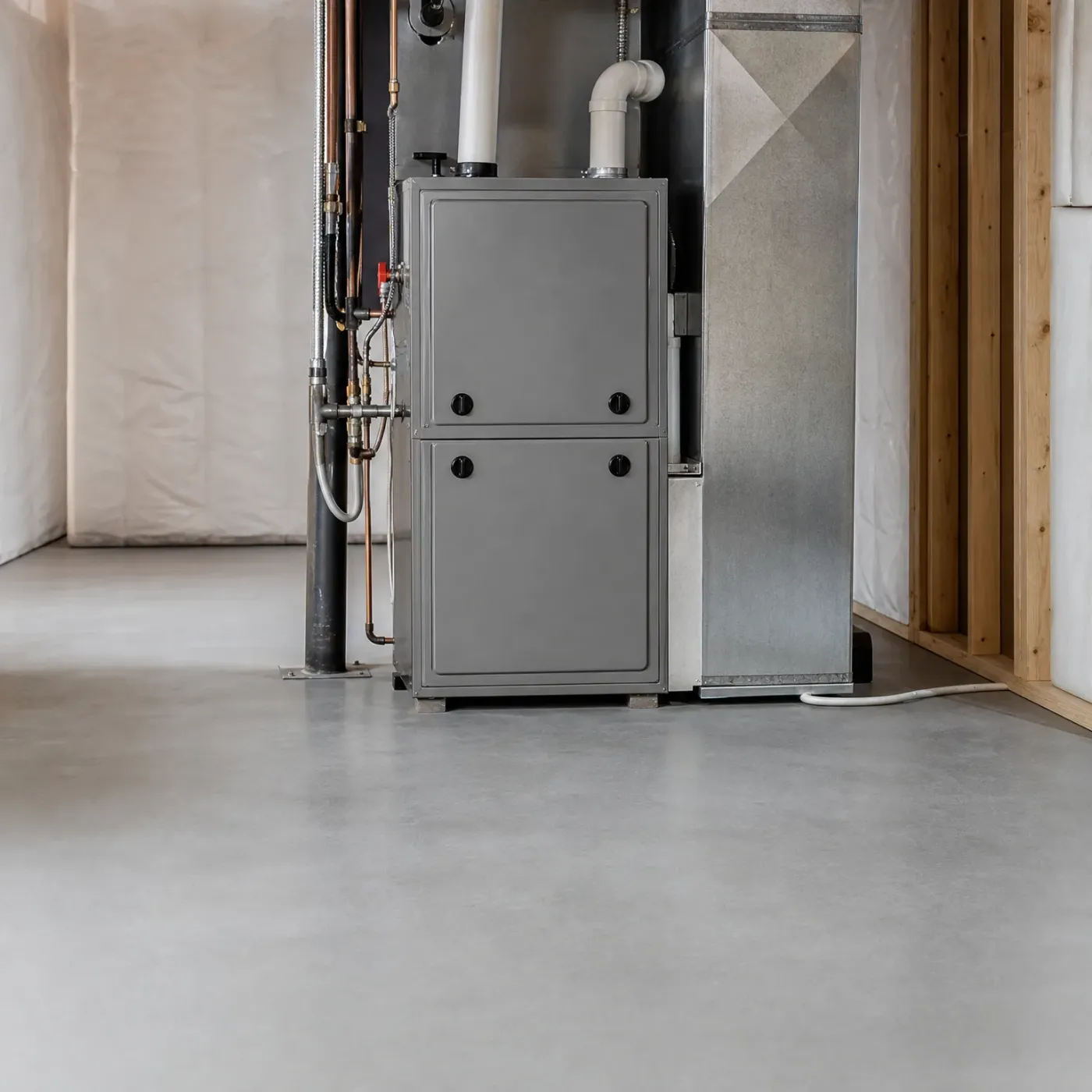
A gray furnace with white PVC vent pipes stands beside sheet-metal ductwork in a basement with a smooth concrete floor, exposed wood framing, and plastic sheeting on the walls.
After you get your furnace installation
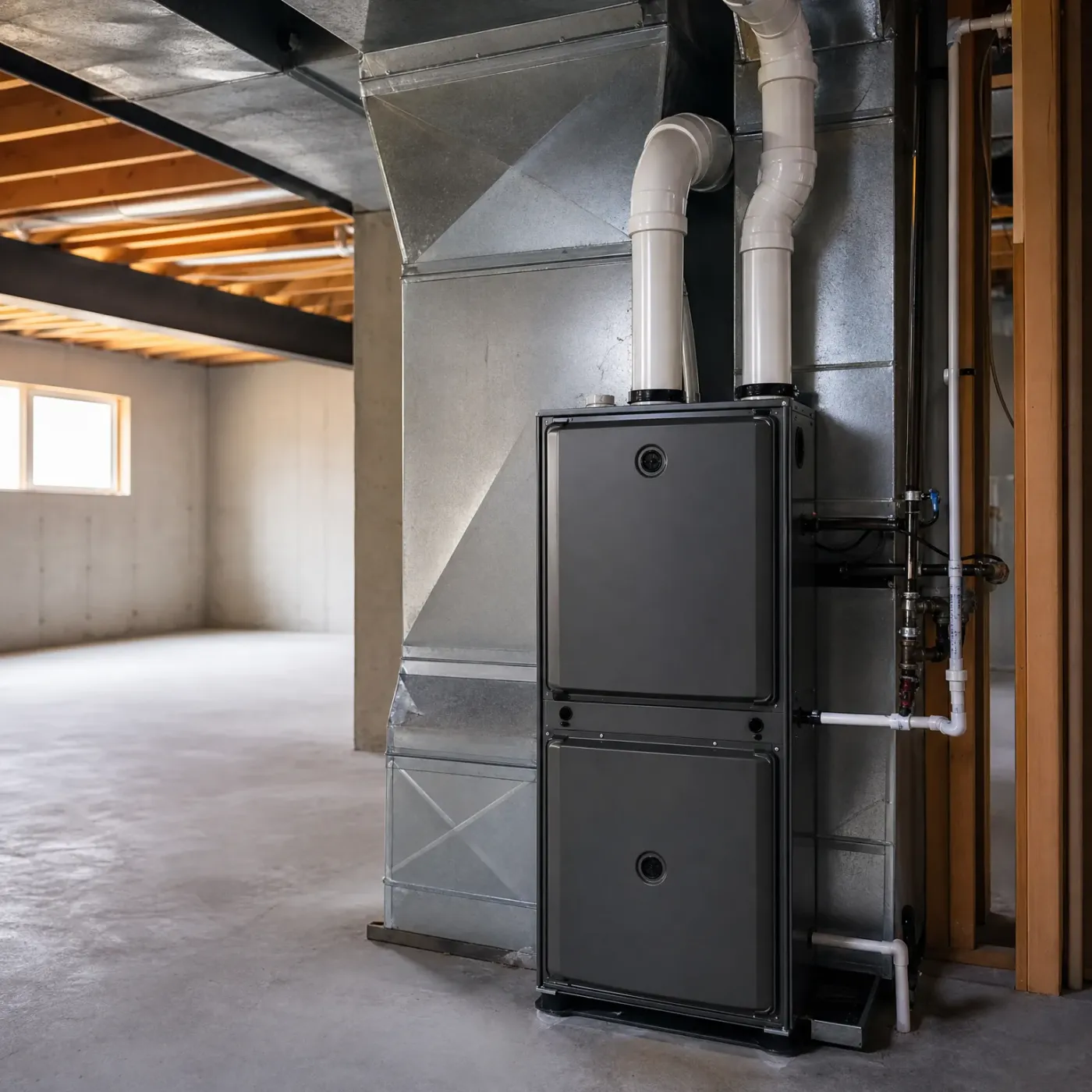
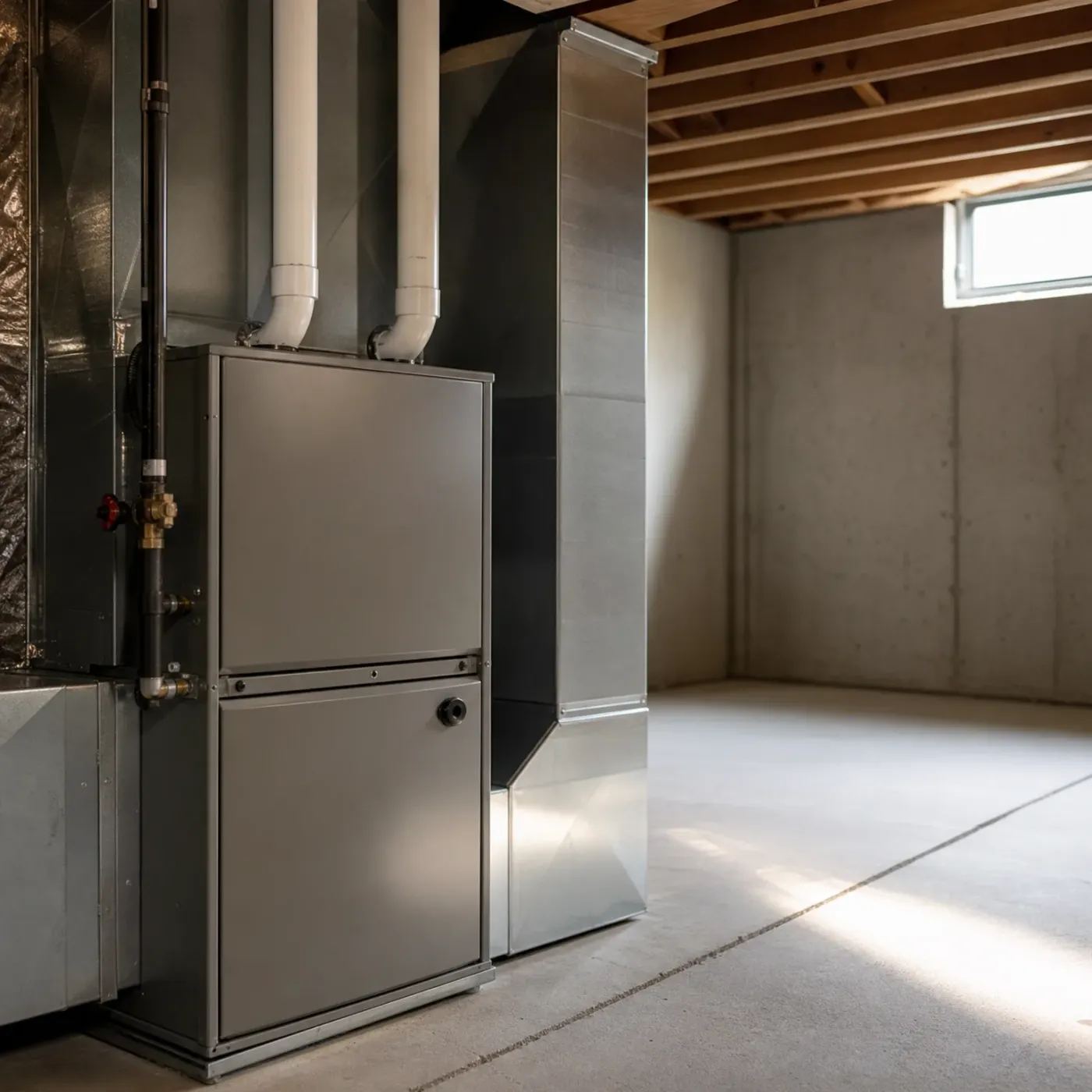
A gray high-efficiency furnace with two white PVC vent pipes stands against sheet-metal ductwork in an unfinished basement with concrete floor and walls and exposed wood joists.

Let someone else find the pro

One installer gets your project, so there's no bidding war over it.

Send it once and finding someone is no longer on you.

Get a licensed local pro

No charge to send it. You decide if you hire them.

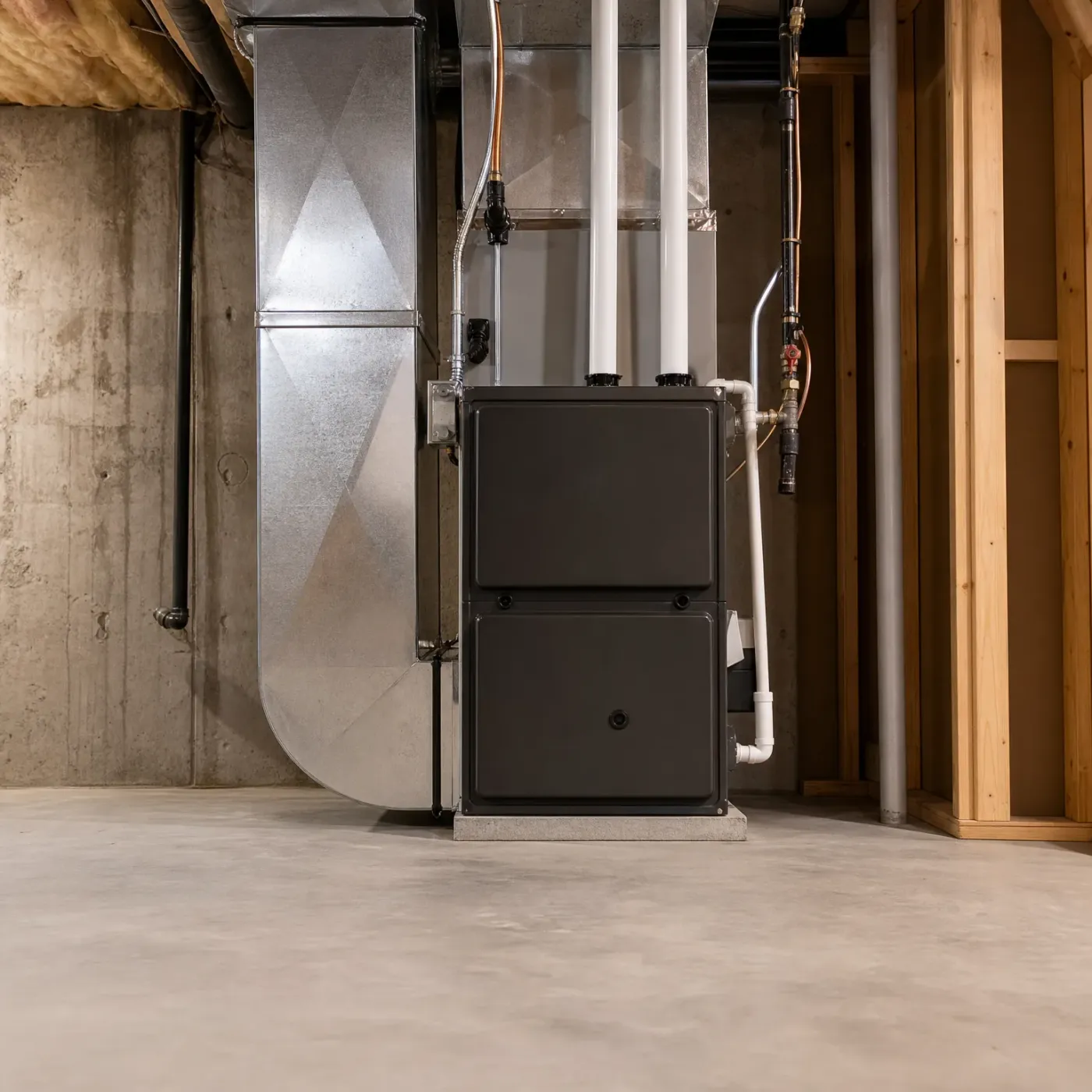
A dark high-efficiency furnace on a concrete pad in a basement, connected to galvanized ductwork, white PVC vent pipes, and copper and black gas piping, with concrete walls and wood framing nearby.
A right-sized furnace ties into clean venting and tight gas and condensate lines, with nothing straining to hold the house at a steady temperature.
A gas furnace with a louvered upper panel stands on a concrete pad in a basement, flanked by sheet-metal ductwork, white PVC and metal pipes, and insulated columns.
An aging or undersized furnace, patched with flex conduit and a sagging condensate line, is working harder than it should to keep up.

How sizing actually gets calculated

  • A Manual J load calculation weighs square footage, window count, insulation and ceiling height, not just square footage alone.
  • Furnace output is rated in BTUs per hour, and a unit sized by square footage guessing can run 20,000 BTUs off in either direction.
  • AFUE tells you how much of that fuel turns into heat, so a 95 percent AFUE furnace needs less raw BTU input than an 80 percent model to deliver the same warmth.
  • Ductwork gets checked alongside the furnace, since even the right size unit can't push enough air through runs that are too narrow.
  • A furnace one size up doesn't heat faster, it just short cycles and wears out its own ignition system sooner.
  • Contractors measure your actual window area and wall exposure instead of relying on a rule of thumb per square foot.

Sizing a furnace starts with a Manual J calculation, not a tape measure around the house. A contractor doing this right walks the home and tallies square footage, yes, but also every window and its direction, how much insulation is in the attic and walls, ceiling height in each room, and how much outside wall the house exposes to the wind. Two houses the same size can need furnaces thousands of BTUs apart once those details come into the math. That output number matters because BTUs per hour is what a furnace is actually rated in, and a guess based on square footage alone can miss by 20,000 BTUs either direction, enough to leave you cold on the worst nights or cycling short all winter. AFUE factors in here too. A 95 percent AFUE furnace turns almost all its fuel into heat, so it needs less raw input than an 80 percent model to warm the same rooms. None of this matters if the ductwork can't carry the air. A correctly sized furnace pushing against runs that are too narrow still leaves rooms cold, so the ducts get checked alongside the unit, not after it's installed. And bigger isn't a shortcut. A furnace sized one notch up doesn't warm the house any faster, it just turns on, satisfies the thermostat too quickly, shuts off, and repeats that cycle more often, which wears out the ignition system sooner than it should.

A woman with shoulder-length brown hair wearing a beige knit cardigan sits in a gray upholstered armchair near a window, looking off to the side with a slight smile, with bookshelves blurred in the background.
A woman with her hair in a bun holds a sleeping young child against her chest, both wrapped in a textured beige knit blanket on a sofa in a dimly lit room with a lamp, framed picture, and bookshelf behind them.

20,000 BTUs off

A furnace picked by square footage alone can land 20,000 BTUs away from what the house actually needs, in either direction, and you'd never know until the first cold snap.

Hand it over

Manual J load calculation

This weighs window count, insulation and ceiling height along with square footage, so the furnace matches the house instead of a rough guess.

Hand it over

Winter nights average 8°F statewide

An 8°F overnight low is the average across a Minnesota winter, not the worst of it. Your furnace has to hold steady through nights colder than that without losing ground. That's what the sizing has to account for, not just the mild stretches.

NOAA nClimDiv 1991-2020 county normals weighted by homes

The right size for your furnace comes from a Manual J calculation on your house, not a guess based on square footage. That's the whole answer. A furnace installer licensed in Minnesota and familiar with the swings from ten below to a January thaw will run that calculation and size the unit to your house, not the one down the street. You'll hear from one contractor, someone who works on furnaces in this climate all season and knows what tends to fail when a system is sized wrong, not a handful of companies competing for the job. That's one call to make, one visit to schedule, and a furnace that holds steady on the coldest night of the year instead of running the whole time just to keep up.

A gray furnace with PVC vent pipes and sheet-metal ductwork stands against a wall in an unfinished basement with concrete floor and walls, exposed wood joists, and a small window.

Done looking for a furnace pro

Hand off my installation

The pro who reaches out is licensed in Minnesota.

You only hire the pro if you want to.