



Why one room stays cold in a Minnesota winter

Step 1 of 3: Equipment

Why is one room in my house so much colder than the rest in winter?

A Minnesota winter makes this kind of problem obvious fast. One room runs cold while the rest of the house is fine, and you've already checked the vent and maybe closed the door to keep the chill contained. Before it turns into shivering through February in your own bedroom or office, you want to know whether this is a furnace problem, a duct problem, or just where that room sits in the house.

Usually it's the duct run to that room, not the furnace itself

A furnace heats the whole system the same way, so when just one room falls behind, the problem is almost always what happens between the furnace and that room. A duct that runs long, takes sharp turns, or passes through an unheated attic or crawlspace loses heat along the way, and the air reaching the register is cooler than what's leaving the furnace. A damper that's partly closed, a duct that's come loose at a joint, or a room with more exterior walls than the rest of the house will do the same thing. In a Minnesota winter, with outdoor temperatures working against that room's walls and windows for months, even a small duct problem shows up as a room that never quite catches up.

A woman in a gray turtleneck sweater stands by a window looking outside at snowy ground, with a dimly lit living room containing a sofa, shelves, lamp and a lit candle behind her.
A woman in a cream cable-knit turtleneck sweater stands in a warmly lit living room with a fireplace and shelves behind her, looking out a window toward snow-covered trees and a railed deck.
A woman in a cream knit turtleneck sweater stands by a window looking out at snow, with a lit fireplace, sofa and lamp in the room behind her.
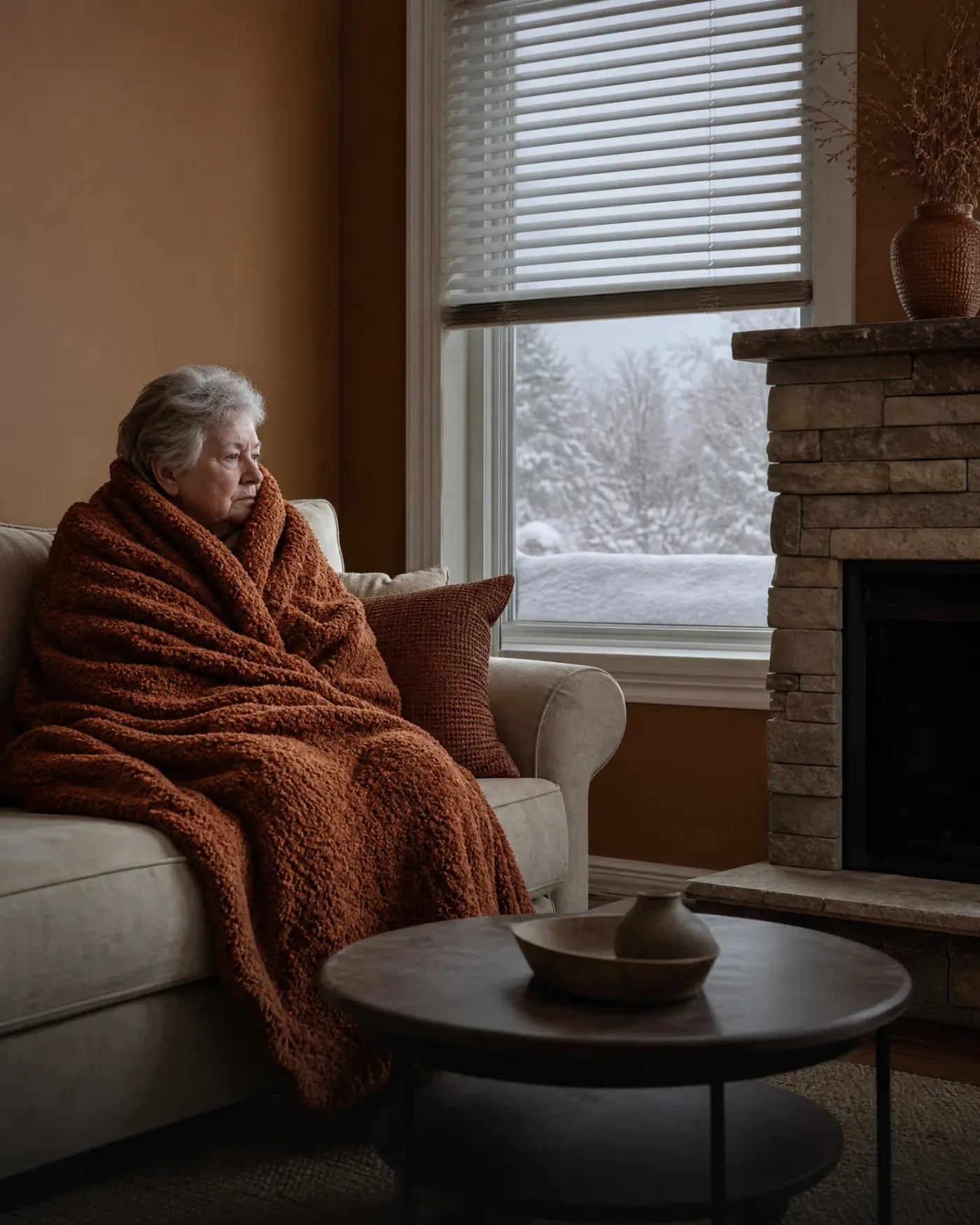
A woman in a gray knit sweater sits by a window looking out at falling snow, with a dimly lit living room containing a sectional sofa, pillows, a lamp and houseplants behind her.

You notice it most in the room you actually sit in: the thermostat reads 70 but that back bedroom or the room over the garage feels like 62. You turn up the heat to compensate, and now the rest of the house runs warm while that one room still lags, and the furnace runs longer to chase a temperature it can't reach evenly. That's money going into rooms you don't use to fix a room you do. Left alone through a Minnesota winter, the cold spot usually doesn't fix itself. Pipes running through an exterior wall in that room are worth knowing about too, since a room that won't hold heat can mean a line that's colder than it should be. A closed vent or a shut door is a workaround, not a fix, and it can make the furnace's job harder rather than easier. The duct run feeding that room, a damper stuck in the wrong position, or a return that's blocked can all show up as exactly this, one room out of step with the rest of the house.

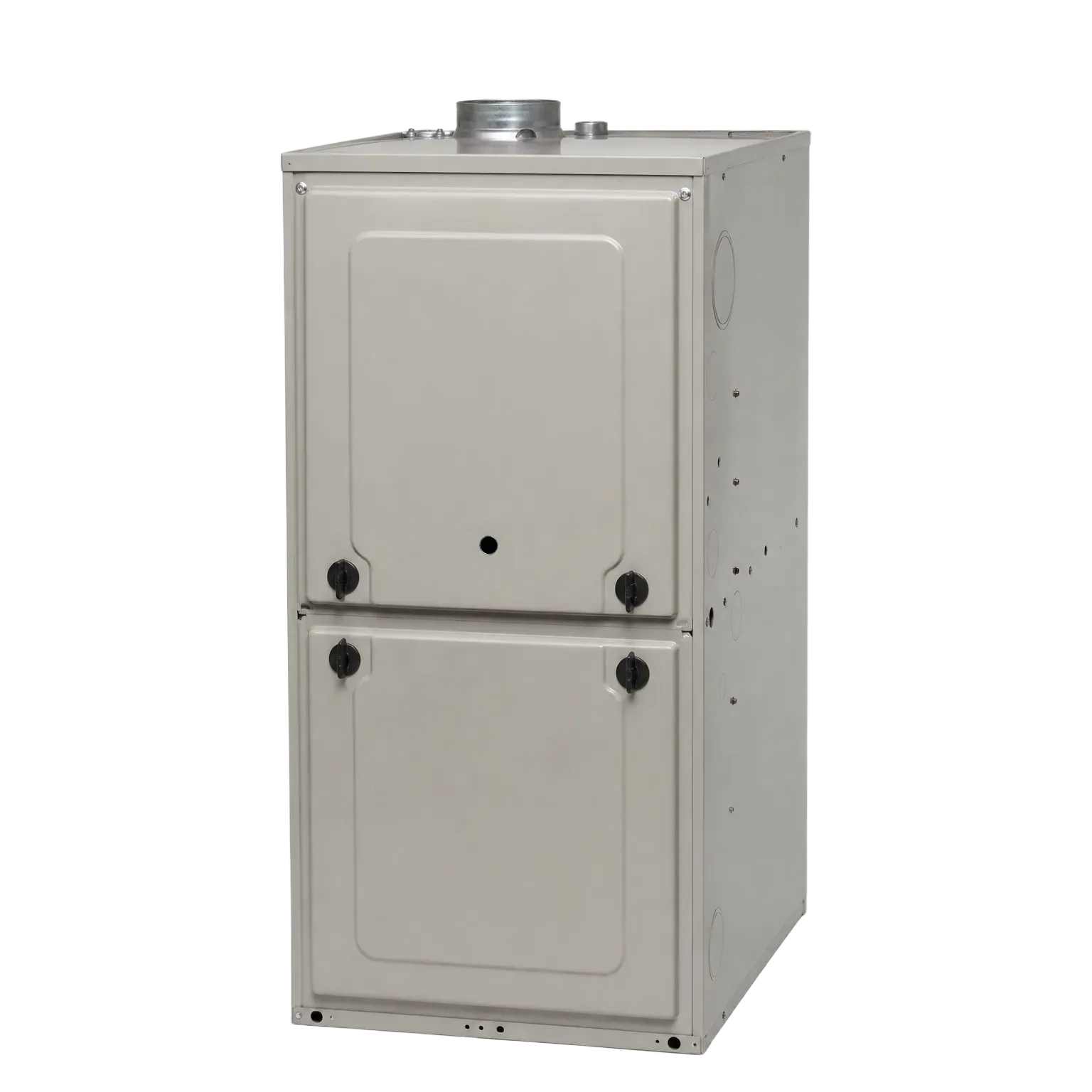
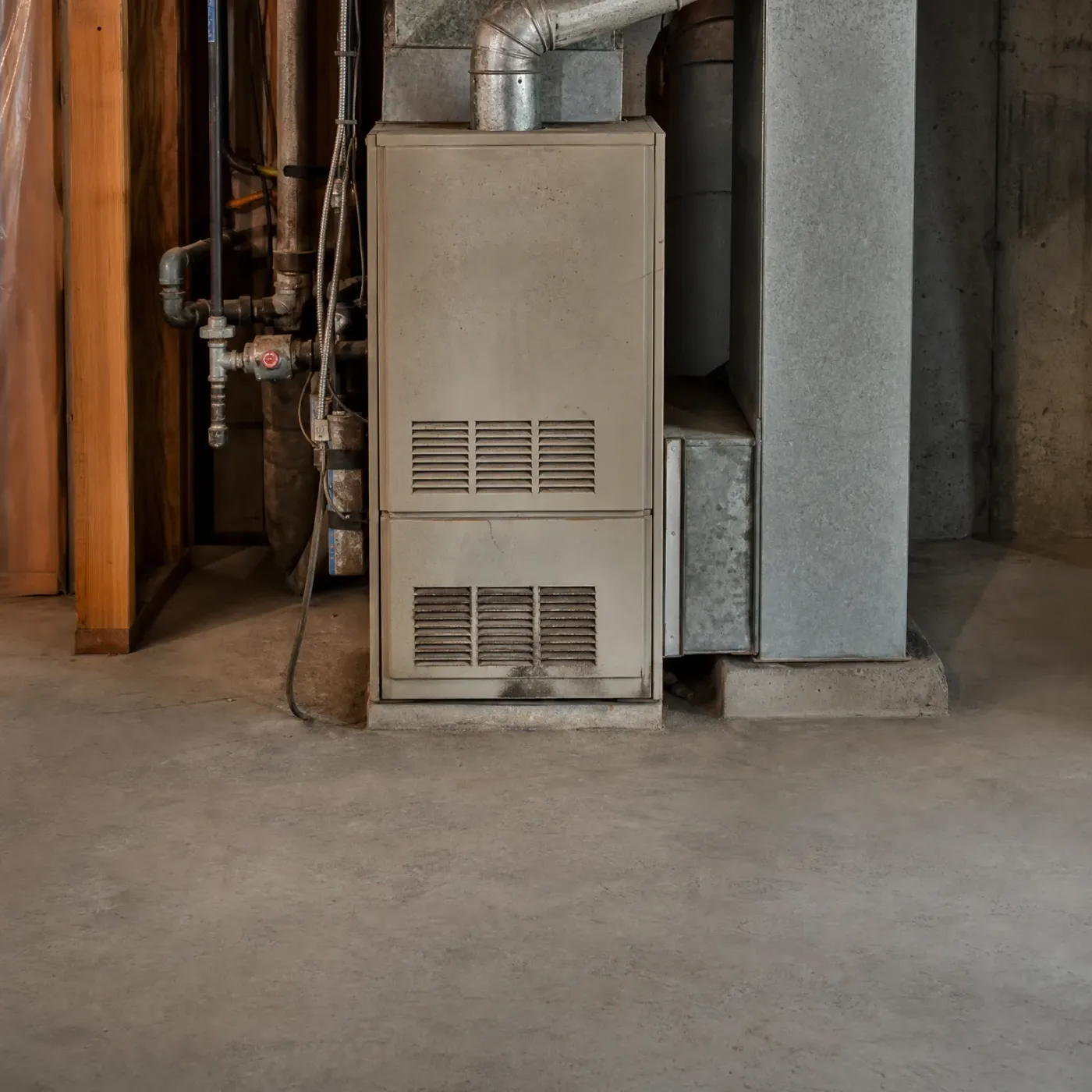
A beige furnace with two louvered front panels stands on a concrete basement floor beside galvanized ductwork, metal pipes, and a wooden post.
Before you get your furnace repair
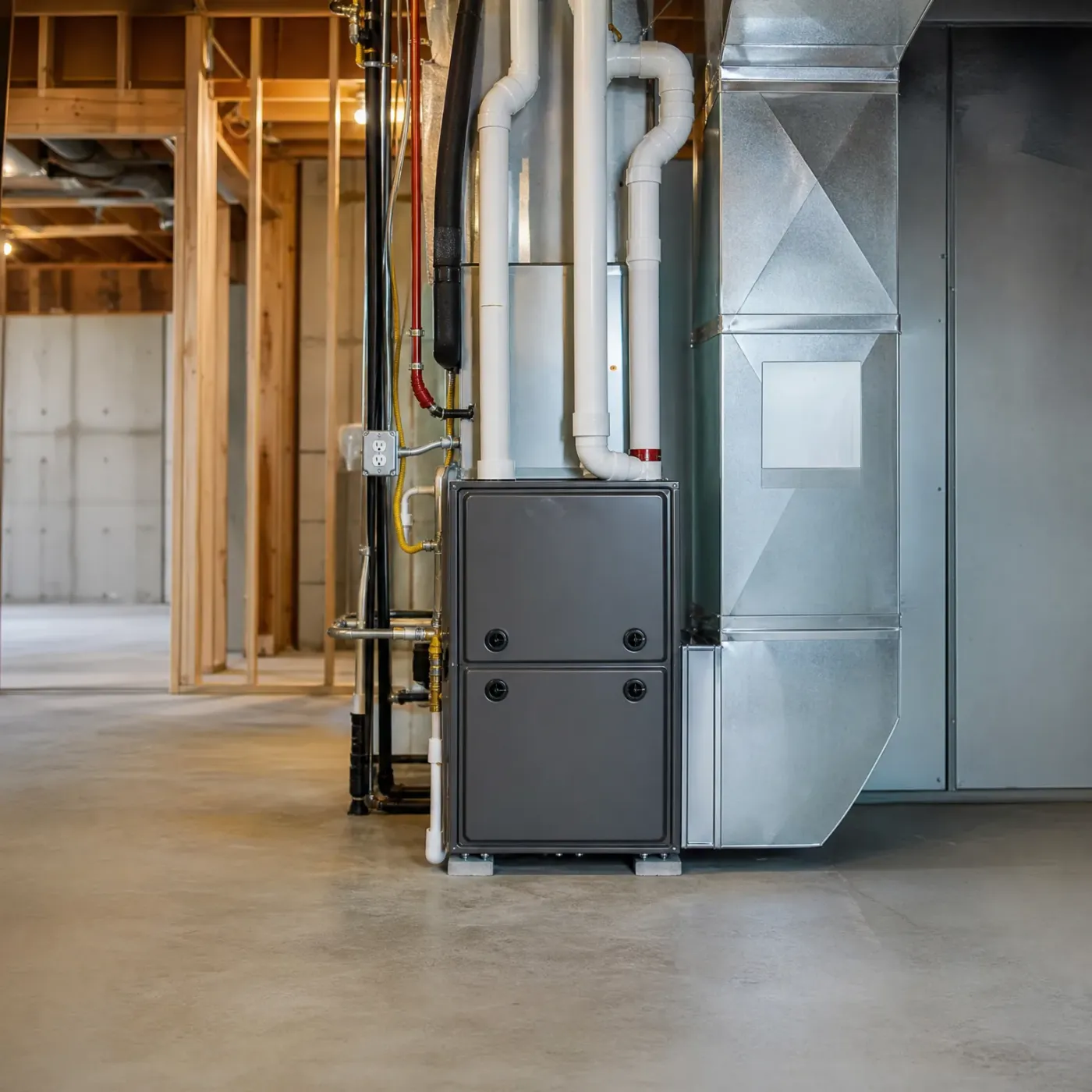
A gray high-efficiency furnace stands on a concrete basement floor beside galvanized sheet-metal ductwork, with white PVC vent pipes, gas and water lines, and unfinished wood framing behind it.
After you get your furnace repair

Duct Issue or Damper Issue

Duct problem

  • A disconnected or crushed duct in the attic or crawlspace feeds that room less air no matter how high you set the thermostat.
  • You can sometimes hear it: weak or no airflow at that vent even when the furnace is running and other rooms feel fine.
  • This kind usually shows up right after other work in the attic, like insulation or wiring, or it's been that way since the house was built.
  • A contractor can check static pressure and look at the duct run itself rather than guessing from the vent alone.
  • If the room is over a garage or at the end of a long duct run, distance and layout work against it even with sound ductwork.

Register or damper problem

  • A closed or partly closed damper inside the duct, not visible at the vent, can choke off a room even though the register looks wide open.
  • Furniture or rugs blocking the vent cuts airflow in a way that looks identical to a duct issue from where you're standing.
  • Some homes have a zone damper system, and a damper stuck or miswired to that room will starve it while others run normal.
  • This is the cheaper fix to find, since it often doesn't require opening a wall or crawling the attic.
  • A contractor can trace the duct from the furnace to the register and test each damper along the way.
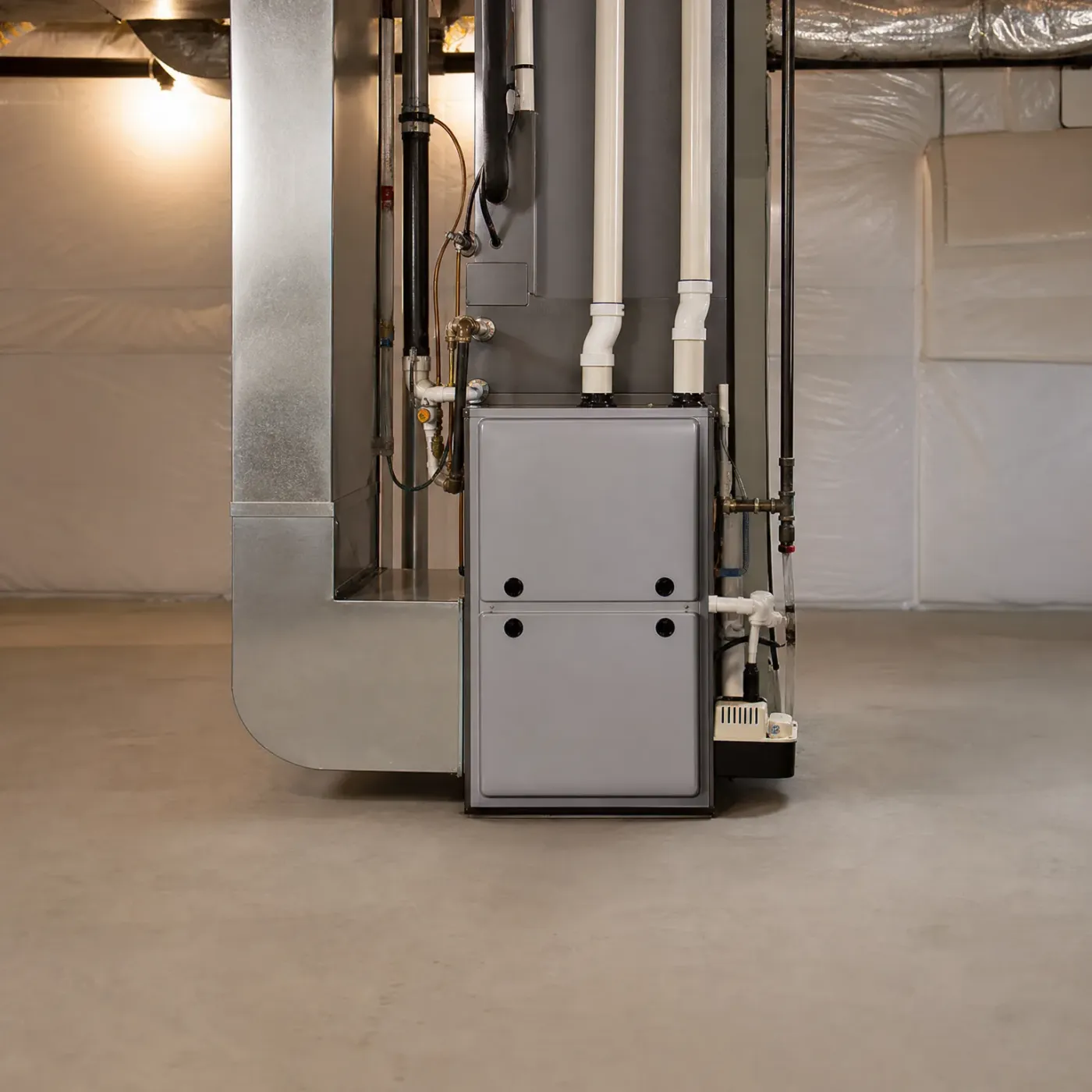
A gray high-efficiency furnace in a basement with white PVC vent pipes, sheet-metal ductwork, copper and black piping, a condensate pump, and insulated walls above a concrete floor.

Furnace running as it should

This is what even heat looks like: steady ductwork, a working condensate pump, flex runs intact along the ceiling. Air moves the same distance to every room. When one room still runs cold with a setup like this, the duct feeding it is the likely problem, not the furnace itself.
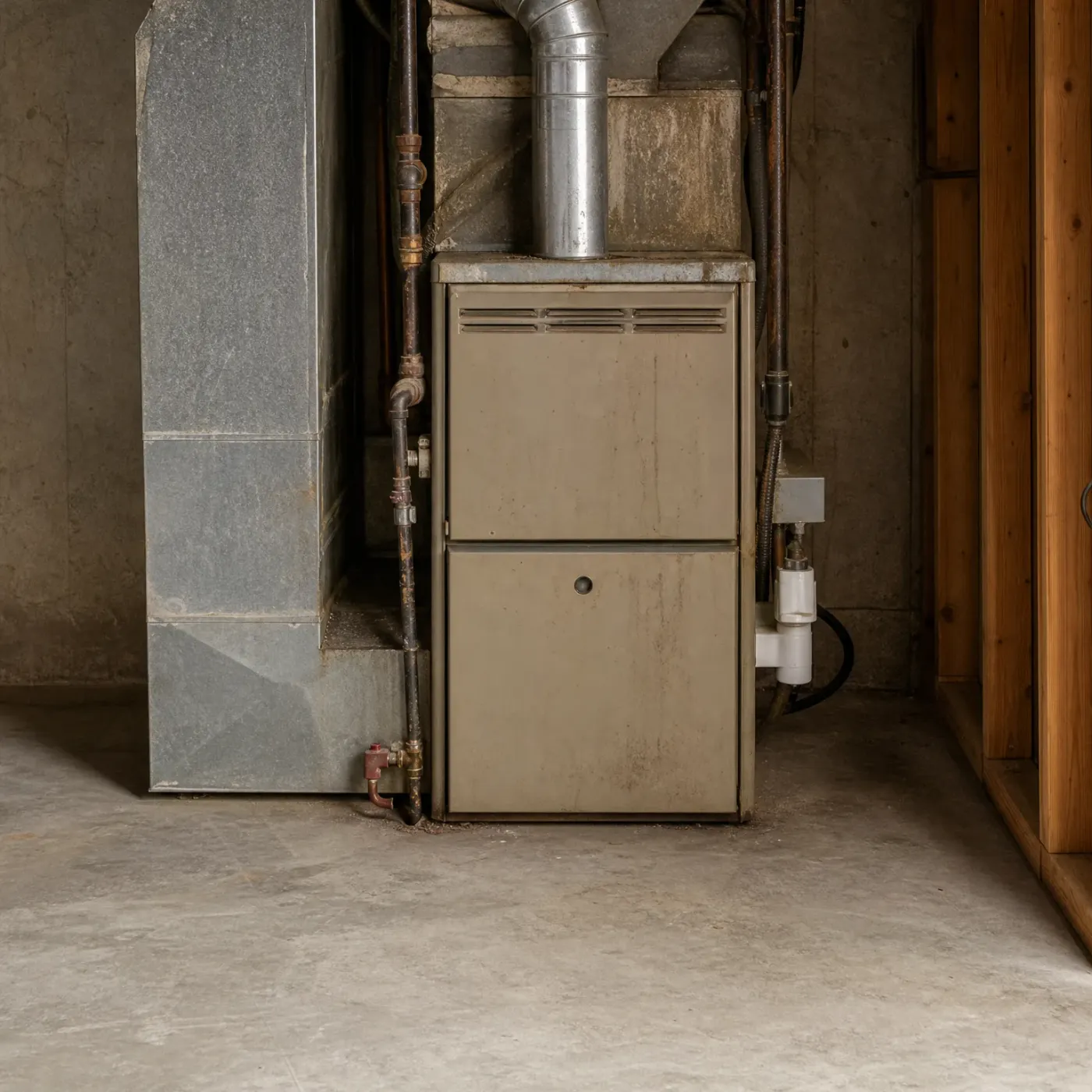

A beige residential furnace stands on a concrete basement floor beside galvanized sheet-metal ductwork, a round flue pipe, copper gas piping, and a PVC condensate line, with a wood-paneled wall at right.

Furnace worth a second look

Age shows up as surface grime, an older flue, panels that have been opened a lot over the years. None of that proves the furnace caused your cold room, but a unit in this shape is worth having a contractor check while they're already tracing the duct run.

Winter nights average 8°F statewide

Those 8 below zero nights put real strain on the run to that one cold room. A furnace can push enough heat to cover a short, clean duct run, but a long run, a crushed section, or a loose connection shows up hardest when it's that cold outside.

NOAA nClimDiv 1991-2020 county normals weighted by homes

A bearded man in a plaid flannel shirt stands in a kitchen looking out a window toward snow-covered shrubs, with a steaming mug on the windowsill and potted plants on a shelf behind him.
A smiling man with dark curly hair in a navy t-shirt sits on a gray couch indoors, with a large-leafed plant and a window in the background.

A local pro for your furnace repair

Fill out one short form instead of calling around.

It costs nothing to send, and you don't have to hire anyone.

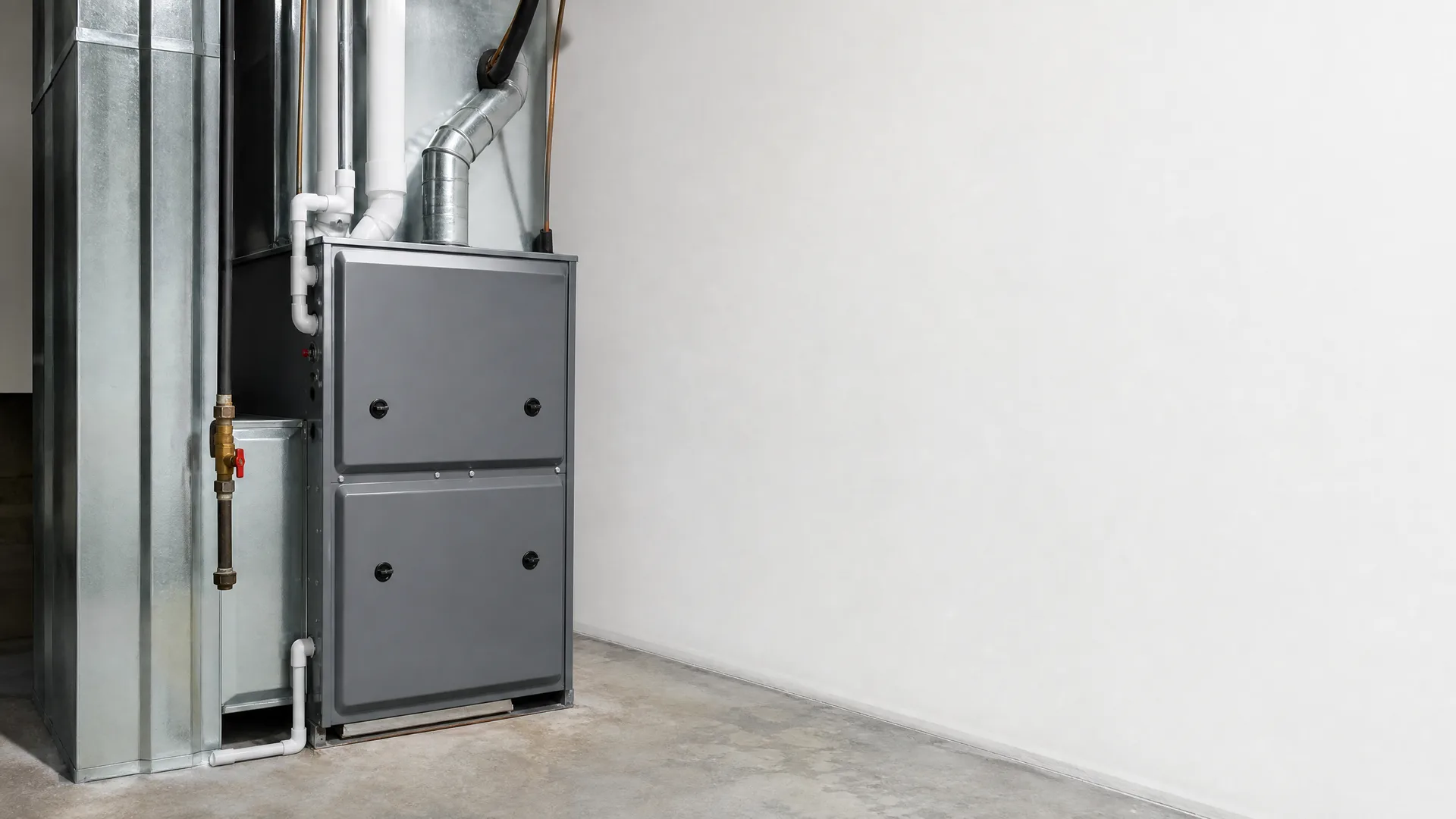
A gray residential furnace with two panel doors stands against a plain light wall in a concrete-floored room, connected to metal ductwork and white and copper pipes.

Why that room loses the most heat

A room at the end of a duct run depends on every foot of duct between it and the furnace. Air cools slightly as it travels, and a long run through an unheated attic or crawlspace loses more heat before it reaches the vent. Add a bend, a loose joint, or insulation packed against the ductwork, and that room ends up with less warm air than a room close to the furnace gets on the same call for heat.

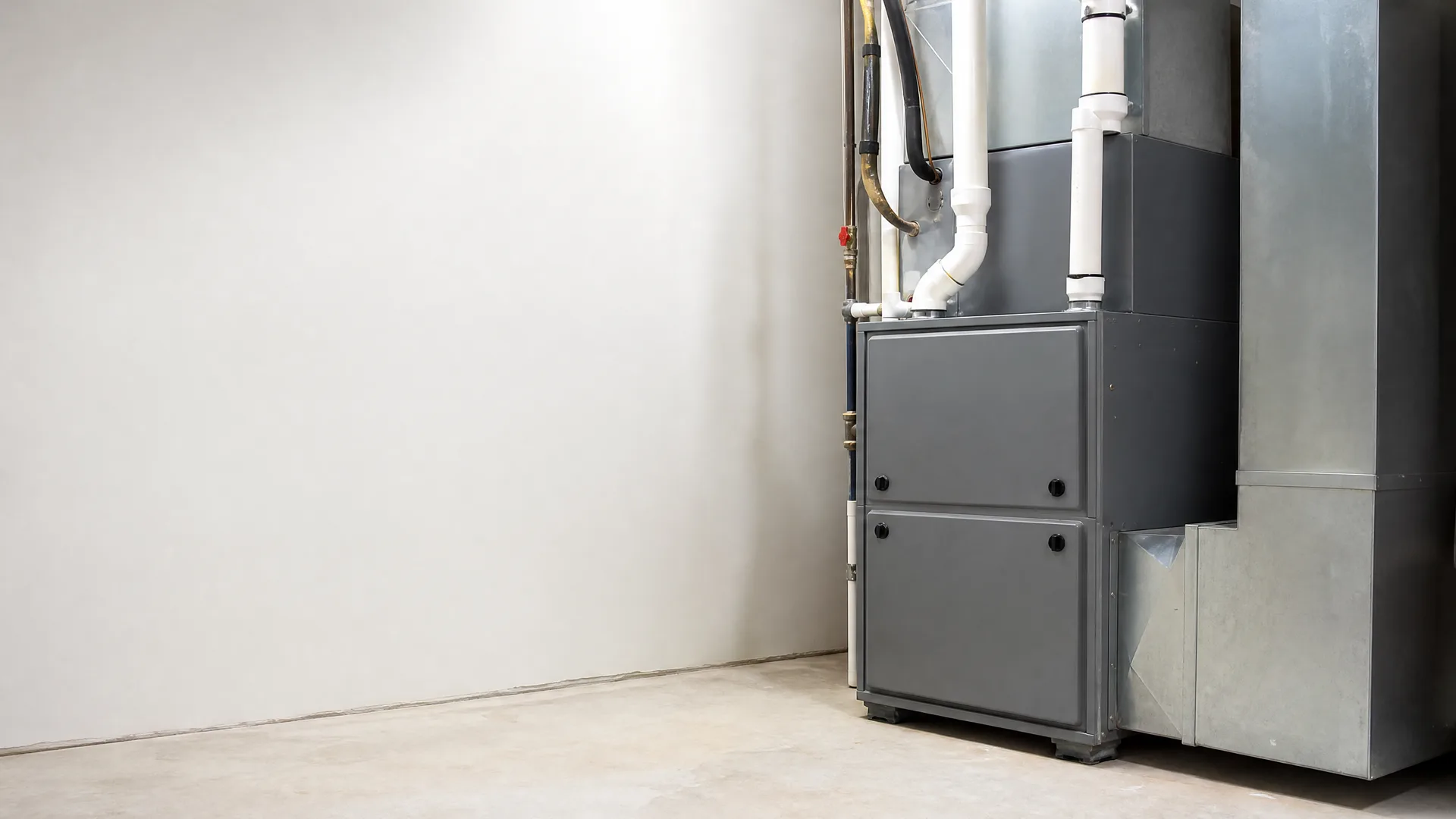
A gray high-efficiency furnace with white PVC venting pipes stands against a plain wall in a basement, connected to sheet-metal ductwork on a concrete floor.

What a tight duct system does instead

Sealed, well-supported ductwork delivers roughly the same air temperature to a far room as it does to one near the furnace. The joints stay fastened, the insulation stays wrapped around the duct instead of pressed against it, and flex runs stay stretched out rather than sagging or kinked. None of that fixes a cold room by itself. It just means the duct feeding it isn't the reason, which points a repair toward the vent, the thermostat zoning, or the room itself.

What is this cold room actually doing to your house

You've probably shut the vent in another room to force more air into the cold one, or run a space heater in there through January and February. Neither one fixes the duct feeding that room, and the space heater adds to your power bill every day you run it. Check the drywall near that vent and around the room's exterior corners for a musty smell or soft spots. A duct that stays cold enough, or a room that never gets enough air to balance humidity, can lead to condensation inside the wall over a winter. If the room sits over a garage or at the end of a long run, that's where this shows up first.

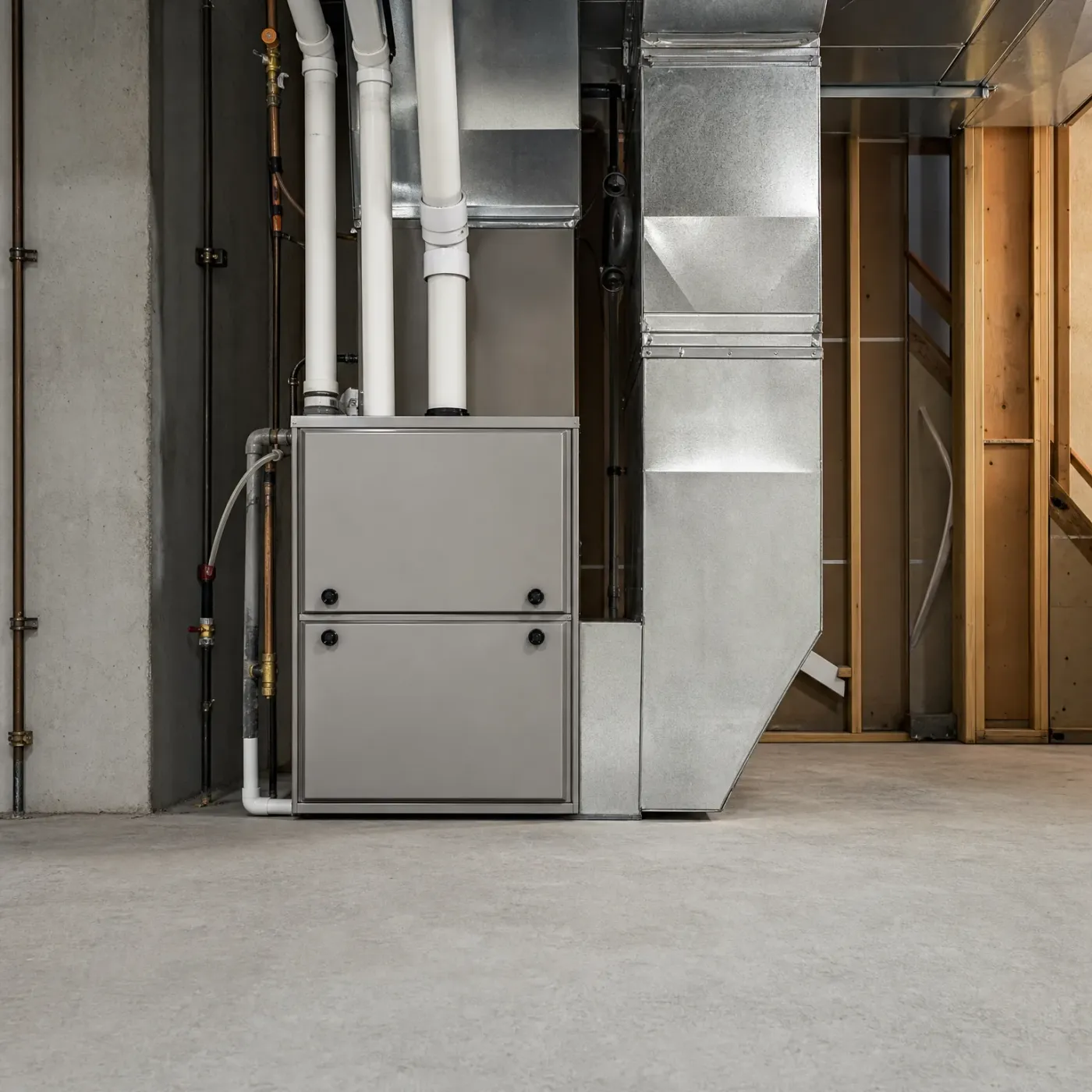
A gray high-efficiency furnace stands on a concrete basement floor beside galvanized sheet-metal ductwork, white PVC vent pipes, copper and black piping, and unfinished wood stud framing.

The furnace doing its job

This is a furnace with no complaints: ductwork run clean overhead, copper and gas lines routed tight along the block wall, PVC condensate pipes draining where they should. Air leaves here at full strength and has a fair shot at reaching every room, including the one that runs cold.

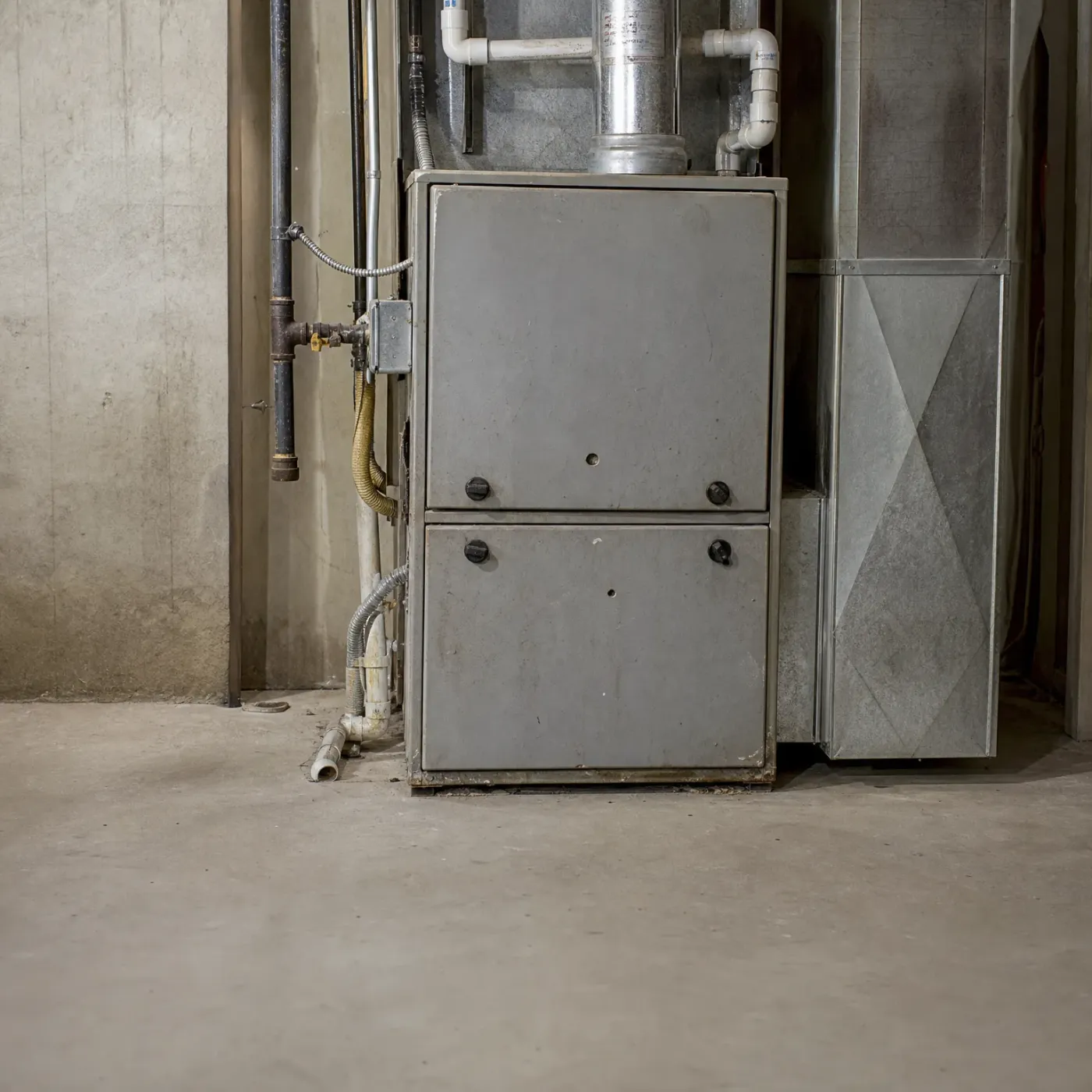
A gray furnace with two access panels stands on a concrete basement floor beside sheet-metal ductwork, with pipes, flexible conduit and an electrical box on the concrete wall to the left.

The furnace and the duct feeding that room

Same furnace, same basement, access panels closed up with quarter-turn fasteners. The unit itself can be running fine here too. The duct that leaves this cabinet and bends off toward that cold room is the part a contractor needs to see to know why the heat isn't getting there.

A man seen from behind raises his hand to wave at a woman standing in the open front doorway of a single-story house with gray shingle siding, white columns and a gabled porch entry.

One cold room has a reason behind it

A duct that's crushed, disconnected, or just too long a run doesn't fix itself, and it won't get better as the weather gets colder. You can keep closing that vent down the hall, keep running the space heater, and keep an eye on the register in that room the way you already do with everything else in the house. But the duct behind the wall still needs a look from someone who can get into the attic or crawlspace and see what's actually happening along that run.

That's the part you can't do from the thermostat. Instead of spending an afternoon calling furnace contractors around the Twin Cities, describing the same cold room three or four times, and weighing quotes against each other, you can get matched with a contractor who takes on this kind of repair and have them reach out to you directly. The duct feeding that room is a known problem with a known fix. Getting the right person out to look at it is the part that's been missing.

A living room corner with a beige upholstered armchair holding navy and striped cushions, a small round wooden side table with a carved bowl and a potted green plant, a framed landscape picture on a pale wall, built-in shelving, and a curtained window.
Interior room corner with sunlight from a window, showing peeling paint and damaged plaster on the wall above a white baseboard, a wooden cabinet with a pale bowl on top, hardwood floor and a patterned rug.
Interior corner of a room with tan walls, white profiled baseboard and window trim, a wood-plank floor in sunlight, and green foliage visible through the window.
An empty room corner with cream walls, white baseboard, two windows with deep sills showing green foliage outside, and a wood plank floor lit by sunlight.
Empty room corner with beige walls, white beadboard wainscoting, chair rail and baseboard, a window with green foliage outside, and sunlight casting leaf shadows on the wall above a wood floor.
Sunlit room corner with a multi-pane window, beige walls, white baseboard, wood floor with a woven rug, and a dark wooden cabinet holding a ceramic table lamp below a framed picture.

Get the right pro for your furnace

Explain the job once and skip repeating it on every call.

Get a local pro

No charge to send it. You decide if you hire them.