

Why your furnace makes a banging noise in Minnesota

Step 1 of 3: Equipment

Why does my furnace make a banging noise when it kicks on?

A bang when the burners light usually happens right at startup, loud enough to make you wonder if something just broke. It tends to show up more once the weather turns cold and the furnace is running harder and longer to keep the house warm. You want to know if this is a quick fix or a sign of something worse before it happens again at two in the morning.

Gas is building up before it lights, then igniting all at once

That bang is small delayed ignition. Gas flows into the burner chamber for a second or two longer than it should before the igniter catches it, so instead of a steady light-up you get a small pocket of gas that ignites all at once. The usual cause is a dirty burner or a weak flame sensor, and both get worse the longer a furnace runs without service. With Minnesota winters asking a lot of your furnace for months at a stretch, a bang that shows up in November tends to get louder and more frequent by January. Left alone, repeated small ignitions can stress the heat exchanger, which is not something to let ride through a full winter.

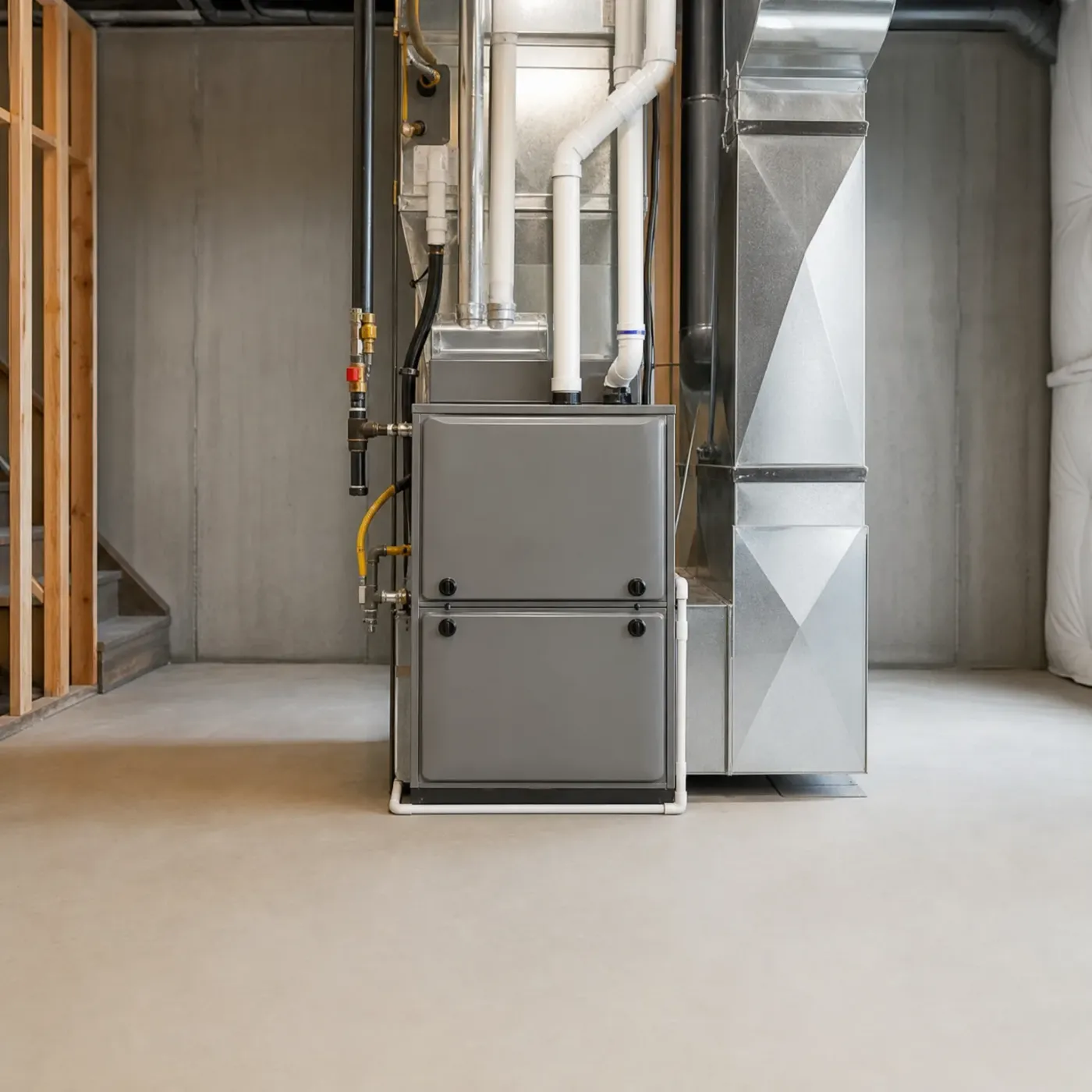
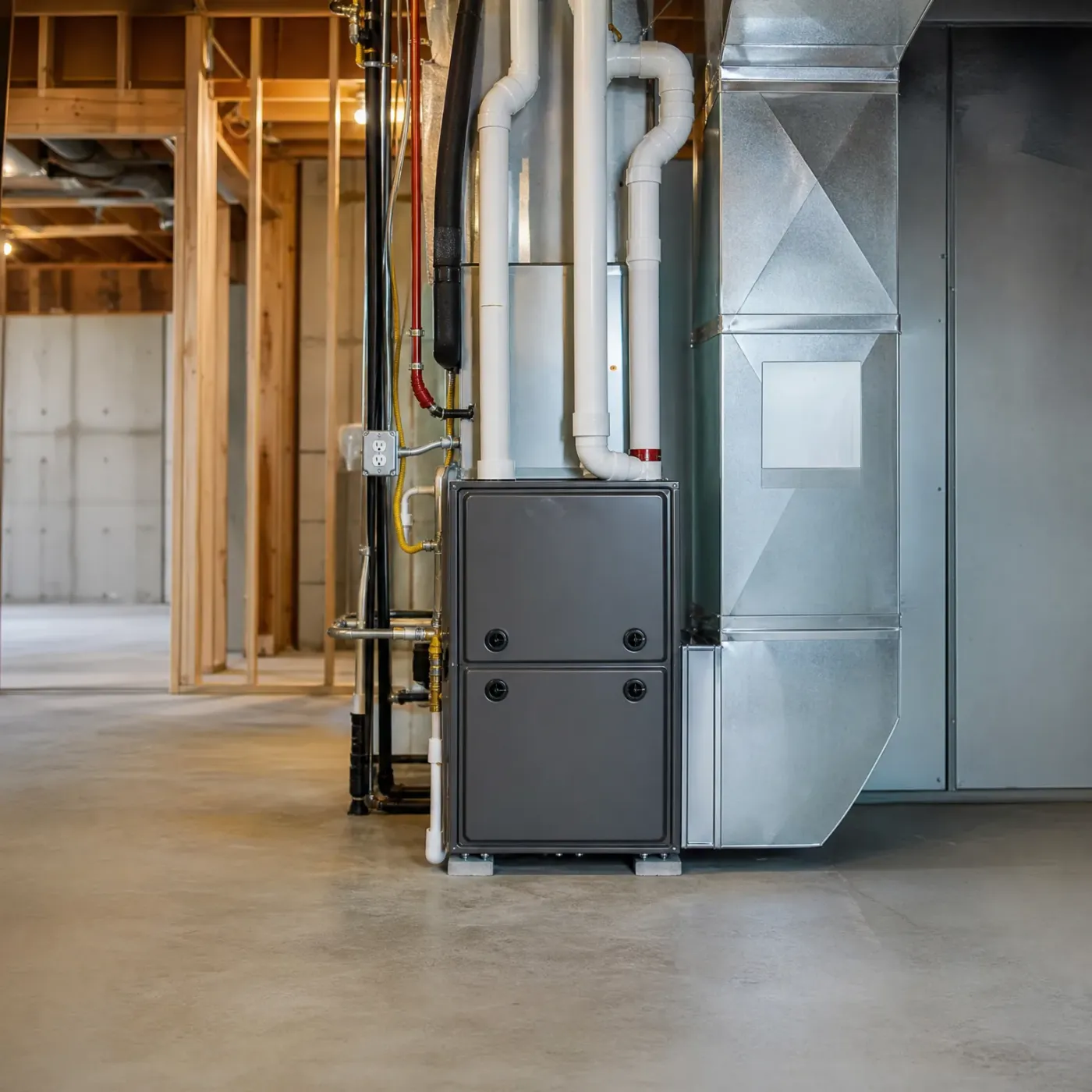
A gray high-efficiency furnace in a basement with PVC venting pipes, a yellow gas line, metal ductwork, concrete walls and floor, and a wood-framed stairway at left.
A quiet, even startup like this means the burners are lighting right away, with no gas pooling first.
A beige furnace with a louvered front panel and metal ductwork stands on a concrete basement floor beside pipes and a white cylindrical water heater.
Louder bangs, loud enough to rattle the ductwork, often mean a delay at the burners that's gotten worse over time.

A bang at startup is easy to shrug off the first few times it happens. But once it's loud enough to rattle the ductwork, it means gas is pooling for a second before it catches, and that delay tends to get worse, not better, as the winter goes on. You'll hear it most on the coldest mornings, right when you need the furnace to just work and keep everyone warm. Left alone, that delayed ignition puts more strain on the heat exchanger every time it happens, and a cracked heat exchanger is not a cheap fix. It can also mean a small amount of unburned gas is escaping into the air before it lights. With a gas furnace running hard through a Minnesota winter, that's not something to wait out. The noise itself won't damage anything in one night, but the cause behind it, a burner that's slow to light, doesn't fix itself and usually gets louder with time.

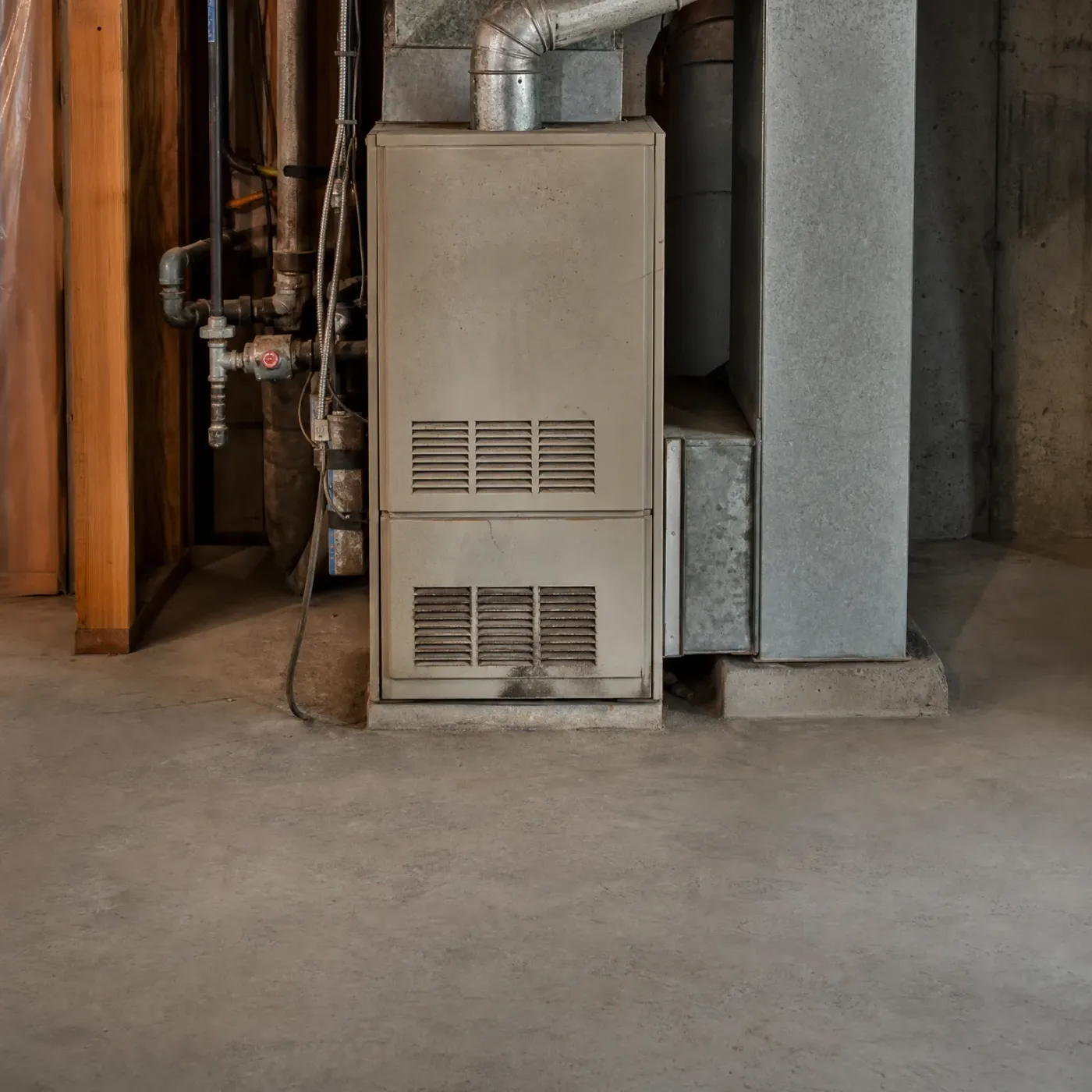
A beige furnace with two louvered front panels stands on a concrete basement floor beside galvanized ductwork, metal pipes, and a wooden post.
Before you get your furnace repair
A gray high-efficiency furnace stands on a concrete basement floor beside galvanized sheet-metal ductwork, with white PVC vent pipes, gas and water lines, and unfinished wood framing behind it.
After you get your furnace repair

Every gas furnace lights the same way. An igniter near the burners heats up first, and gas only starts flowing once it's hot enough. When that works right, the burners catch fast and even, and startup is quiet. The bang happens when something slows that handoff down. Dirty or misaligned burners light unevenly, so one section catches a beat after the rest. In that gap, a little gas collects in the burner chamber, and when it finally lights, it goes all at once instead of smoothly. A dirty flame sensor causes a similar problem from a different angle: the furnace lights, can't confirm the flame, shuts off, and tries again, and each retry is another chance for gas to pool first. Burners that are already out of adjustment don't hold steady through a Minnesota winter. The furnace is cycling on and off constantly once it's cold out, and every extra cycle is another chance for that delay to show up. A cracked heat exchanger is a separate issue, and it can make its own banging or popping as the metal heats and expands while the burners run.

What's actually happening inside

  • Gas furnaces light with an igniter near the burners, and that igniter has to glow hot enough before gas is allowed to flow.
  • If the burners are dirty or slightly out of position, the flame doesn't spread across them evenly, so part of the burner lights a beat late.
  • That delay lets a small amount of gas build up in the burner chamber before it catches, and the bang is that pocket of gas igniting all at once.
  • The same thing can happen if the flame sensor is dirty, since the furnace may try to light, shut off, and try again before it catches.
  • A cracked heat exchanger can also make banging or popping sounds as the metal expands once the burners are running.
  • Burners that are out of adjustment tend to get worse through the winter as the furnace cycles on and off more often.
An older woman with short gray hair in a cream cable-knit turtleneck sweater smiles while looking to the side in a wooden kitchen, with a round loaf of bread on a board in the foreground and a lit candle by a dark window.
A woman with dark hair in a bun sits wrapped in a chunky knit blanket on a couch with a child resting his head on her shoulder, eyes closed, beside a lit lamp and bookshelf indoors.
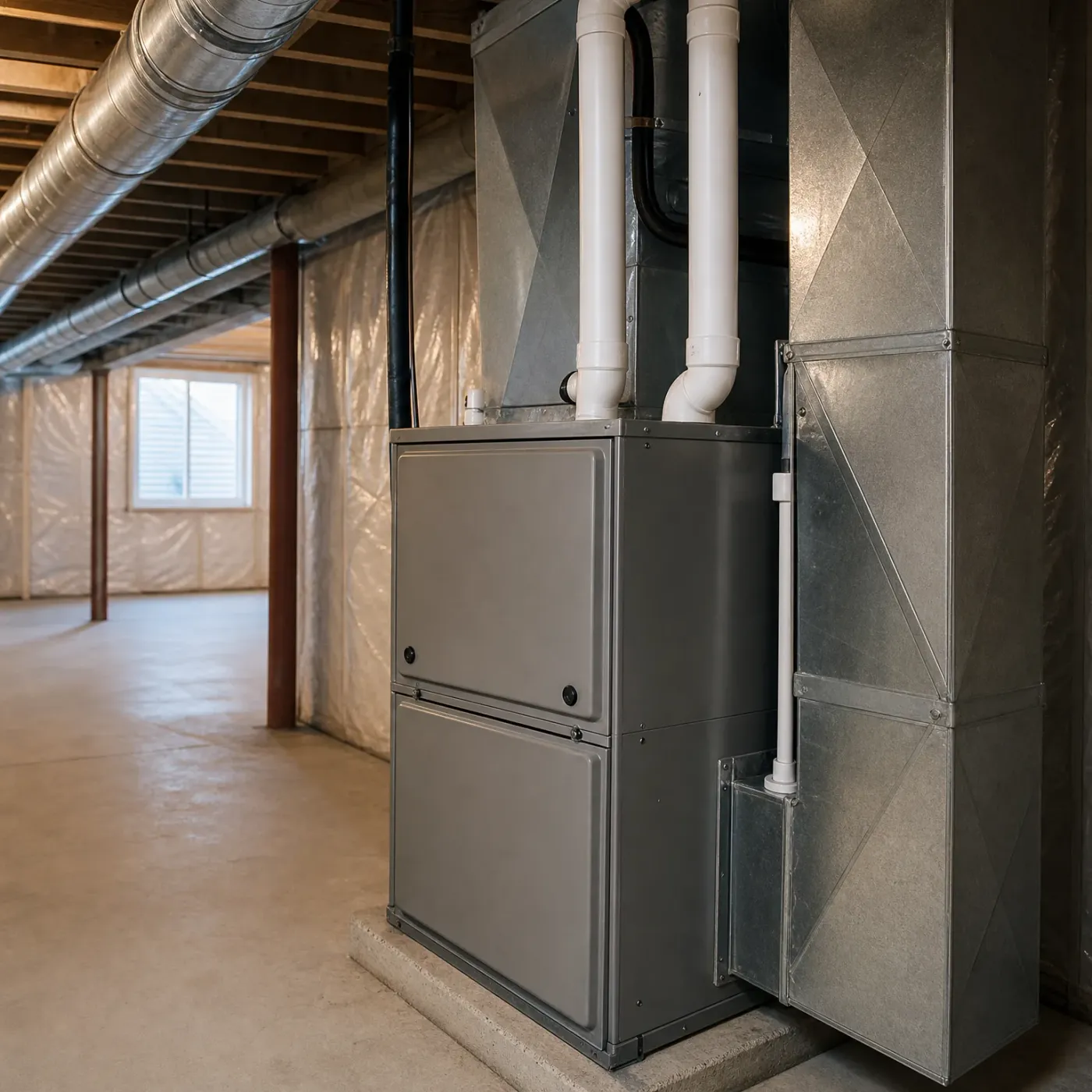
A gray high-efficiency furnace on a concrete pad in an unfinished basement, with white PVC vent pipes, galvanized sheet-metal ductwork, insulated walls and a small window in the background.

A pro who works on furnaces

Send the request today and let a furnace pro reach out to you.

Describe your furnace job, and a local pro who handles it gets in touch.

Connect with a pro

No fee to send it, and nothing to sign.

Wait It Out or Get It Checked

Leave it alone

  • The bang might not get worse for weeks, so there's no sign telling you to act today.
  • A furnace that's banged for years without failing can keep doing that for a while longer.
  • Skipping a repair now means one less thing to schedule during a cold snap.
  • If the noise only happens once in a while, it may not be worth the trip out yet.
  • Waiting costs you nothing up front, but you're guessing at how much time you actually have.

Get it looked at

  • A furnace that's banging louder each week has a delay at the burners that's getting worse, not fixing itself.
  • Dirty or shifted burners can be cleaned and reset before the delay turns into something that cracks the heat exchanger.
  • A technician can check the igniter and burner alignment in one visit and tell you what's actually causing the delay.
  • Catching it now means you're not troubleshooting a dead furnace on a night it's below zero outside.
  • Minnesota winters run long, and a furnace that struggles to light reliably in November usually struggles more by February.
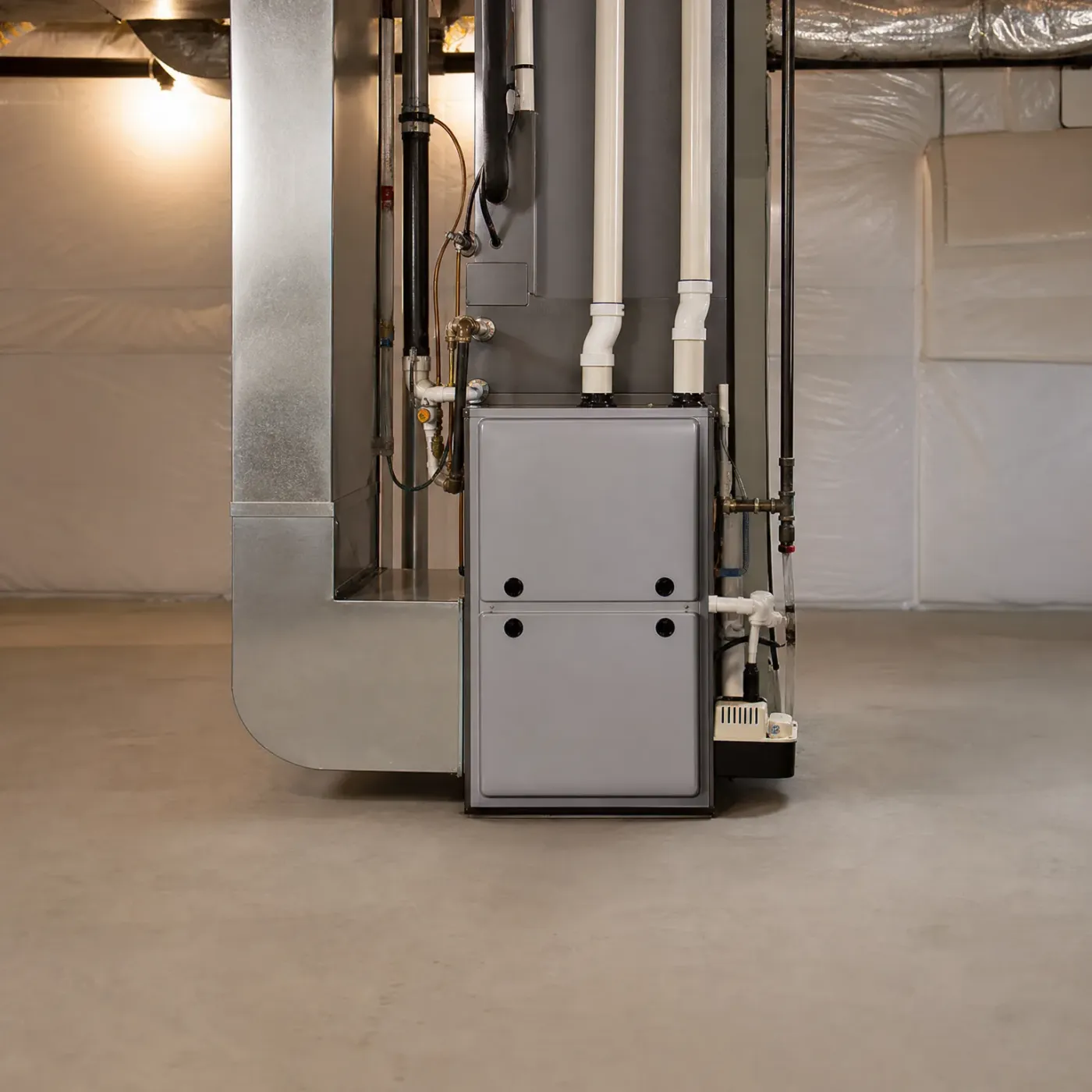
A gray high-efficiency furnace in a basement with white PVC vent pipes, sheet-metal ductwork, copper and black piping, a condensate pump, and insulated walls above a concrete floor.

Furnace running right

This is what a clean startup looks like. The ductwork, the gas lines, the condensate drain all doing their job without a sound out of place. A furnace like this lights on the first try, every time, and the only noise you hear is air moving through the ducts.
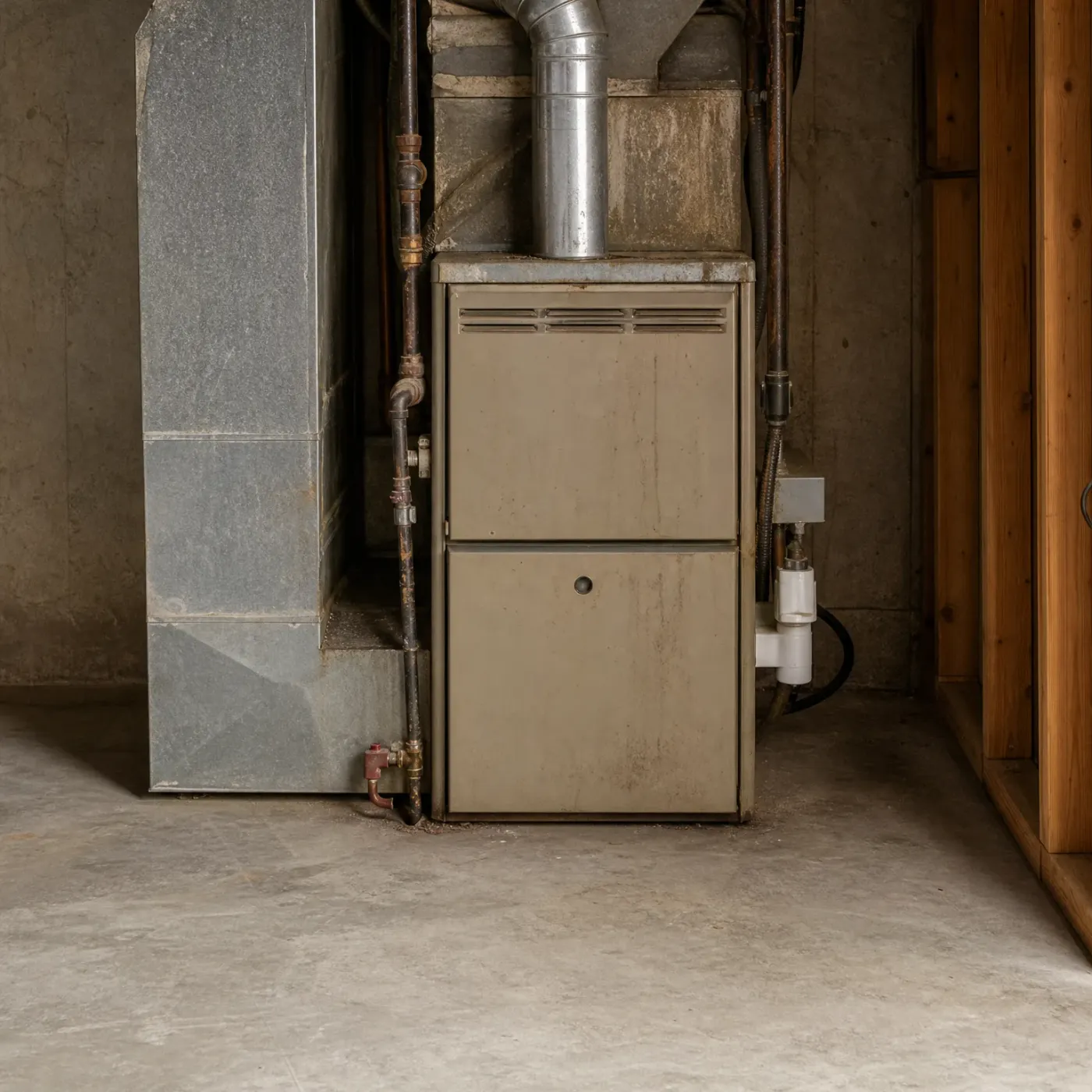
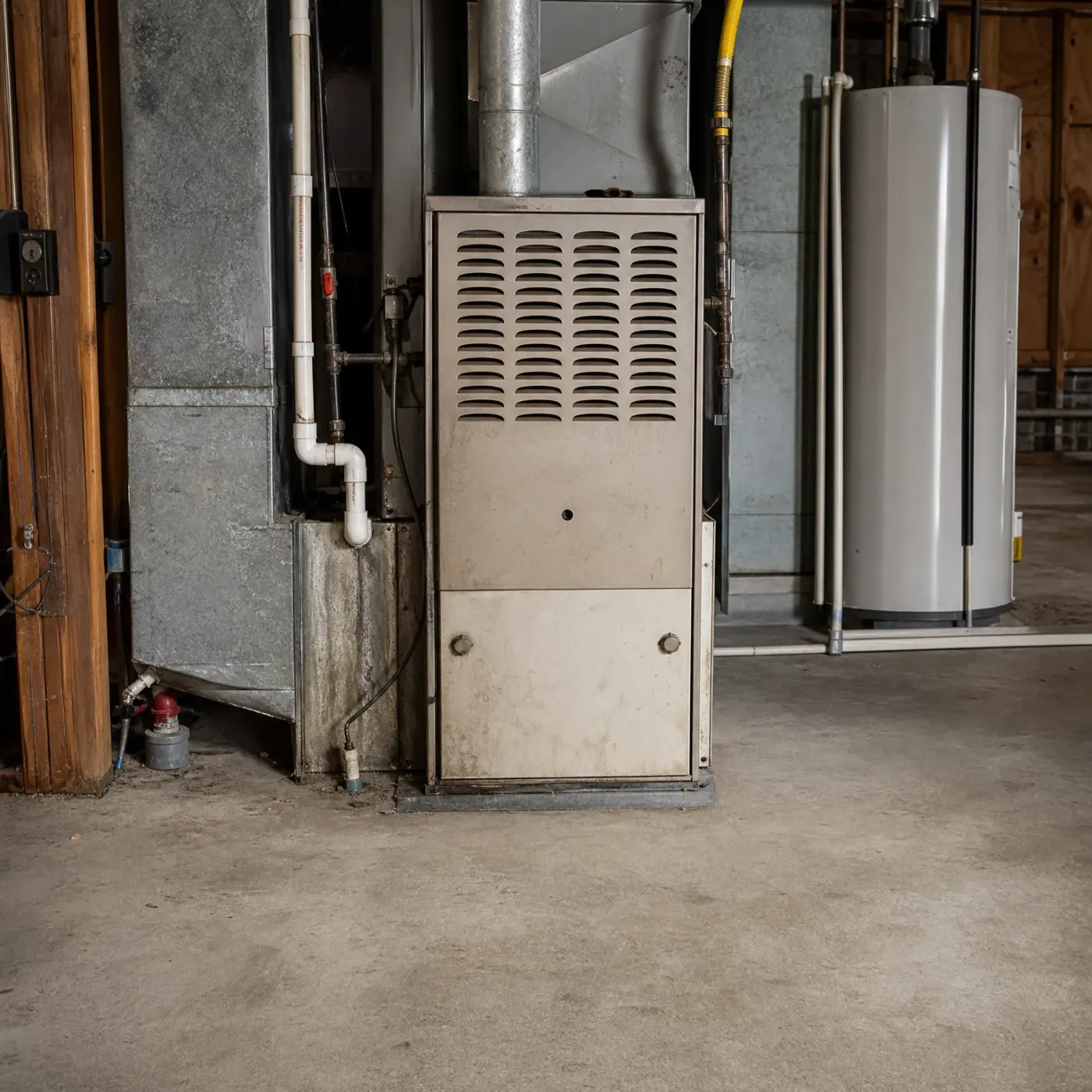
A beige residential furnace stands on a concrete basement floor beside galvanized sheet-metal ductwork, a round flue pipe, copper gas piping, and a PVC condensate line, with a wood-paneled wall at right.

Furnace in trouble

An older furnace like this one has had years for dust to settle on the burners and the flue to pick up grime. That's often where a delayed light-off starts. Nothing here looks broken from the outside, but the bang on startup is the furnace telling you something underneath has changed.

Winter nights average 8°F statewide

Winter nights here average 8°F, and your furnace is what's standing between that and a cold house. At that temperature it's firing often, and every startup is another chance for that delayed bang to show up.

NOAA nClimDiv 1991-2020 county normals weighted by homes

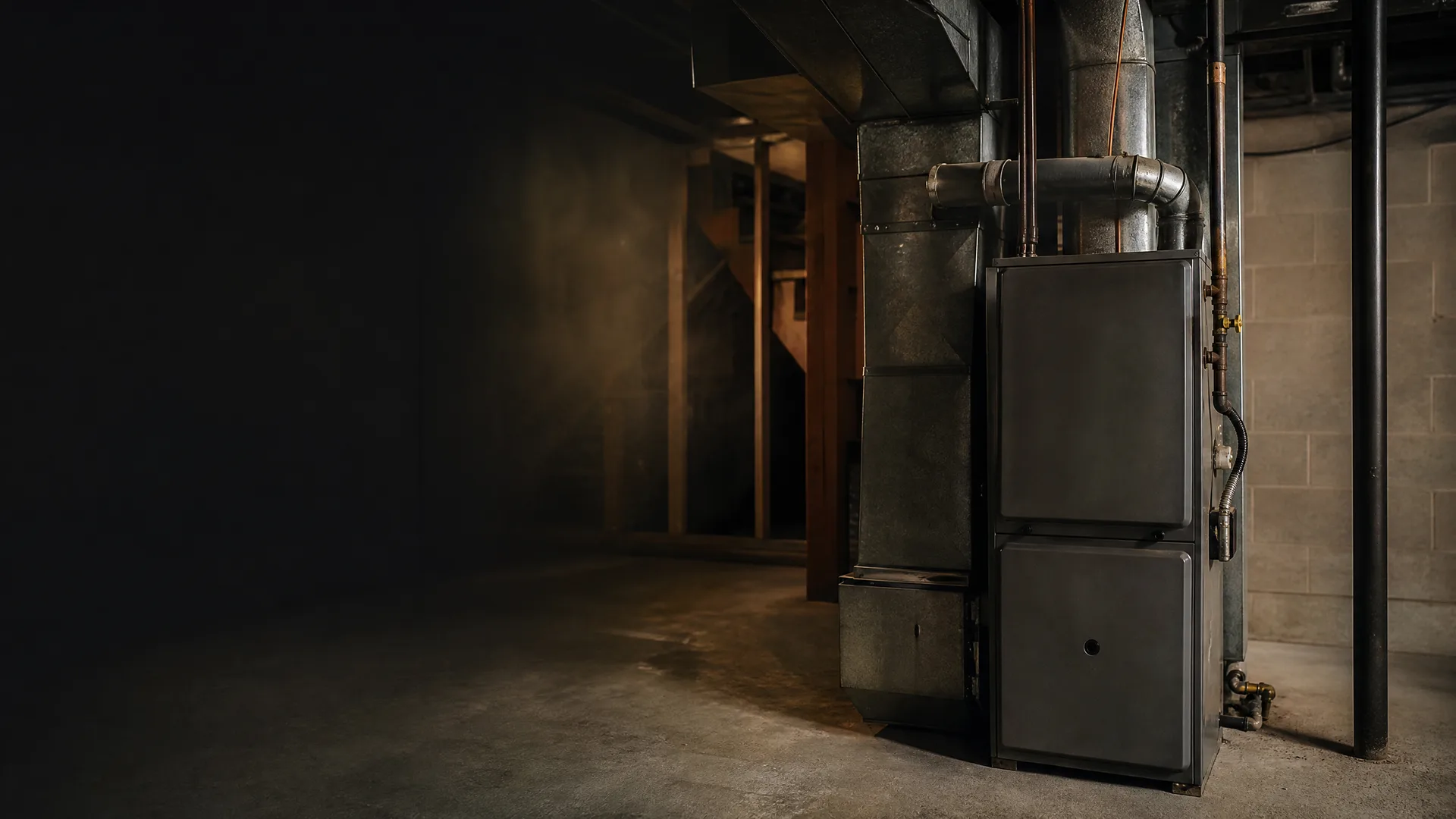
A furnace with sheet-metal ductwork and copper piping stands against a concrete block wall in a dim basement with a bare concrete floor.

It's past six and the basement windows are already black. You went down to grab something off the shelf by the furnace and the cold hit you before you flipped the light on. The furnace sits there dark, not a sound, not that low hum it usually has. A thin haze hangs in the air near the cabinet, catching the light from the stairs, the kind of dust that stirs up when a furnace hasn't run in a while. You wait for the click and the bang you've been hearing all week. Nothing happens. Upstairs, somebody's going to ask why it's gotten cold.

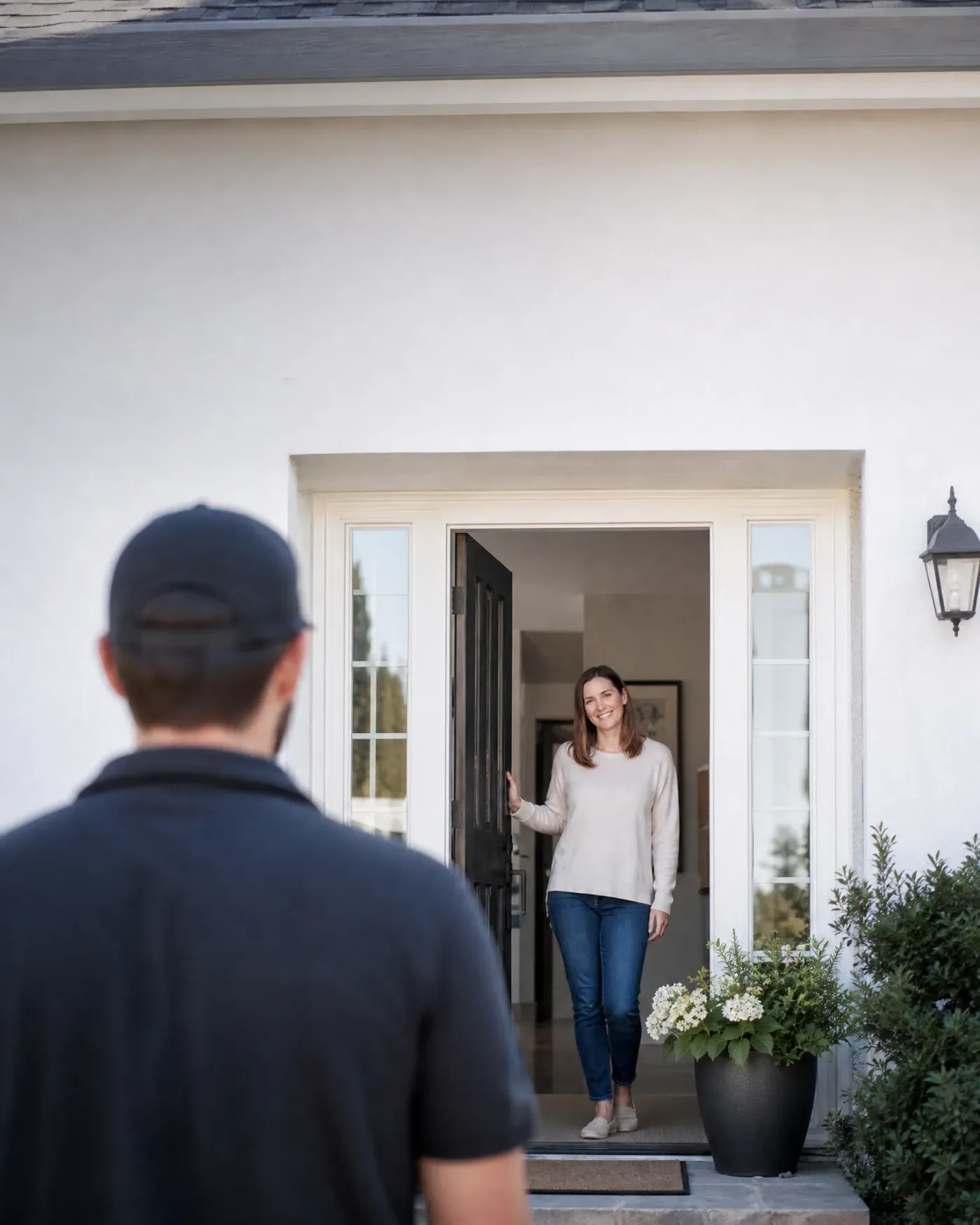
A woman stands in the open doorway of a white stucco house holding the dark door, facing a man in a black cap and shirt seen from behind in the blurred foreground, with a potted flowering plant beside the entry.

What the bang is telling you

A delayed bang at startup comes from gas pooling for a second before it catches, and that delay doesn't fix itself. It gets a little worse each cold snap, through the rest of a Minnesota winter. Catching it early usually means a smaller job than catching it late.

You don't have to figure out which part is causing it before you ask for help. A furnace repair contractor can check the igniter, the burners, and how they're lining up, and tell you exactly what's going on. Once you send the request, finding the right person for your furnace isn't on your plate anymore. A contractor who handles this gets matched to your situation and reaches out to you directly.

Interior corner of a living room with a beige upholstered sofa and dark cushion in the foreground, a ceramic vase of leafy branches on a dark side table by a curtained window, a framed picture on the wall, and a wood-surround fireplace at right.
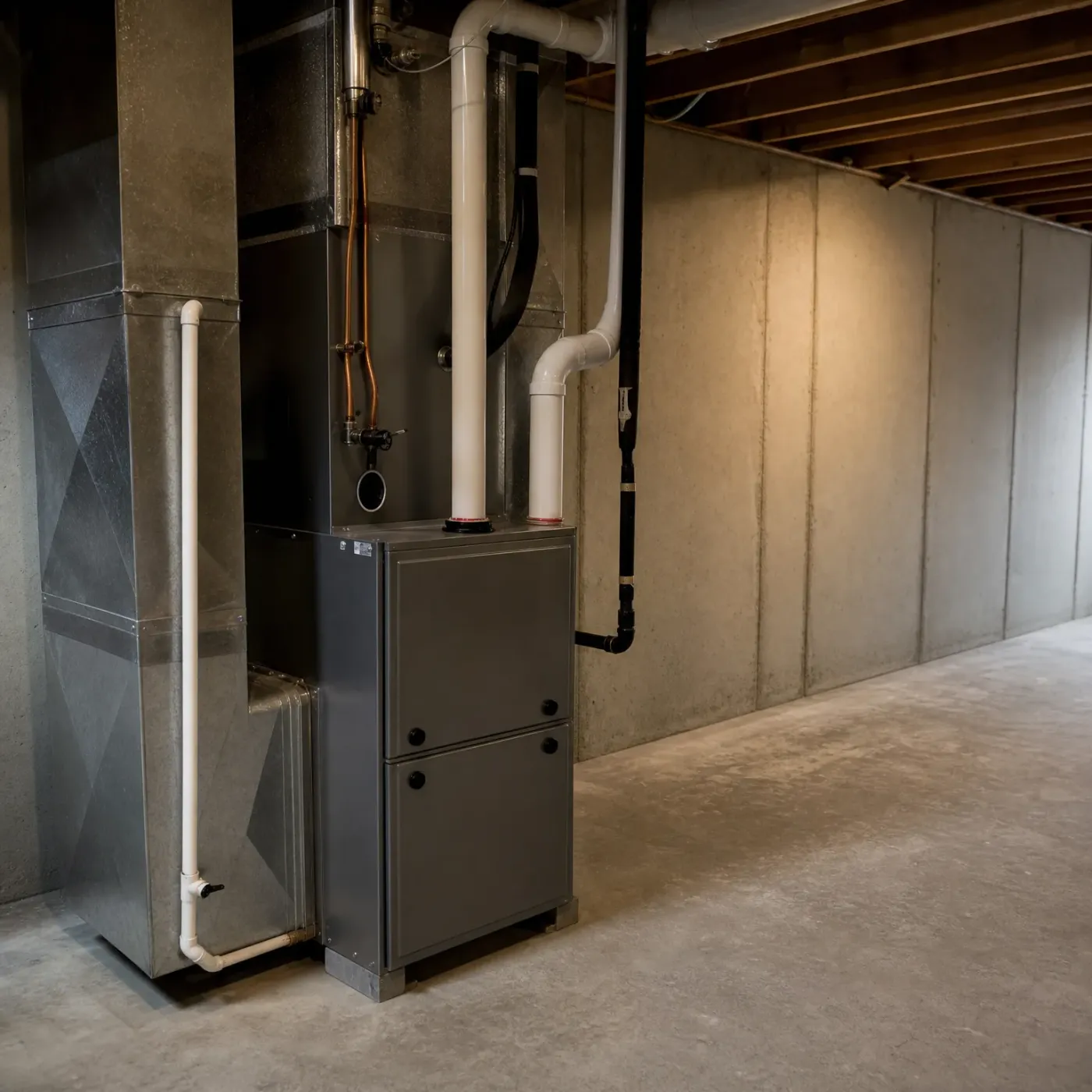
A gray high-efficiency furnace in an unfinished basement with concrete walls and floor, connected to sheet-metal ductwork, white PVC vent pipes, and a black drain line beneath exposed wood joists.

Get your furnace to the right pro

Find a pro near me

Get the furnace repair search off your mind today.

Sending the form costs nothing.