
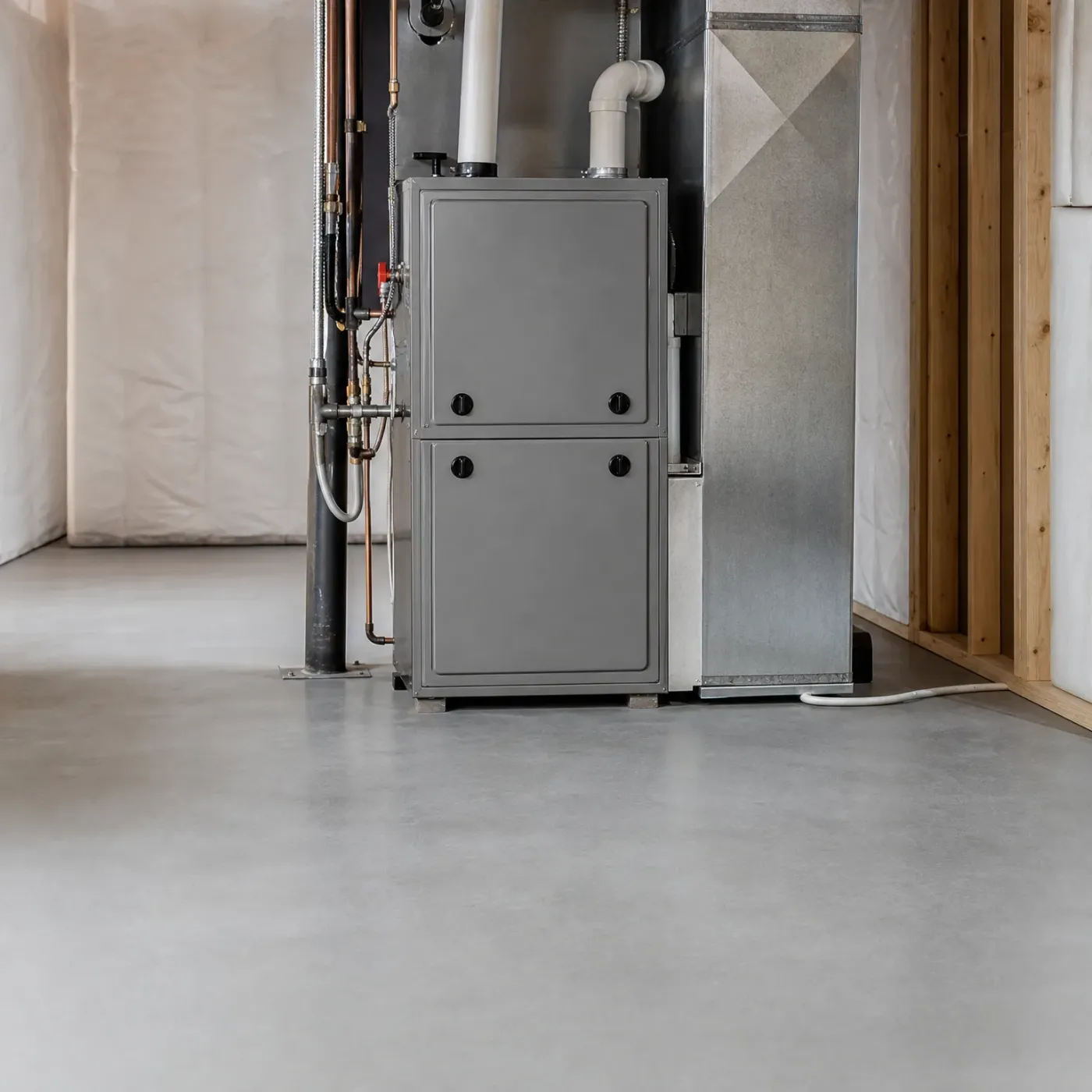
Running clean
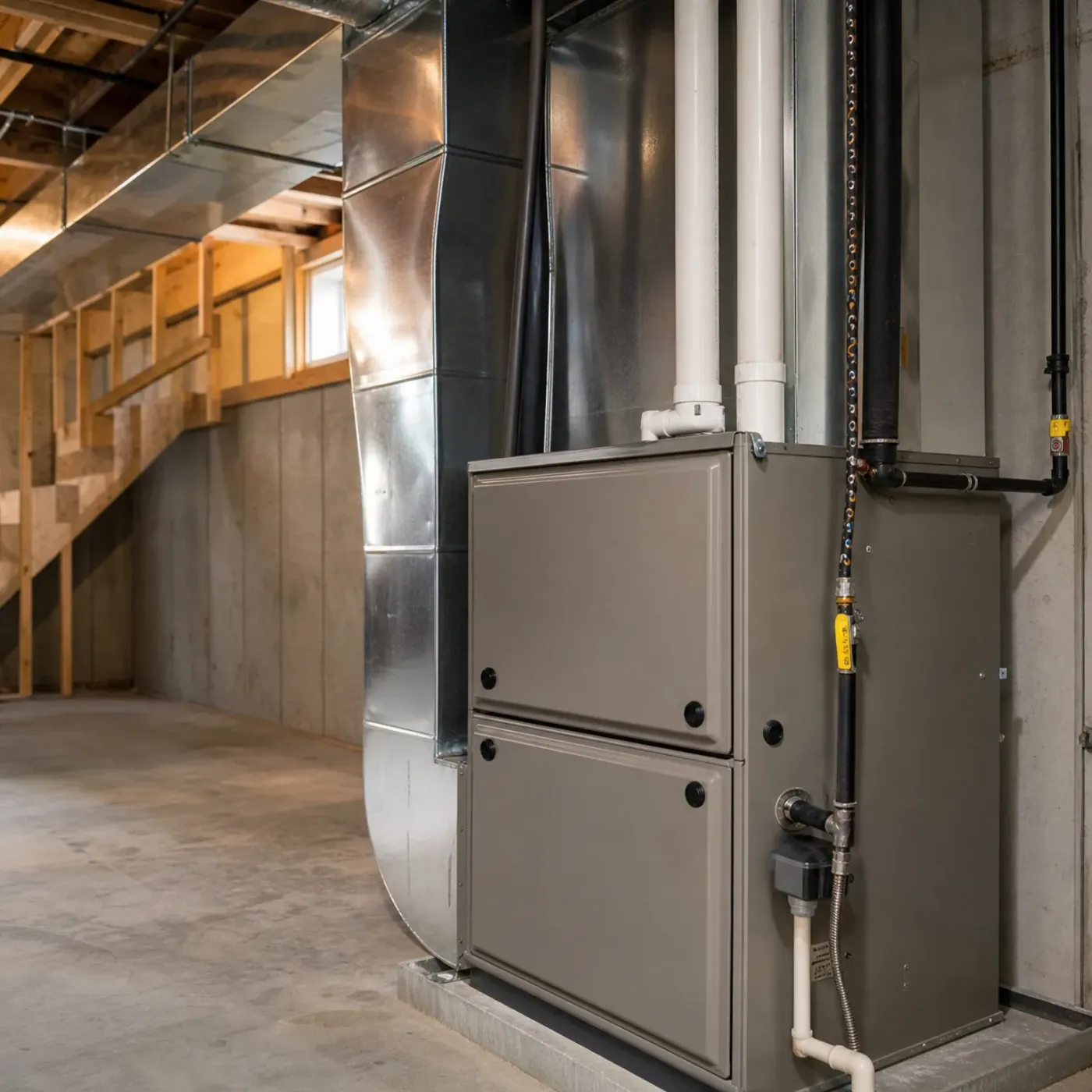
This is a furnace that's fine. The burners fire, the blower pushes warm air up through the ductwork, and the gas and condensate lines along the wall are doing their job quietly. No smell, no rust, nothing to look at twice.
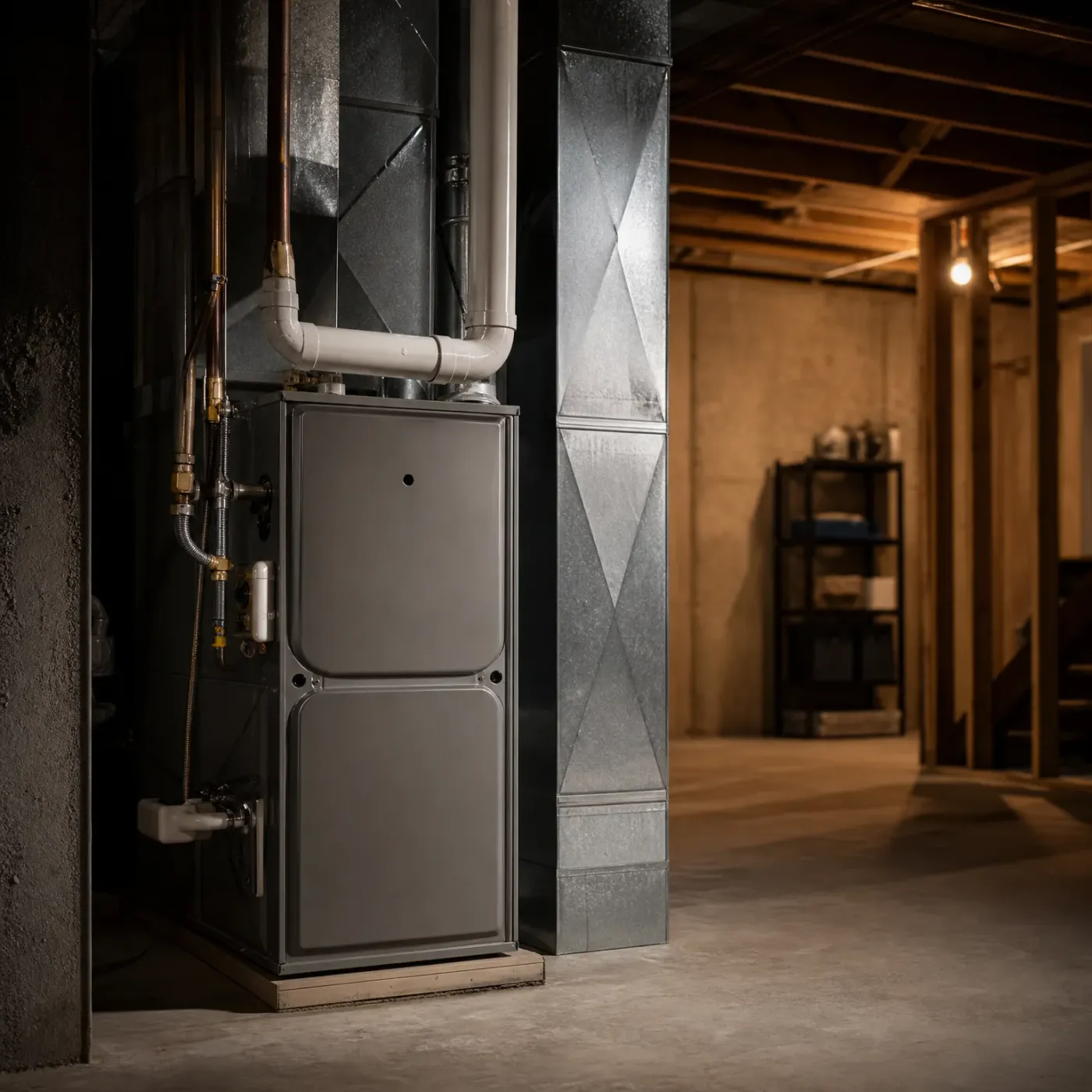
Describe it once
A burning smell from your furnace can mean dust burning off after it sat idle, or it can mean something inside is wearing out and needs a look. This page walks through what's likely going on and what to check first. Skip the search for who to call: tell us what's happening and get matched with a licensed Minnesota contractor who works on furnaces all winter, instead of calling around and repeating yourself to each one.
Skip the searchA burning smell when your furnace first kicks on for the season is usually dust that settled on the heat exchanger over the summer, and it should clear up within an hour of run time. If the smell keeps coming back, or it smells sharper, like hot metal or burning plastic, that's different. A furnace that's been running steadily since October can develop a cracked heat exchanger, a failing blower motor, or wiring that's overheating where it shouldn't be. A metallic smell often points to a motor bearing running dry. A plastic smell can mean a part near the blower is melting from too much heat. None of these go away on their own, and running the furnace while the smell continues risks more than an inconvenience. If your furnace is still under warranty or came with the house, it's worth having someone look at it before the cold really sets in.




Your furnace sits unused most of the summer, and dust settles right on the heat exchanger and burners. When it fires up again, that dust burns off, and the smell fades once it's run a while. Past the first hour, a lingering smell points somewhere else. The blower motor is the part moving air across the burners and out through your ducts. If it's weak, or the filter behind it is clogged, air stops moving the way it should and heat builds up inside the cabinet instead of leaving through the vents. That's a different smell too. Burning plastic means something electrical, not dust, since dust smells more like scorched paper. A sharp, metallic smell can mean the igniter is failing or wiring insulation is melting against something hot inside the cabinet. The one that matters most is a cracked heat exchanger. It can smell sharp or linger longer than it should, and it can also leak carbon monoxide into your home, which is why that kind of smell needs a look before you run the furnace again.
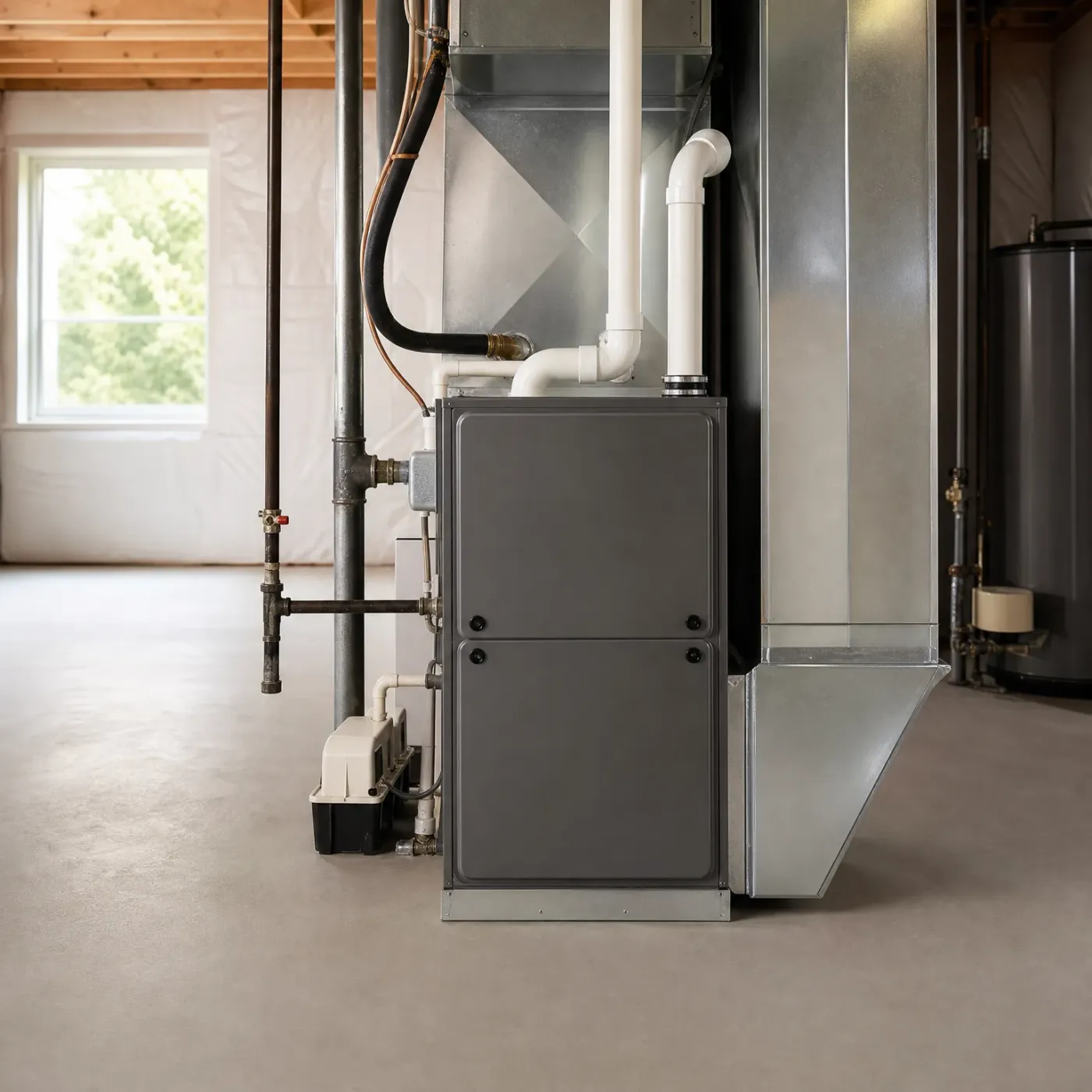
The pro who reaches out is licensed in Minnesota.
Describe what your furnace is doing once, in one form.
Sending the form costs nothing.
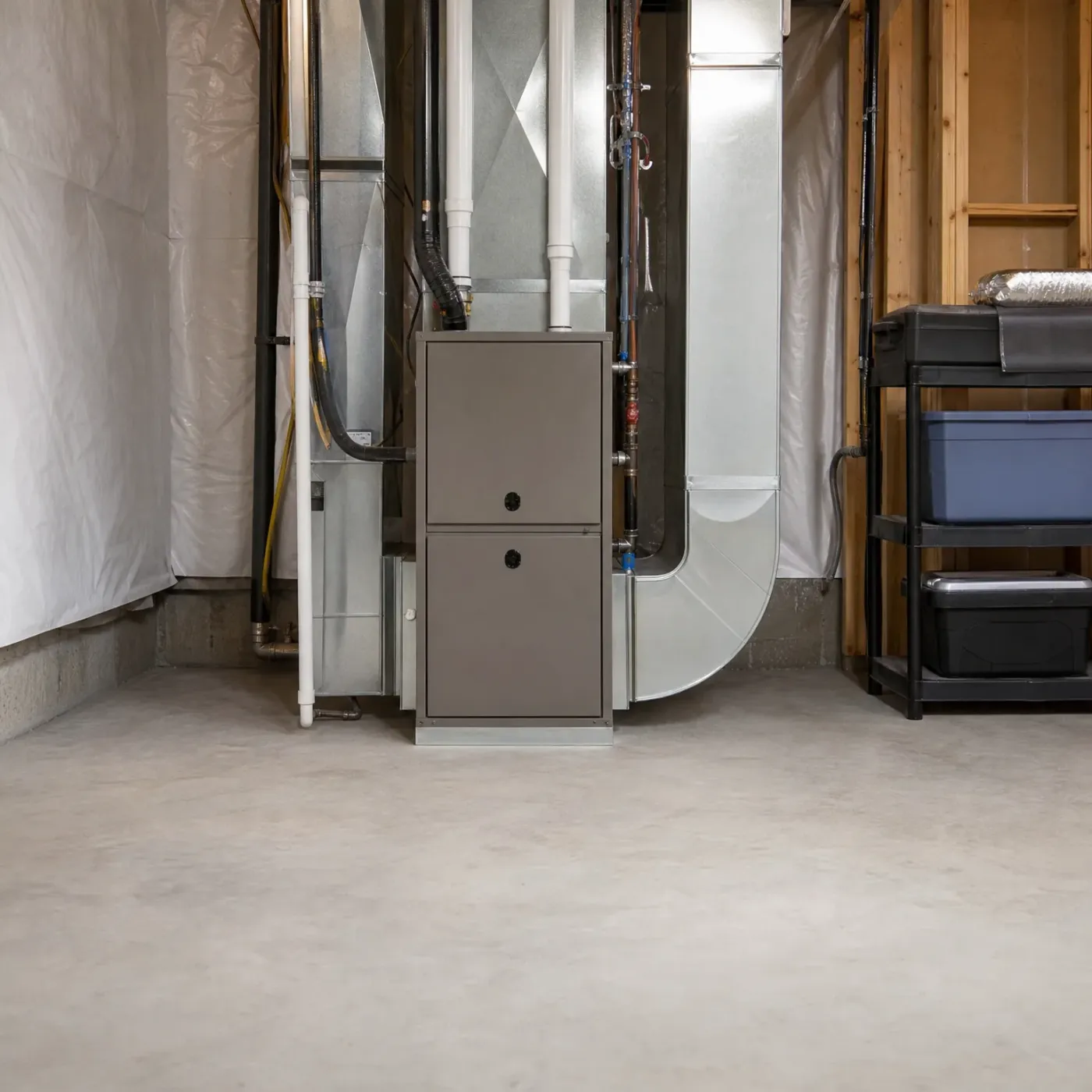
Cold burners and a dusty heat exchanger ignite when the furnace starts.
Trapped heat burns that dust off over the first few minutes.
A blower motor running hot gives off a sharper, lasting smell.
Dust pulled past a dirty filter can scorch on the burners too.
You turn the furnace on and the house starts smelling like something hot. Maybe it's faint, gone in a few minutes, and the air coming out of the vents is warm like it should be. Or maybe it's still there an hour later, and now it smells less like dust and more like hot metal or melting plastic, maybe near the thermostat or close to the furnace itself. You might hear the blower working harder than usual, or notice one room staying cooler than the rest. Left alone, a smell that doesn't clear up points to a part overheating, and that part can fail outright and leave the house without heat on a cold night.


At 8°F on a typical winter night, your furnace is running for long stretches, not short bursts. That kind of steady runtime puts more hours on the blower motor and burners, so a smell that would fade in a mild climate has more time to point to real wear.
NOAA nClimDiv 1991-2020 county normals weighted by homes
This is a furnace that's fine. The burners fire, the blower pushes warm air up through the ductwork, and the gas and condensate lines along the wall are doing their job quietly. No smell, no rust, nothing to look at twice.
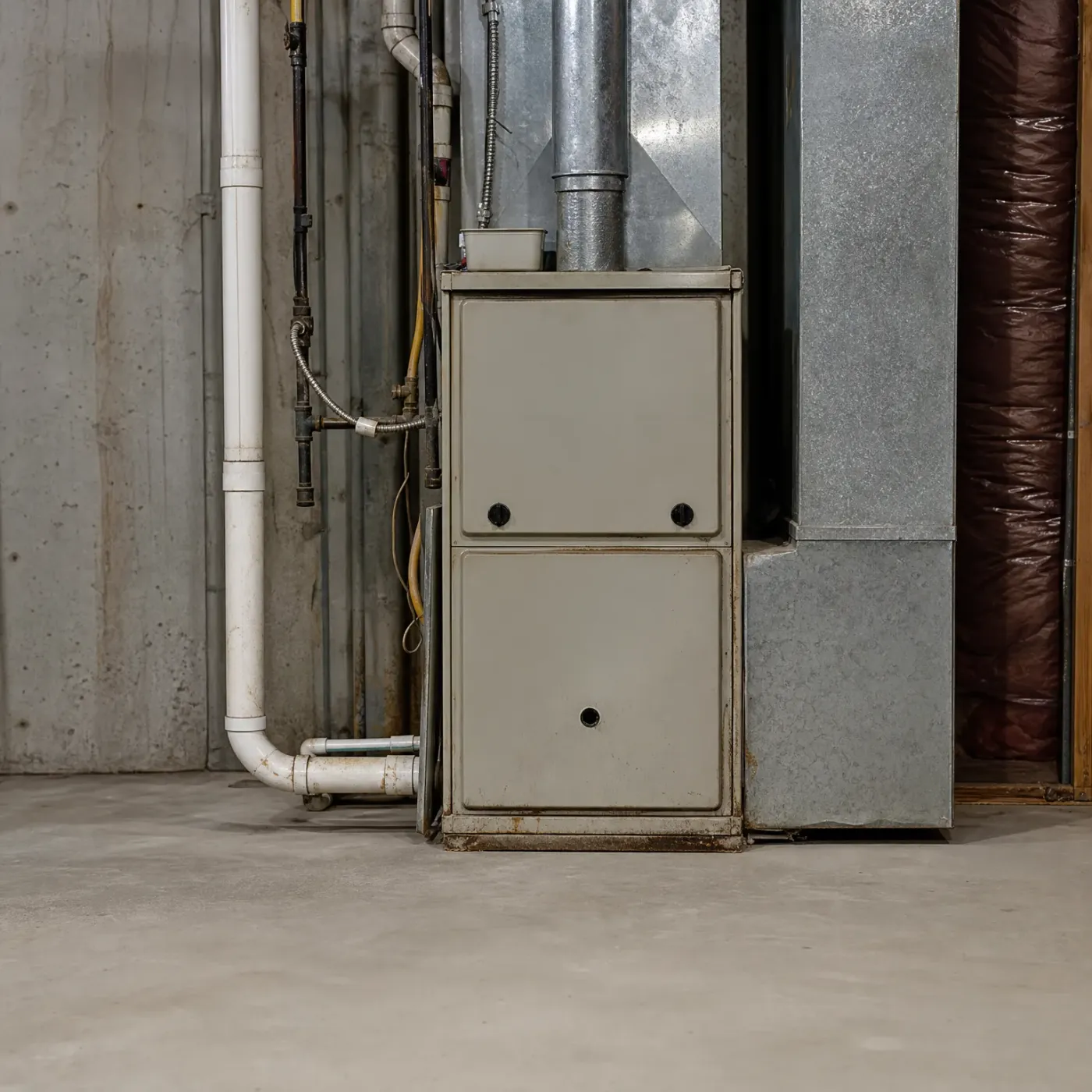
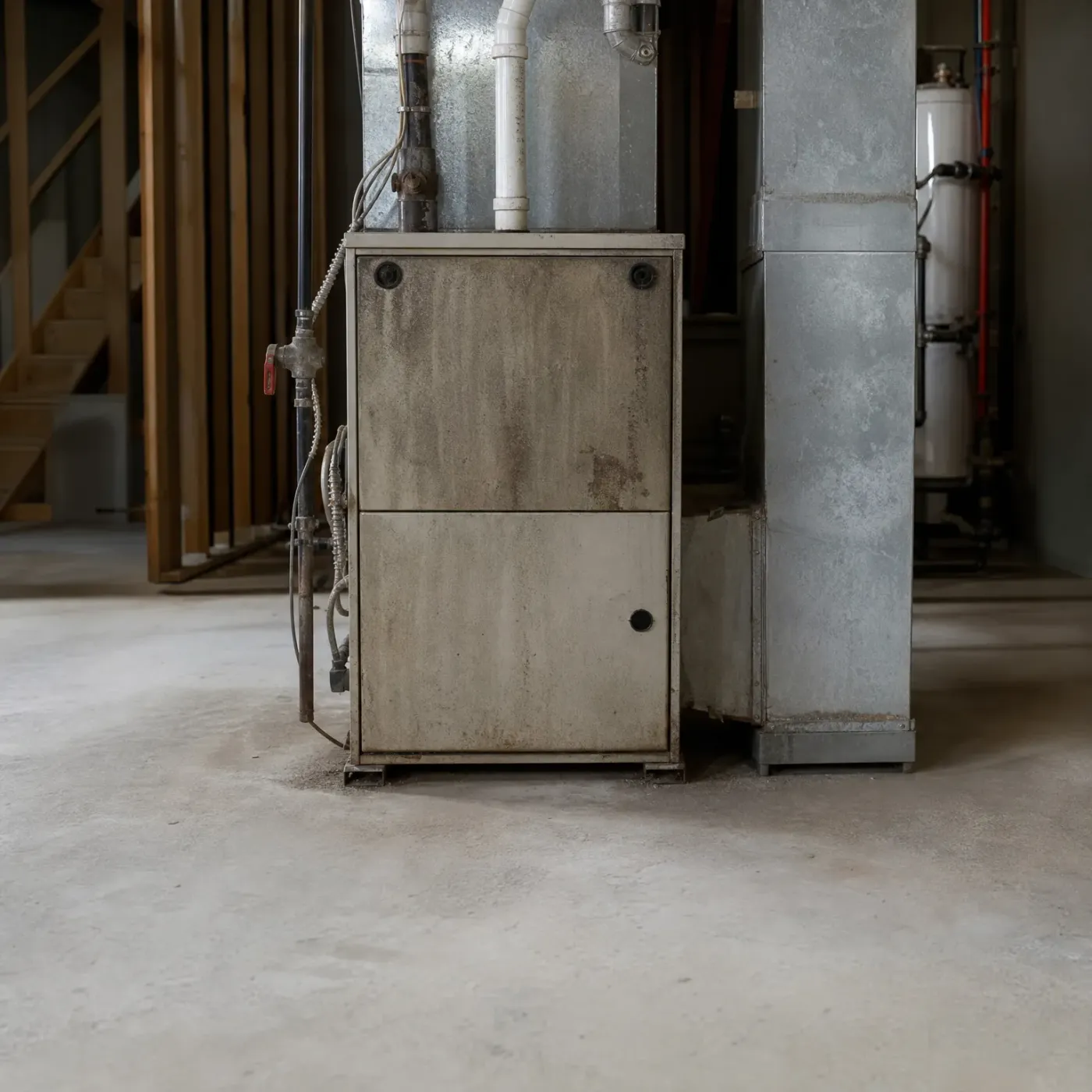
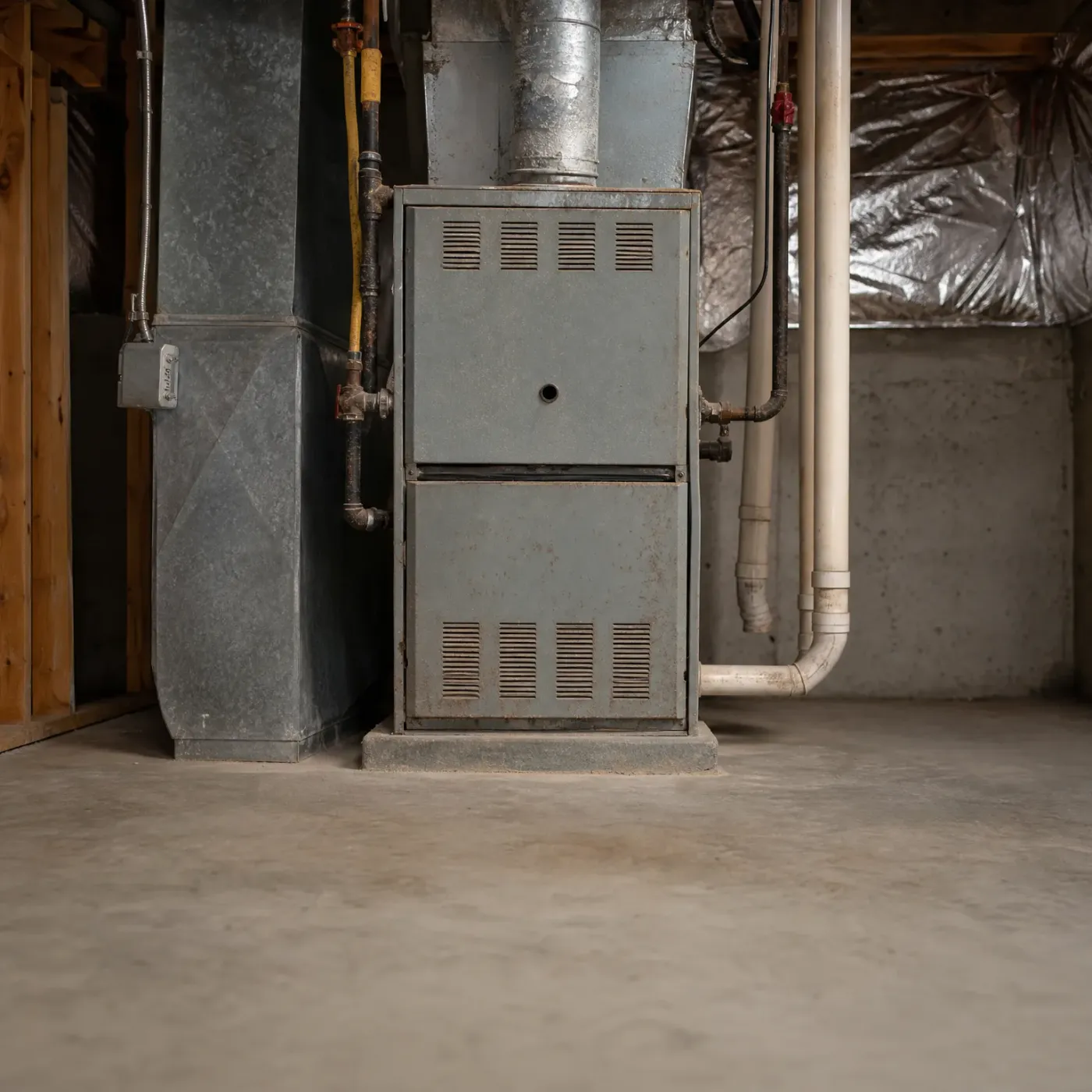
Rust has worked into the cabinet here, and the flue pipe is carrying more than it should have to. A furnace in this shape is closer to a repair call than a quick fix, and a burning smell from a unit like this is worth taking seriously.

A burning smell that fades within the first hour of the season's first run is dust leaving the heat exchanger and burners. One that lingers past that, or turns sharp like hot metal, is a sign something inside your furnace is wearing out and worth a closer look before the cold settles in for good.
Finding out which one you've got usually means tracking down a furnace repair contractor, explaining the smell over the phone, and waiting to see if they even work on your model. This connects you with one licensed contractor near you in Minnesota, someone who works on furnaces like yours all winter and knows what a burning smell like this usually turns out to be. No need to call around or repeat yourself to a handful of companies.


One form, no calling around