




Why your furnace won't shut off in Minnesota

Once you send the form, finding a pro is off your list.

Let a pro reach out

A furnace that keeps running is usually stuck on a call for heat it already answered. The thermostat tells it to fire, and something downstream never tells it to stop. Most often it is the limit switch misreading the air temperature, a flame sensor sending a bad signal, or the thermostat itself wired or set wrong. On a cold stretch here in Minnesota, a furnace already runs long cycles just to keep up, so a stuck relay or dirty flame sensor can hide inside what looks like normal hard work. Left alone, the furnace can overheat parts not built to run that long, or it can push the blower to wear out faster than it should. It is also wasting gas the whole time it runs past where it should have shut off. None of this fixes itself by waiting out the cold snap.

A smiling man in a gray long-sleeved shirt stands in a kitchen looking to the side, with open shelves of dishes, a white mug on the counter, a potted plant, and a view through a doorway into a living room.
A smiling bearded man in a green sweater sits at a white marble kitchen island with a mug, potted plant and bowl of fruit, in a bright white interior with open shelving and an arched doorway.
A smiling man with dark curly hair and a beard, wearing a dark green knit sweater, stands at a white marble kitchen counter with a dark blue mug, with open shelving, pendant lights and a houseplant behind him.
A smiling man in a green ribbed sweater stands behind a wooden table holding a ceramic mug of coffee in a kitchen with white subway tile, shelves of potted plants, and a bowl of fruit.

Thermostat or Furnace: Which Is It

Thermostat problem

  • The thermostat itself is set to On instead of Auto, which forces the blower to run even after the air is warm enough.
  • A loose wire at the thermostat can make it hold the call for heat open instead of releasing it.
  • An old mercury thermostat that has gone out of level can misread the room and keep signaling for heat.
  • Moving the thermostat setting down a few degrees and waiting a minute tells you fast whether the stat is the problem.
  • If the furnace shuts off once you touch the thermostat, the issue is likely there and not in the furnace cabinet.

Furnace problem

  • A limit switch that misreads the air temperature can keep the furnace firing past the point it should have stopped.
  • A flame sensor that is worn or coated can send a weak signal that confuses the control board about whether the burner is lit.
  • A cracked heat exchanger can trip the limit switch repeatedly, and the furnace keeps trying to satisfy a call it can't safely finish.
  • A dirty filter restricts airflow across the heat exchanger, which can push the limit switch into thinking the air is too hot to stop.
  • If the thermostat shows no call for heat but the furnace keeps running anyway, the fault is in the furnace, not the wall.
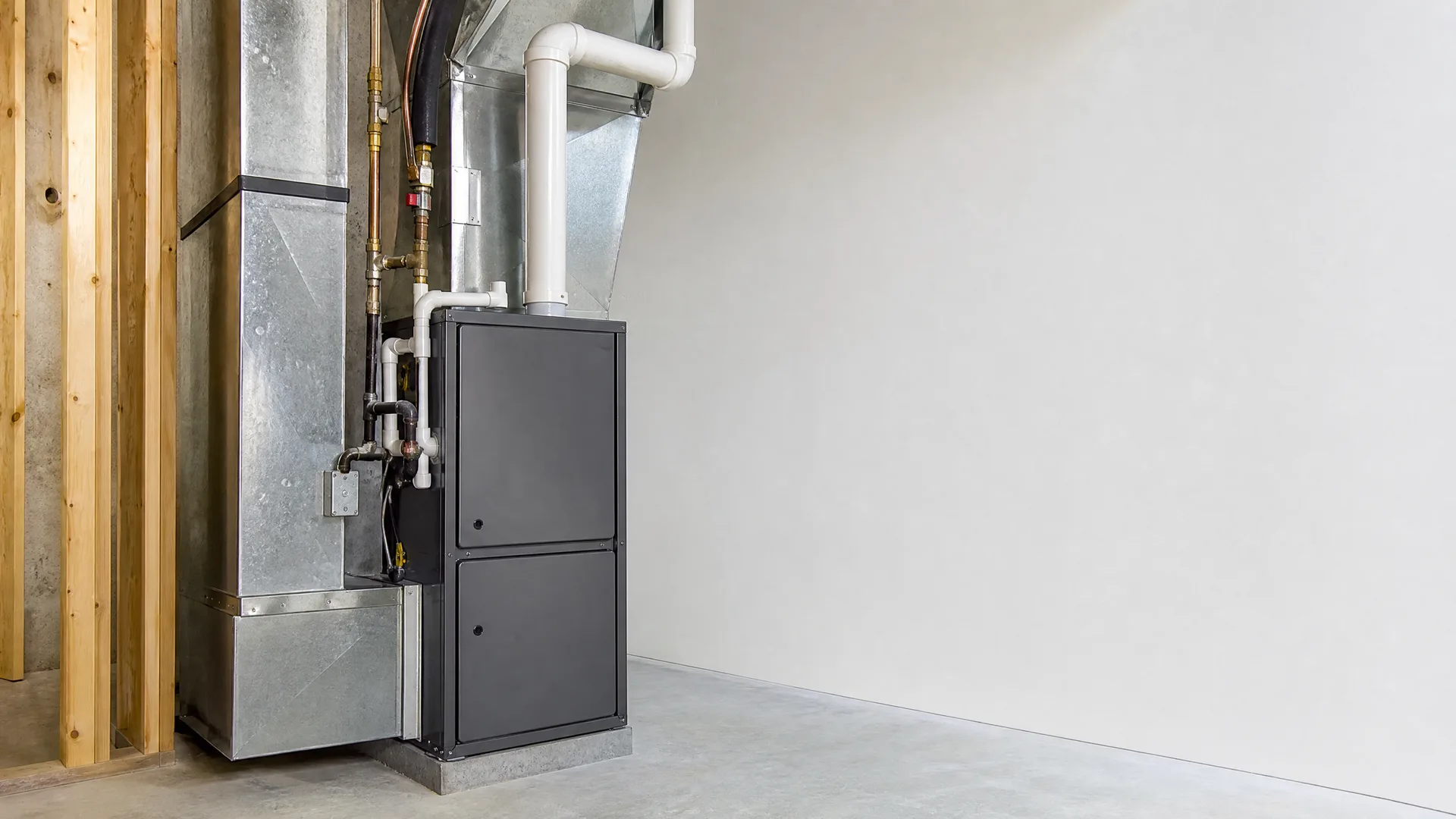
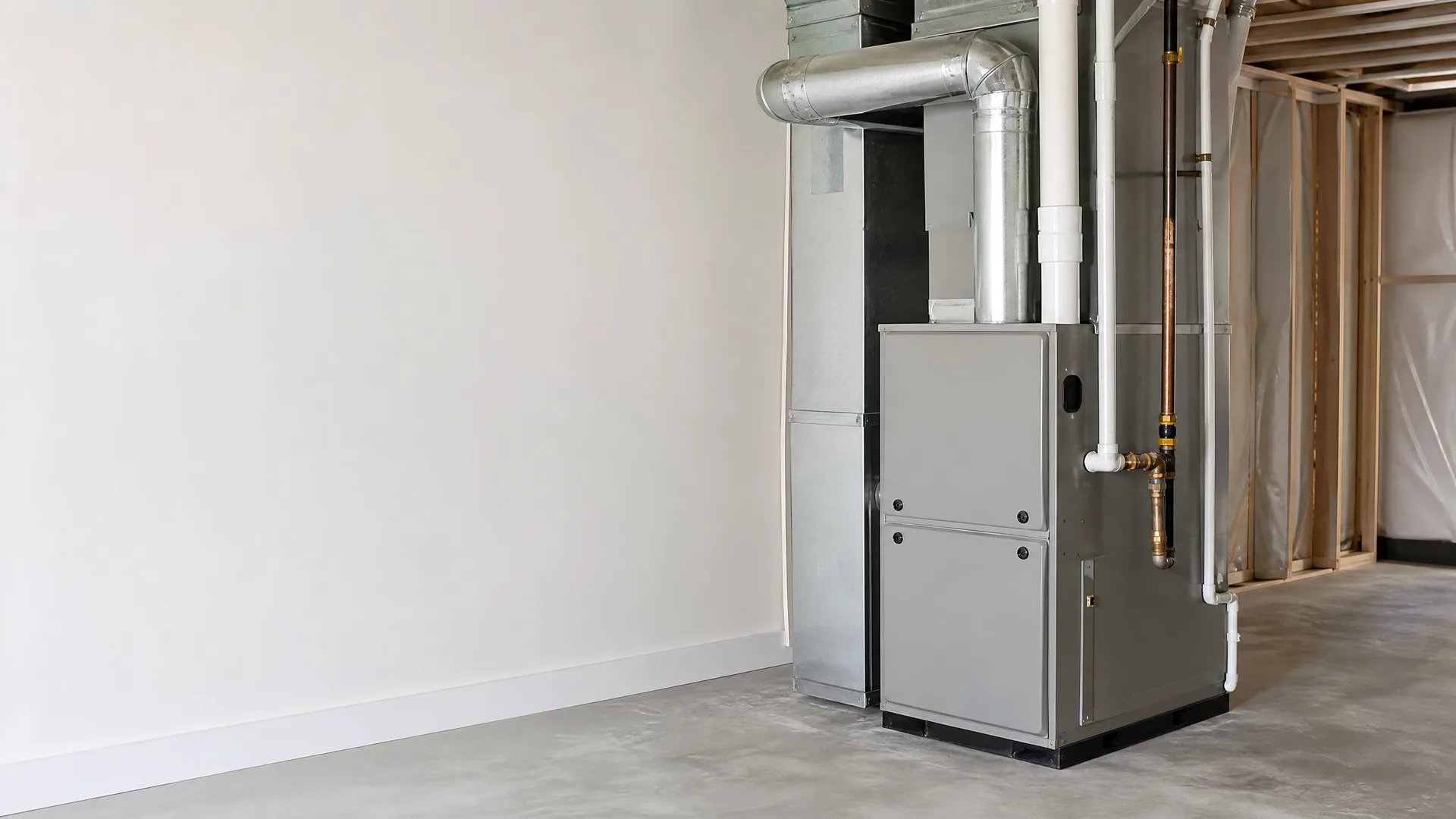
A dark gray furnace connected to galvanized sheet-metal ductwork, white PVC vent pipes and copper piping, standing against a plain light wall in a room with a bare concrete floor and exposed wood framing at left.

The limit switch and the blower

The limit switch reads the air temperature inside the plenum and tells the blower when to run and when to stop. If it sticks or gets a bad reading, it can hold the blower on well past the point the air has warmed up, because as far as the switch can tell, the furnace is still working. Dust on the sensor or a bent switch arm will cause this. A contractor can test it with a multimeter in a few minutes.

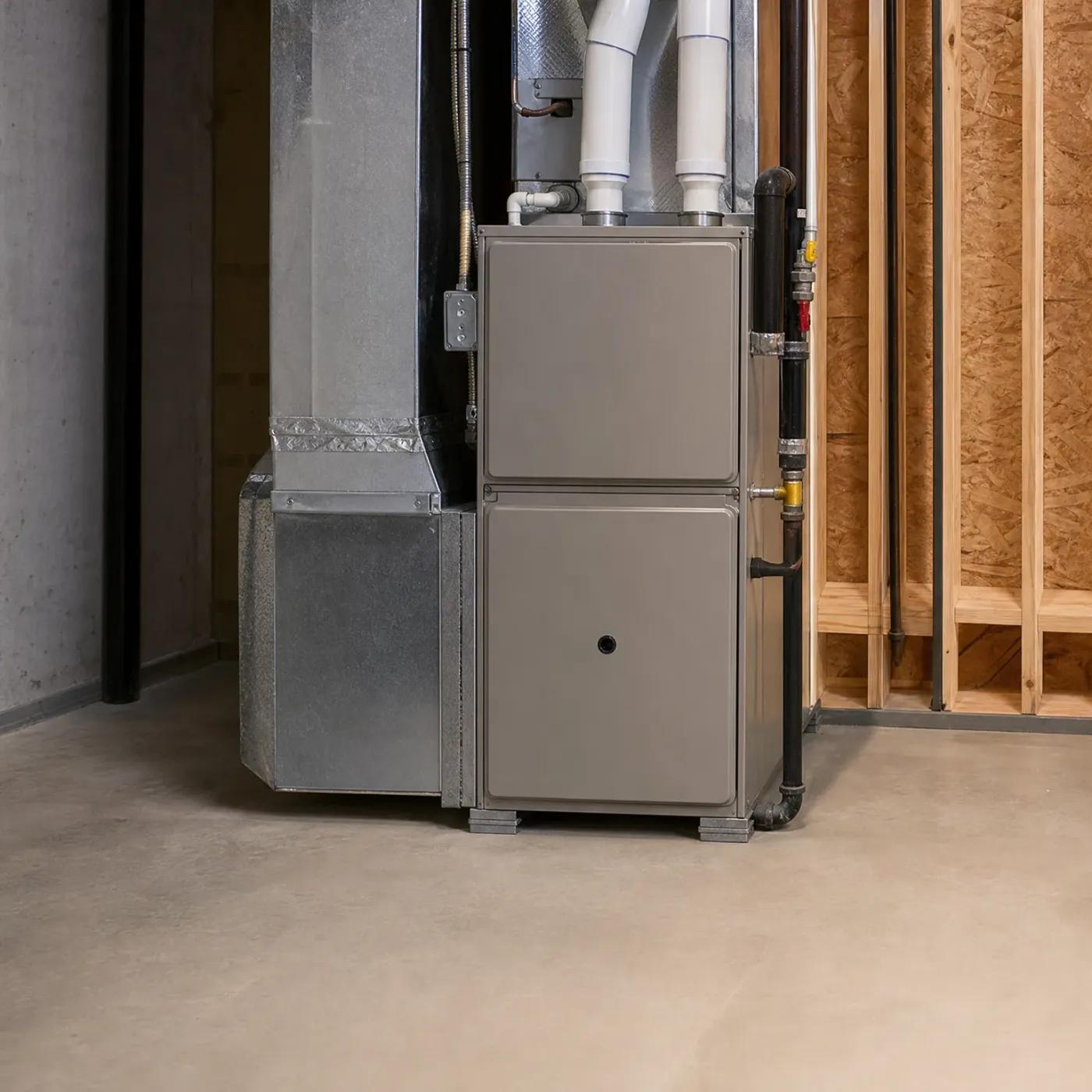
A gray high-efficiency furnace with sheet-metal ductwork, white PVC vent pipes and copper piping stands against a wall in an unfinished basement with a concrete floor and insulated wood stud framing at right.

Why the flame sensor matters here

The flame sensor's job is to confirm a flame is present so the gas valve knows it is safe to stay open. A sensor coated in soot can send a weak or false signal, and some furnaces respond by keeping the burners lit and the call for heat open rather than shutting down cleanly. This shows up more in January and February, when the furnace is cycling on more often and the sensor gets more exposure to combustion byproducts.

Winter nights average 8°F statewide

At 8 below most winter nights, your furnace is firing for long stretches to keep up. That long runtime is exactly when a bad limit switch or a stuck relay shows itself, because the system never gets a break long enough to reset on its own.

NOAA nClimDiv 1991-2020 county normals weighted by homes

A gray high-efficiency furnace in a basement, connected to sheet-metal ductwork on the left and white PVC vent pipes above, with black gas and drain piping and an exposed wood-stud wall with OSB sheathing on the right.

Running the way it should

The blower kicks on, the house climbs to temperature, and the burners shut off. The blower runs a few minutes longer to pull the last heat out of the plenum, then it stops too. No long runs, no burning smell, no constant fan noise from the basement.
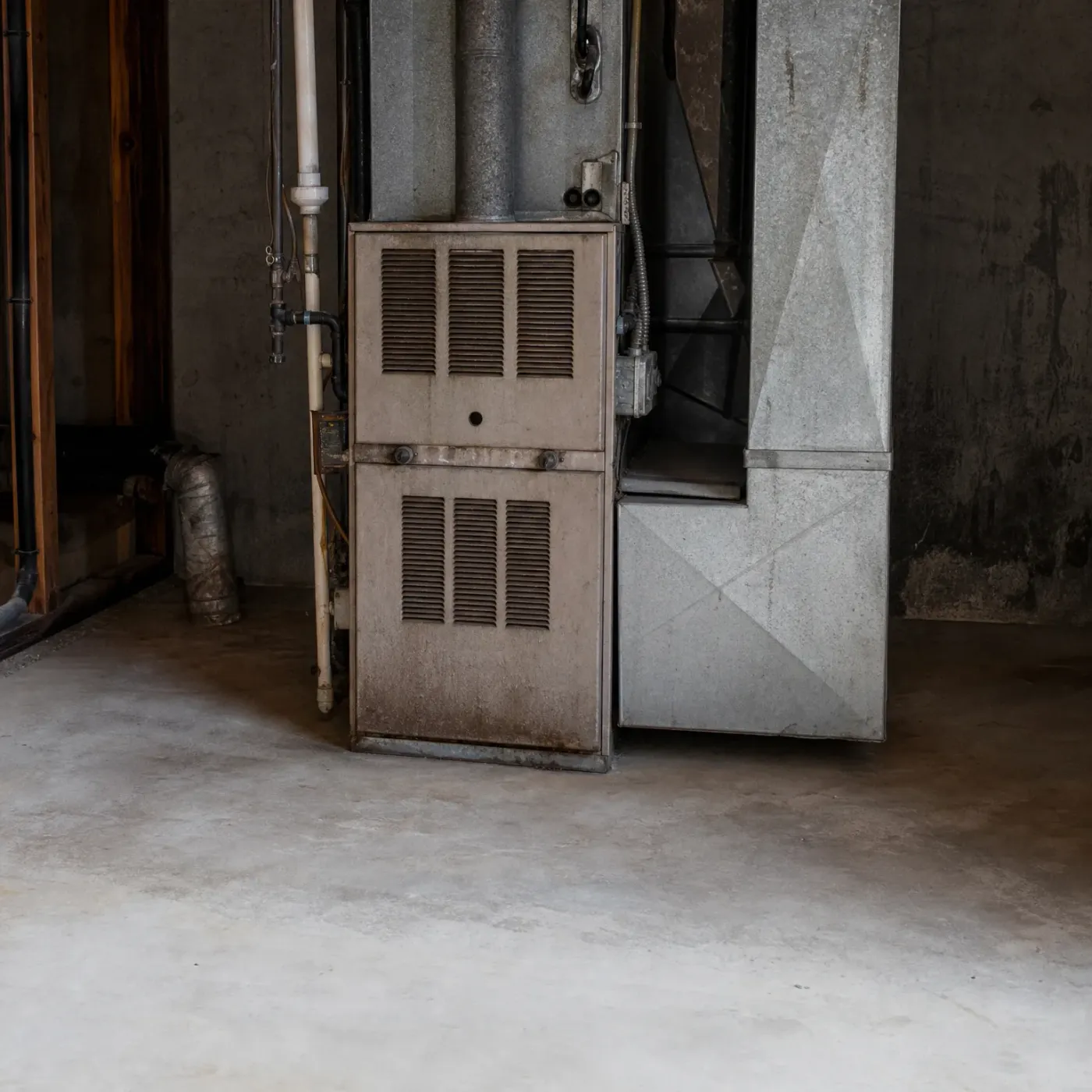

An older gas furnace with two louvered front panels stands on a concrete basement floor beside galvanized sheet-metal ductwork, pipes, and a weathered concrete wall.

Stuck on a call for heat

This furnace has been firing for years without a hard look at the limit switch or the flame sensor. An older unit like this one is more likely to have a switch that's drifted out of calibration, which is often what keeps the blower running long after the house is warm.

A smiling man in a dark blue T-shirt sits on a light gray sofa in a living room with a wooden shelf and window behind him, with a laptop edge visible in the foreground.
A bearded man in a plaid flannel shirt stands indoors looking out a frost-covered window, with a steaming dark blue mug on the wooden sill and snow-covered trees outside.

Hand off the search today

A furnace that won't shut off doesn't fix itself by waiting it out, and in a Minnesota winter you don't want to find that out at 2 a.m. with the blower running nonstop and the burners cycling long past when the house is warm. The longer a bad limit switch or a stuck relay runs unchecked, the more it strains a system already working hard to keep up with the cold outside. Someone who services furnaces in this area through the worst of winter has seen this exact problem plenty of times and knows which part is behind it before they even open the panel. Sending the request means one local contractor who knows gas furnaces gets your situation, not a list of strangers. You stop tracking down who's available and who isn't, and the furnace that's been running since last night becomes someone else's problem to solve.

Where This Leaves You

  • A furnace that won't shut off is stuck on a call for heat it already met, not one it still needs to meet.
  • The limit switch, the flame sensor, and the thermostat itself are the three places this almost always traces back to.
  • Long runtimes in a Minnesota cold snap make a failing part show itself faster, since the system never idles long enough to reset.
  • Left alone, a stuck blower or a cycling burner past the point of warmth wears on parts that weren't built to run that long.
  • A local contractor who works on furnaces all winter has likely seen this exact complaint on this exact brand before.
  • One contractor takes the call, so you're not fielding quotes from four companies while your blower keeps running.

A furnace that won't shut off is answering a call for heat that already ended. Somewhere between the thermostat and the burners, that message isn't getting through, and the usual suspects are the limit switch, the flame sensor, or the thermostat itself. In a Minnesota cold snap, the furnace runs long and hard enough that a weak part doesn't get the idle time it needs to reset, so the problem shows up sooner than it would in mild weather. Left running, a stuck blower or a burner cycling past the point of warmth puts hours of wear on parts that were never meant to see that kind of runtime.

None of that gets sorted out by watching the thermostat. It takes someone who can get into the plenum, test the limit switch and the flame sensor, and trace the wiring back to the thermostat itself. A contractor who works on furnaces through a Minnesota winter has likely run into this same complaint on this same brand more than once, because the cold makes these failures common in a way summer never does. The request goes to one contractor, local to where you live, not a handful of companies competing for the job. That means one call back, one visit to get the furnace actually diagnosed, and no juggling bids while the blower keeps running in the next room. The furnace won't fix this on its own. It will keep running until the part that's failing gets replaced.

A modern two-story house with dark siding and stone base at dusk, with lit soffit lights, a path of large rectangular pavers set in dark gravel, planting beds, a lawn, and an orange and blue sunset sky above distant trees and water.

Furnace Repair

Hand off the furnace problem

Step 1 of 3: Equipment
  • A gray upholstered sofa arm with a cream knit fringed throw sits beside a wooden side table holding a stack of books, a shallow wooden bowl, and a ceramic vase of leafy branches, on a wood floor near a window.
    • Tell a local repair pro what your furnace is doing.
    • Say what's going on with your furnace, and a pro who works on them reaches out.
  • A living room corner with a cream upholstered sofa and cushion beside a wooden side table holding a ceramic vase of olive branches and a small dark bowl, with a framed landscape painting on the gray wall and a linen curtain at the window.
    • Send the request and finding a pro stops being your problem.
    • After this form, you can stop searching for a furnace pro.
  • A wood-framed armchair with a beige cushion and knitted throw sits beside a round wooden side table holding a ceramic mug, with a potted green plant near a window in the corner and a framed picture on the wall.
    • Describe your furnace job once, to one pro.
    • Fill out one short form instead of calling around.
  • Interior corner with beadboard wainscoting, a gray cabinet with wood countertop holding a vase of greenery below a window, and a potted leafy plant in a woven basket on a wood floor with a fringed jute rug.
    • Your request stays with one local pro.
    • Your request goes to one pro, not a list of companies.