Tell us about the job
Takes about a minute. No obligation.
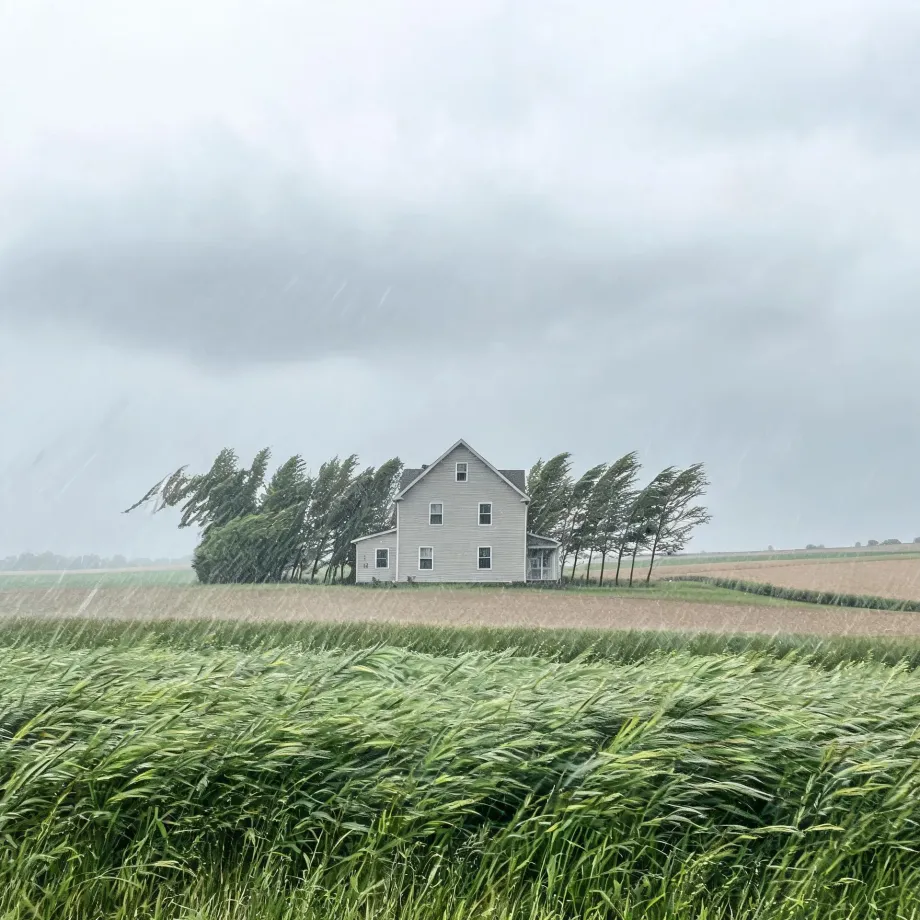
A furnace installation in Cook County starts with a real question about what the system will be asked to carry. 135 severe weather events were recorded in Cook County, Minnesota between 2015 and 2024. At that rate, severe weather is a standing condition of operating here, and a contractor who treats it otherwise will undersize the equipment or cut corners on the install that matter most when the system runs hard. Duct sealing, heat exchanger clearances, and flue integrity all absorb the consequences of a demanding climate in ways that a unit sitting on a shelf does not anticipate.
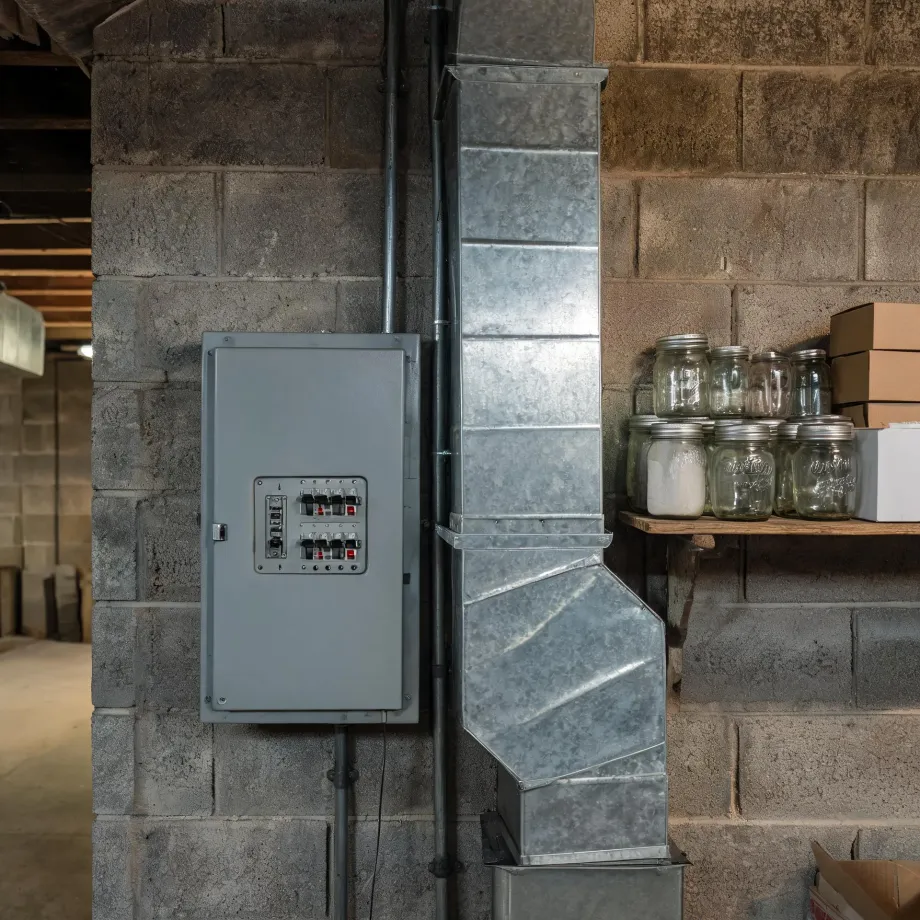
Ductwork laid in for older furnace generations shapes what a new installation can do more than the unit itself does. Half the homes in Cook County, Minnesota were built in 1988 or earlier (2020-2024 ACS 5-year). A contractor coming in to install a furnace has to establish whether the existing trunk lines and branch runs will move the air volume a current system delivers, and whether the electrical service will carry the load. If the ductwork cannot, the install scope changes before the furnace is ever priced. That is what the age of the housing stock determines: not the equipment choice, but what is already behind the walls waiting to accept it.
What Gets Installed With a New Furnace
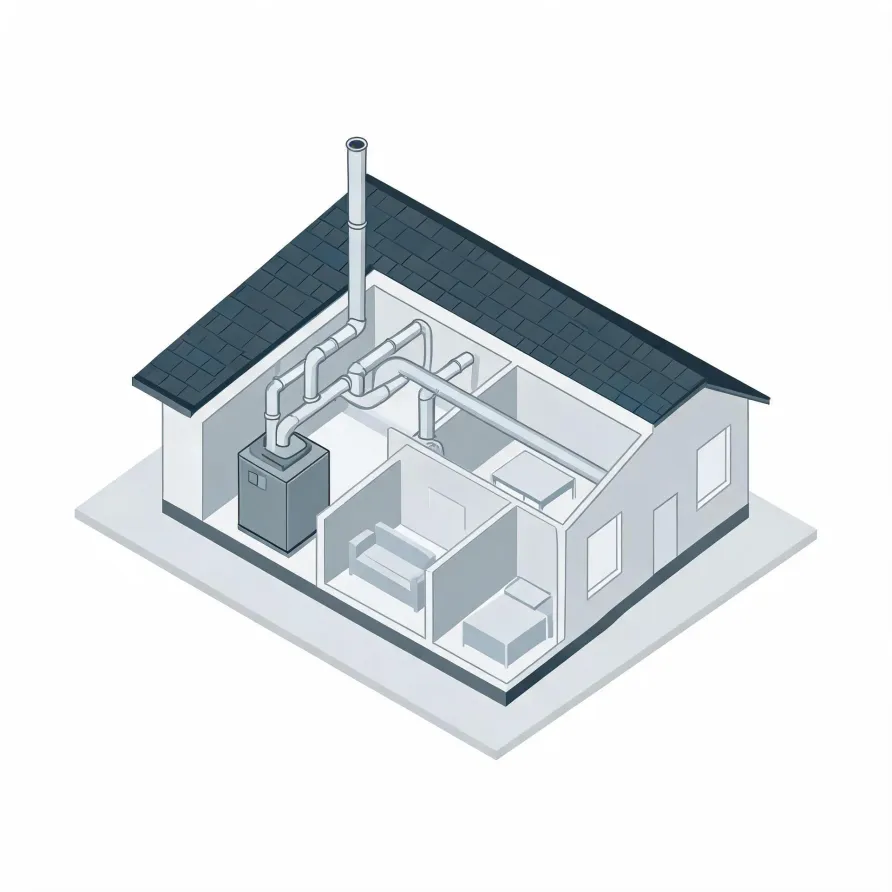
The furnace itself sits in the basement, utility room, or closet and is the heart of what a contractor puts in. It houses the burner, the heat exchanger, and the blower motor in a single cabinet. The thermostat mounts on an interior wall and is the control point the household sees every day.
The flue pipe runs from the furnace to an exterior vent and carries combustion gases out of the house. Alongside it, the contractor installs the gas line connection and the filter housing, which slots into the air return path directly at the unit.
The drawing shows a typical layout, and a licensed contractor determines what applies to this specific house and its configuration.
Get matched in Cook CountyCook County, Minnesota, by the numbers
135 severe weather events were recorded in Cook County, Minnesota between 2015 and 2024.
NOAA National Centers for Environmental Information, Storm Events Database, bulk CSV export, events 2015-01-01 through 2024-12-31.Half the homes in Cook County, Minnesota were built in 1988 or earlier (2020-2024 ACS 5-year).
U.S. Census Bureau, 2020-2024 American Community Survey 5-Year EstimatesCook County, Minnesota holds 6,079 housing units (2020-2024 ACS 5-year).
U.S. Census Bureau, 2020-2024 American Community Survey 5-Year EstimatesOwners occupy 77.7% of the occupied homes in Cook County, Minnesota (2020-2024 ACS 5-year).
U.S. Census Bureau, 2020-2024 American Community Survey 5-Year EstimatesFurnace Installation Rules on the Books for Cook County, Minnesota6 codes, standards, and licensing rules
What the Installation Actually Looks Like
Non-weatherized gas furnaces manufactured on or after November 19, 2015 must reach 80.0 percent AFUE.
Non-weatherized oil-fired furnaces manufactured on or after November 19, 2015 must reach 83.0 percent AFUE.
Mobile home gas furnaces manufactured on or after November 19, 2015 must reach 80.0 percent AFUE.
Non-weatherized gas furnaces manufactured on or after December 18, 2028 must reach 95.0 percent AFUE, up from the 80.0 percent minimum that applies to units manufactured before that date.
Licensing Rules for HVAC Work in Cook County, Minnesota
Minnesota defines a mechanical contractor as a business that installs, repairs or maintains heating, ventilating, cooling or refrigeration systems — the definition that carries the exemption from the residential contractor licence.
Minnesota's residential contractor licence does not reach HVAC work: the licensing section carries its own exemption list, and a mechanical contractor is exempt from the licence requirement by name.
Severe Weather Events in Cook County
Cook County winters put real stress on heating equipment, and the load a furnace carries is shaped by what the local climate actually does. A contractor sizing or installing a furnace here works from that reality, not from a national average.
135 severe weather events, 2015–2024. Source: NOAA National Centers for Environmental Information, Storm Events Database.