Tell us about the job
Takes about a minute. No obligation.
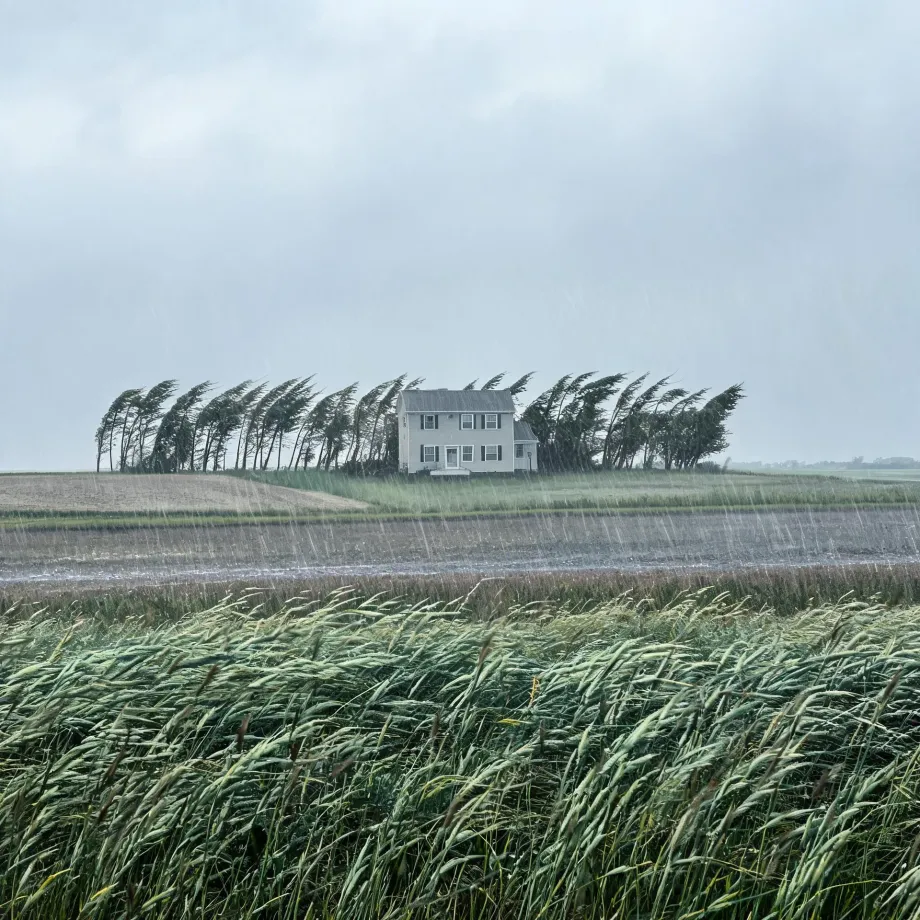
A furnace install in Lake County is a local engineering decision before it is anything else. 145 severe weather events were recorded in Lake County, Minnesota between 2015 and 2024. At that rate, severe weather is a standing condition of every heating season here, and a contractor who ignores it when sizing equipment or selecting components will leave a system underbuilt for what it will actually face. Duct routing, equipment ratings, and installation method all shift when the climate pushes this hard, and a quote that does not account for those adjustments is priced for a different place.
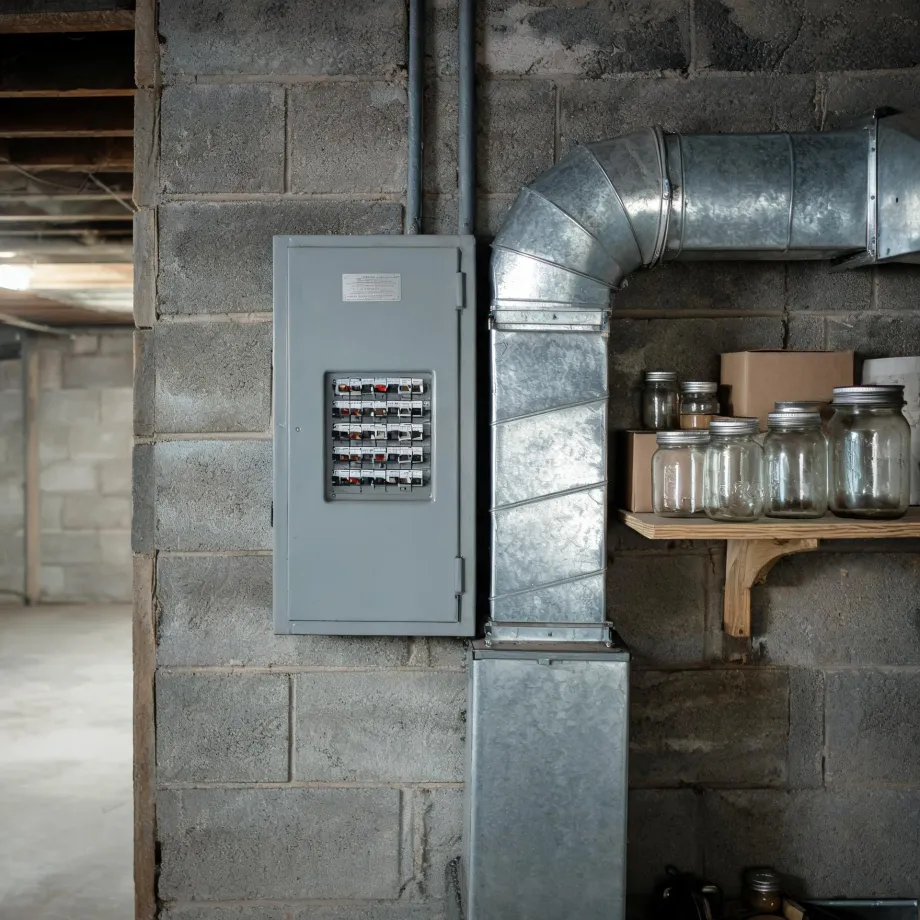
Ductwork laid down for an older furnace carries assumptions about airflow, trunk sizing, and return placement that a modern unit does not share. Half the homes in Lake County, Minnesota were built in 1969 or earlier (2020-2024 ACS 5-year). A contractor quoting a furnace replacement here has to assess what those ducts will actually do with a new system pushing through them, not just match the equipment to the space. Where the existing runs fall short, the scope of the job grows before the furnace itself is even selected.
What Gets Installed With a New Furnace
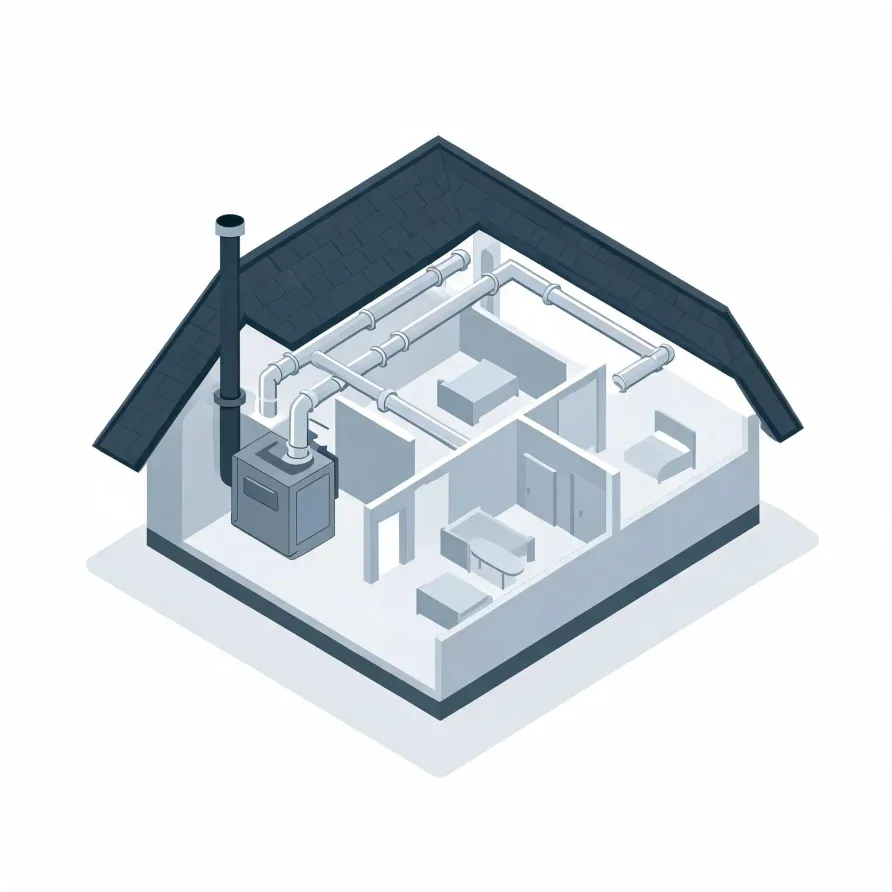
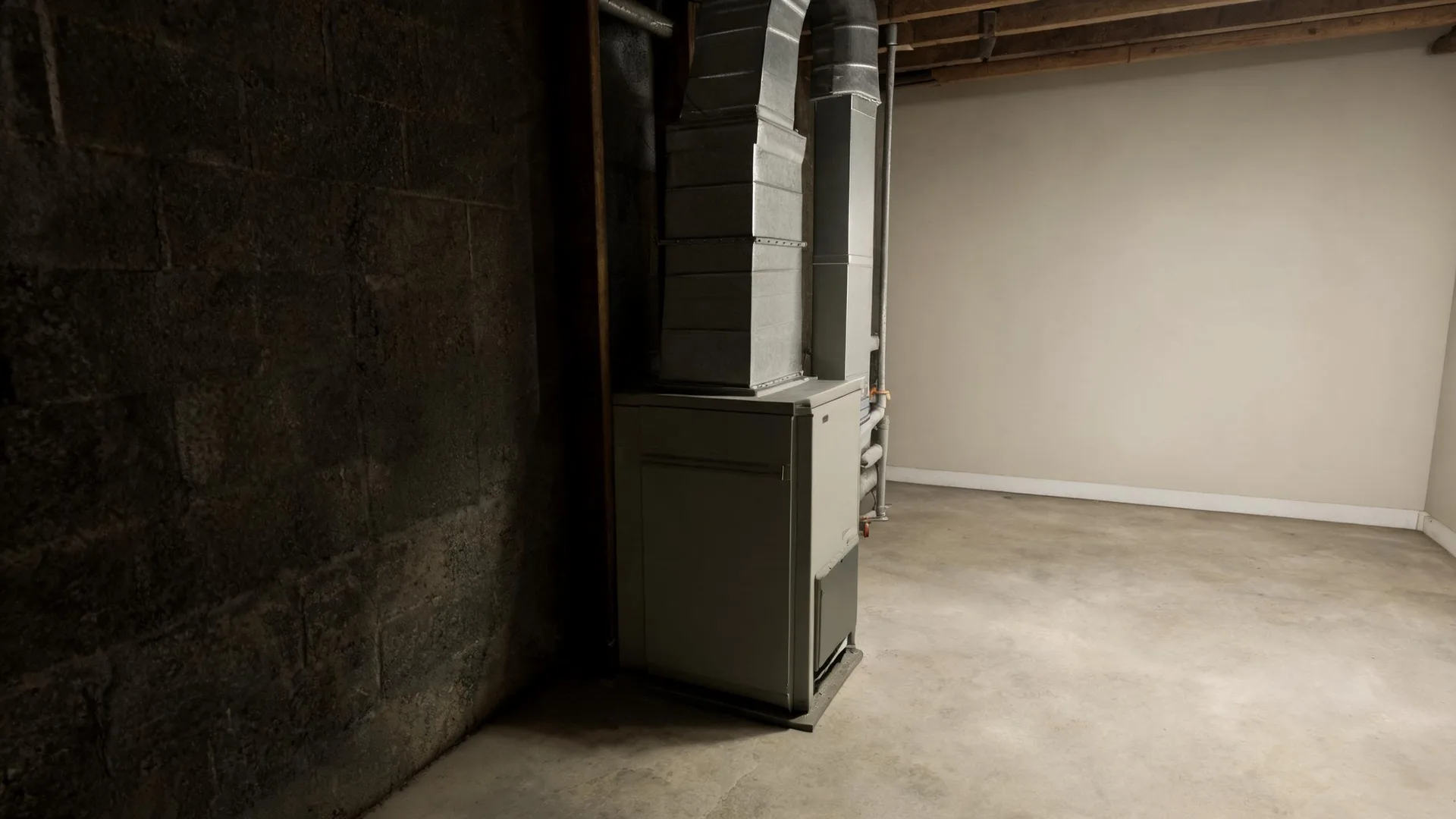
The furnace itself sits in the basement, utility room, or closet and is the piece that produces heat. A contractor mounts it to the existing ductwork and connects it to the gas line and flue. The flue pipe runs from the furnace to an exterior wall or up through the roof, carrying combustion gases out of the house.
The thermostat goes on an interior wall and is what the homeowner touches to call for heat. Near the furnace, a contractor also installs the air handler or blower cabinet if one is needed, which pulls air across the heat exchanger and pushes it into the duct system. A condensate drain line runs from the unit to a floor drain or utility sink.
The drawing shows a typical layout, and a licensed contractor determines exactly what applies to your house.
Get matched in Lake CountyLake County, Minnesota, by the numbers
145 severe weather events were recorded in Lake County, Minnesota between 2015 and 2024.
NOAA National Centers for Environmental Information, Storm Events Database, bulk CSV export, events 2015-01-01 through 2024-12-31.Half the homes in Lake County, Minnesota were built in 1969 or earlier (2020-2024 ACS 5-year).
U.S. Census Bureau, 2020-2024 American Community Survey 5-Year EstimatesLake County, Minnesota holds 7,449 housing units (2020-2024 ACS 5-year).
U.S. Census Bureau, 2020-2024 American Community Survey 5-Year EstimatesOwners occupy 83.5% of the occupied homes in Lake County, Minnesota (2020-2024 ACS 5-year).
U.S. Census Bureau, 2020-2024 American Community Survey 5-Year EstimatesFurnace Installation Rules for Lake County, Minnesota6 sourced codes and standards
What the installation actually looks like
Non-weatherized gas furnaces manufactured on or after November 19, 2015 must reach 80.0 percent AFUE.
Non-weatherized oil-fired furnaces manufactured on or after November 19, 2015 must reach 83.0 percent AFUE.
Mobile home gas furnaces manufactured on or after November 19, 2015 must reach 80.0 percent AFUE.
Non-weatherized gas furnaces manufactured on or after December 18, 2028 must reach 95.0 percent AFUE, up from the 80.0 percent minimum that applies to units manufactured before that date.
Licensing and Legal Requirements in Lake County, Minnesota
Minnesota defines a mechanical contractor as a business that installs, repairs or maintains heating, ventilating, cooling or refrigeration systems — the definition that carries the exemption from the residential contractor licence.
Minnesota's residential contractor licence does not reach HVAC work: the licensing section carries its own exemption list, and a mechanical contractor is exempt from the licence requirement by name.
Severe Weather Events in Lake County
Extreme weather puts real hours on heating equipment. A furnace that carries a home through hard winters ages differently than one that rarely works at full load, and that shapes what installation choices make sense for this area.
145 severe weather events, 2015–2024. Source: NOAA National Centers for Environmental Information, Storm Events Database.