Tell us about the job
Takes about a minute. No obligation.
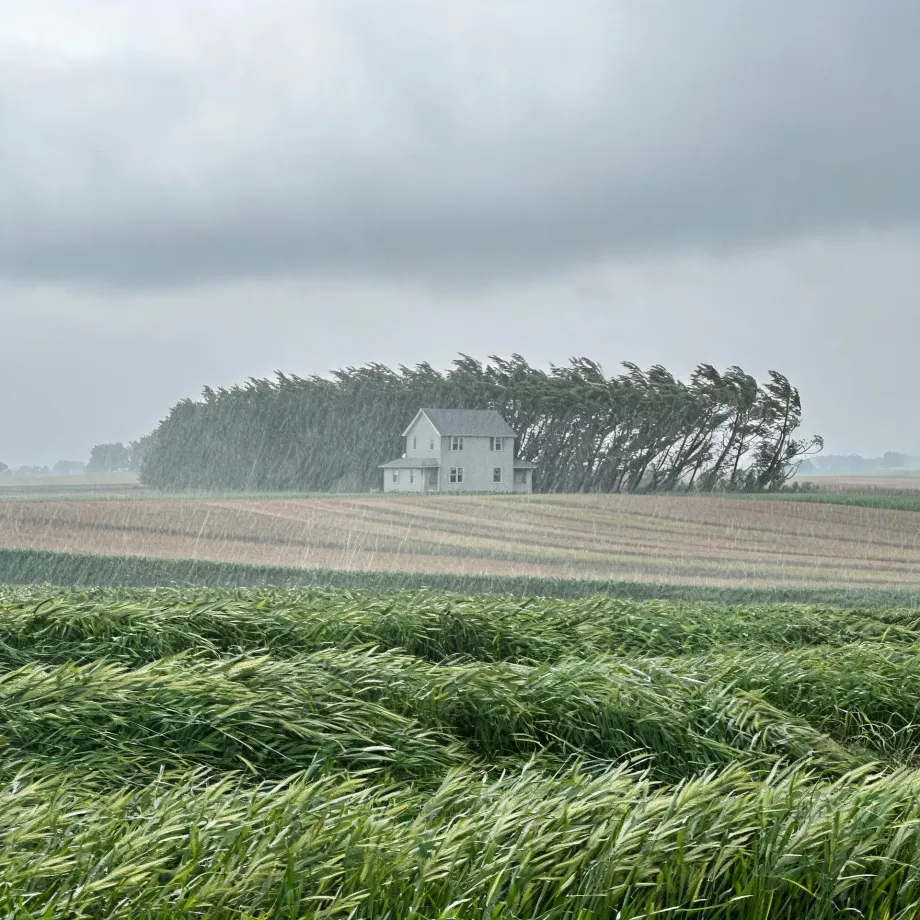
A furnace installation in Pipestone County starts with a question about what the equipment will run against, not just what the house requires in square footage. 92 severe weather events were recorded in Pipestone County, Minnesota between 2015 and 2024. At that rate, severe weather is a standing feature of the climate, and a contractor who ignores it when sizing a new furnace risks putting in a unit that is correctly sized for the catalog and wrong for this address. Heat exchangers, controls, and venting all carry that load from the first season. A contractor who knows this area prices accordingly.
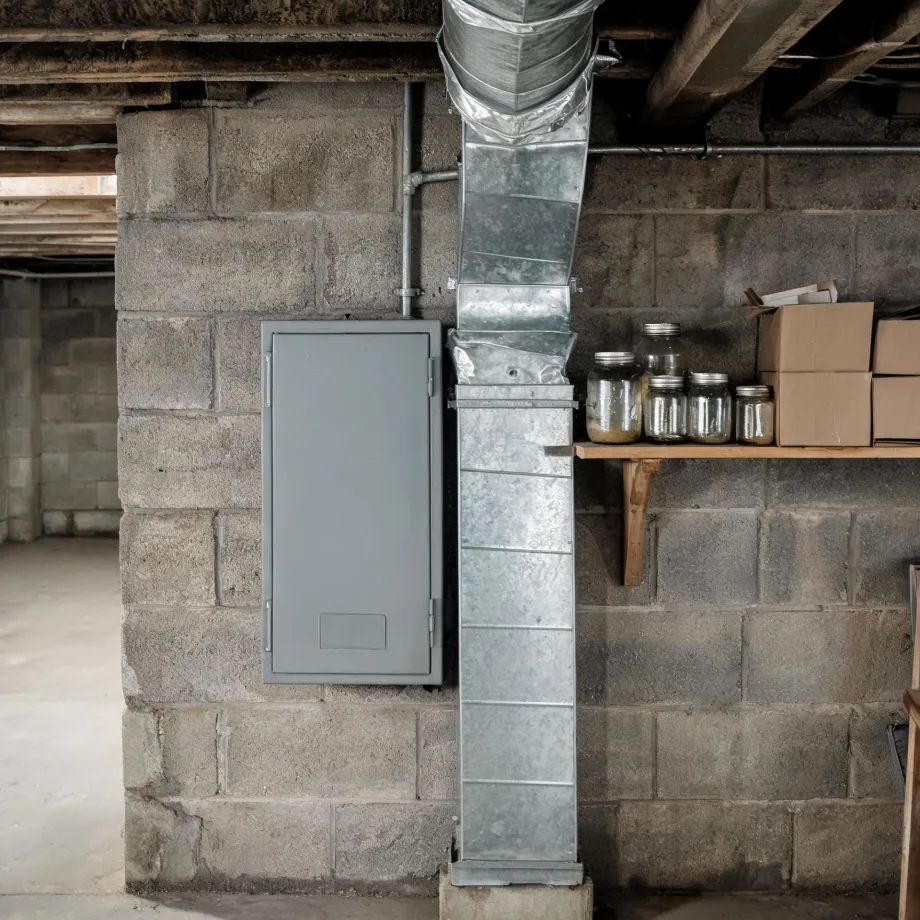
Ductwork laid down for equipment from a previous generation carries no guarantee it will move air the way a new furnace needs it to. Half the homes in Pipestone County, Minnesota were built in 1956 or earlier (2020-2024 ACS 5-year). That gap between when a house was framed and what a contractor is now hanging in it is where the real sizing work lives. The electrical service, too, was set up for draws that do not match modern equipment. A contractor quoting a furnace here checks both before anything is ordered.
What Gets Installed With a New Furnace
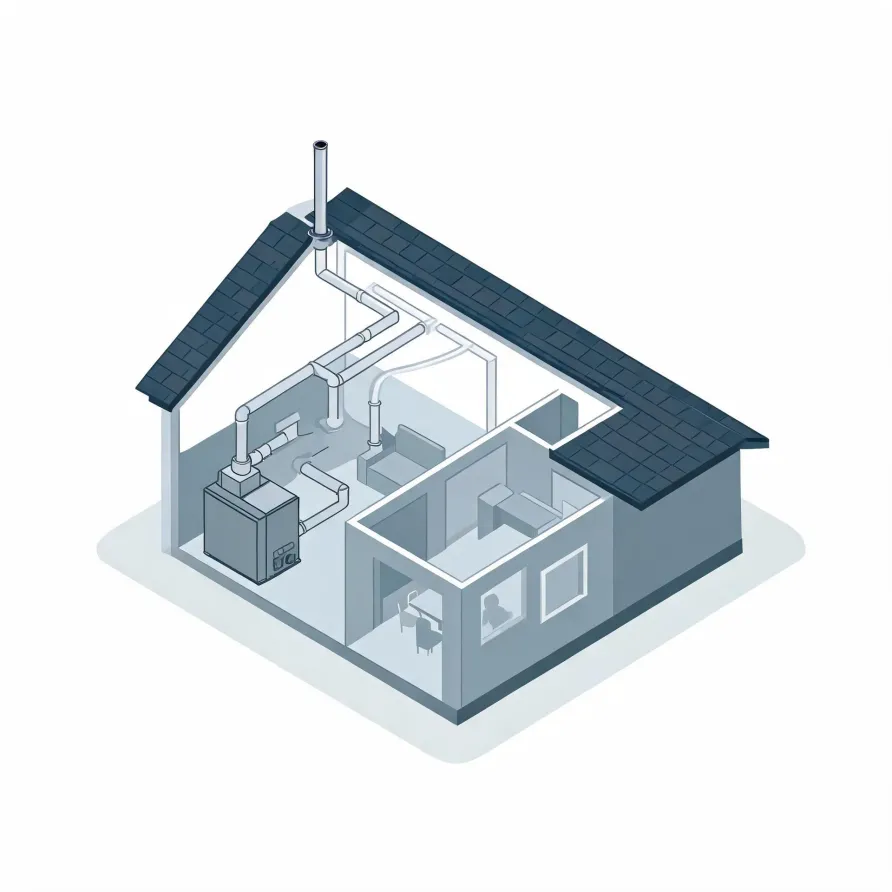
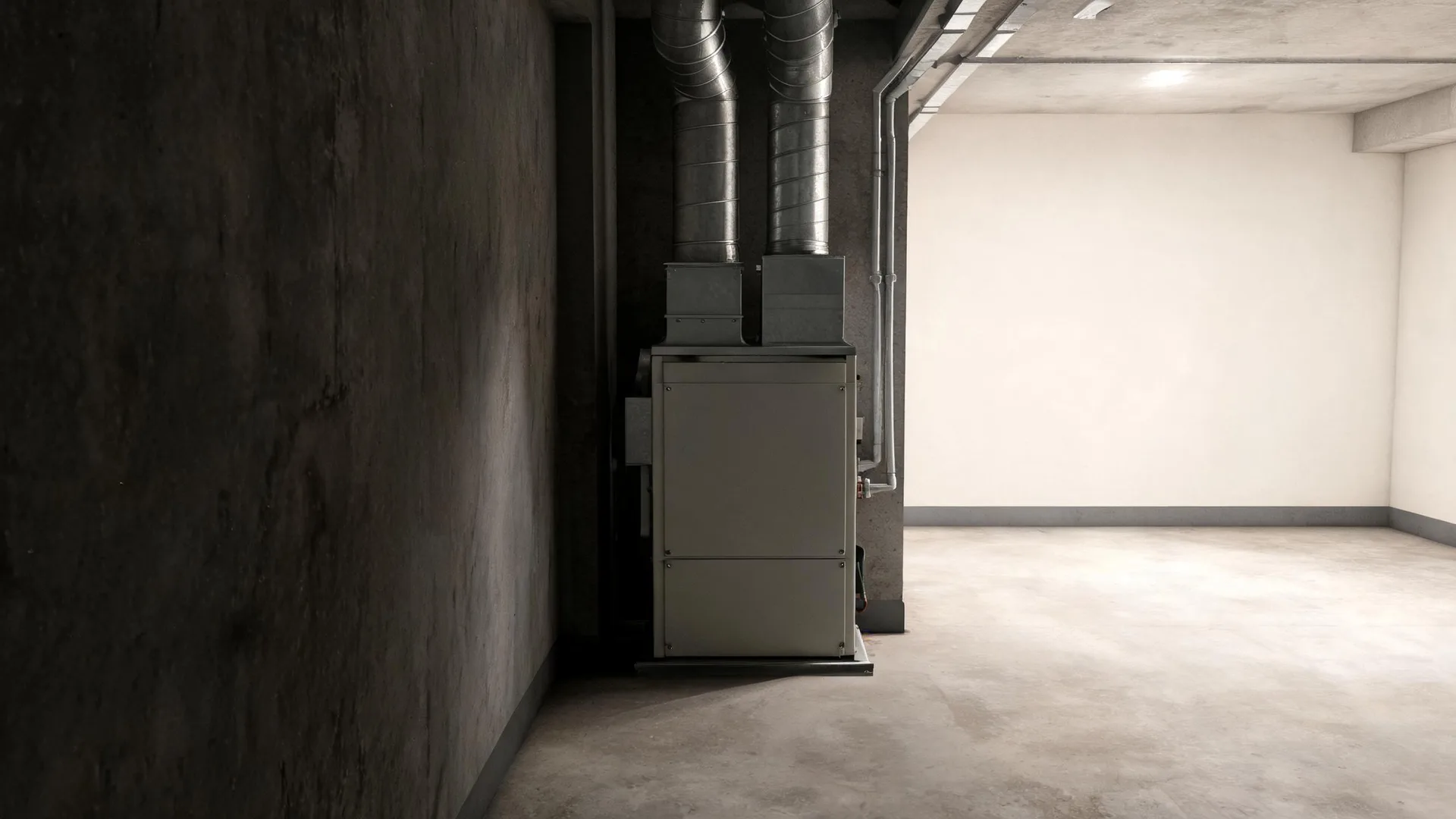
The furnace itself sits in a mechanical room, basement, or utility closet and is the heart of what goes in. Attached to it at the top is the flue or vent pipe, which runs through the wall or roof to exhaust combustion gases outside. The air handler or blower compartment, built into the furnace cabinet, pulls return air in and pushes conditioned air out.
The thermostat mounts on a main-floor wall and is the control point the household interacts with daily. A contractor also installs or connects the condensate drain line if the unit is a high-efficiency model, and fits the filter housing where return air enters the cabinet before it reaches the heat exchanger.
The drawing alongside shows a typical layout, and a licensed contractor determines exactly which components and configurations apply to your home.
Get matched in Pipestone CountyPipestone County, by the numbers
92 severe weather events were recorded in Pipestone County, Minnesota between 2015 and 2024.
NOAA National Centers for Environmental Information, Storm Events Database, bulk CSV export, events 2015-01-01 through 2024-12-31.Half the homes in Pipestone County, Minnesota were built in 1956 or earlier (2020-2024 ACS 5-year).
U.S. Census Bureau, 2020-2024 American Community Survey 5-Year EstimatesPipestone County, Minnesota holds 4,325 housing units (2020-2024 ACS 5-year).
U.S. Census Bureau, 2020-2024 American Community Survey 5-Year EstimatesOwners occupy 80.8% of the occupied homes in Pipestone County, Minnesota (2020-2024 ACS 5-year).
U.S. Census Bureau, 2020-2024 American Community Survey 5-Year EstimatesCodes & Standards Governing Furnace Installation in Pipestone County, Minnesota6 sourced rules and standards
What the installation looks like from your end
Non-weatherized gas furnaces manufactured on or after November 19, 2015 must reach 80.0 percent AFUE.
Non-weatherized oil-fired furnaces manufactured on or after November 19, 2015 must reach 83.0 percent AFUE.
Mobile home gas furnaces manufactured on or after November 19, 2015 must reach 80.0 percent AFUE.
Non-weatherized gas furnaces manufactured on or after December 18, 2028 must reach 95.0 percent AFUE, up from the 80.0 percent minimum that applies to units manufactured before that date.
Licensing and Legal Requirements in Pipestone County, Minnesota
Minnesota defines a mechanical contractor as a business that installs, repairs or maintains heating, ventilating, cooling or refrigeration systems — the definition that carries the exemption from the residential contractor licence.
Minnesota's residential contractor licence does not reach HVAC work: the licensing section carries its own exemption list, and a mechanical contractor is exempt from the licence requirement by name.
Severe Weather Events in Pipestone County
Pipestone County winters put sustained pressure on heating equipment, and the load a furnace carries through any given year tracks closely with what the weather demands of it. That makes local storm and extreme-weather history a real factor in sizing and installing a furnace that holds up.
92 severe weather events, 2015–2024. Source: NOAA National Centers for Environmental Information, Storm Events Database.