Tell us about the job
Takes about a minute. No obligation.
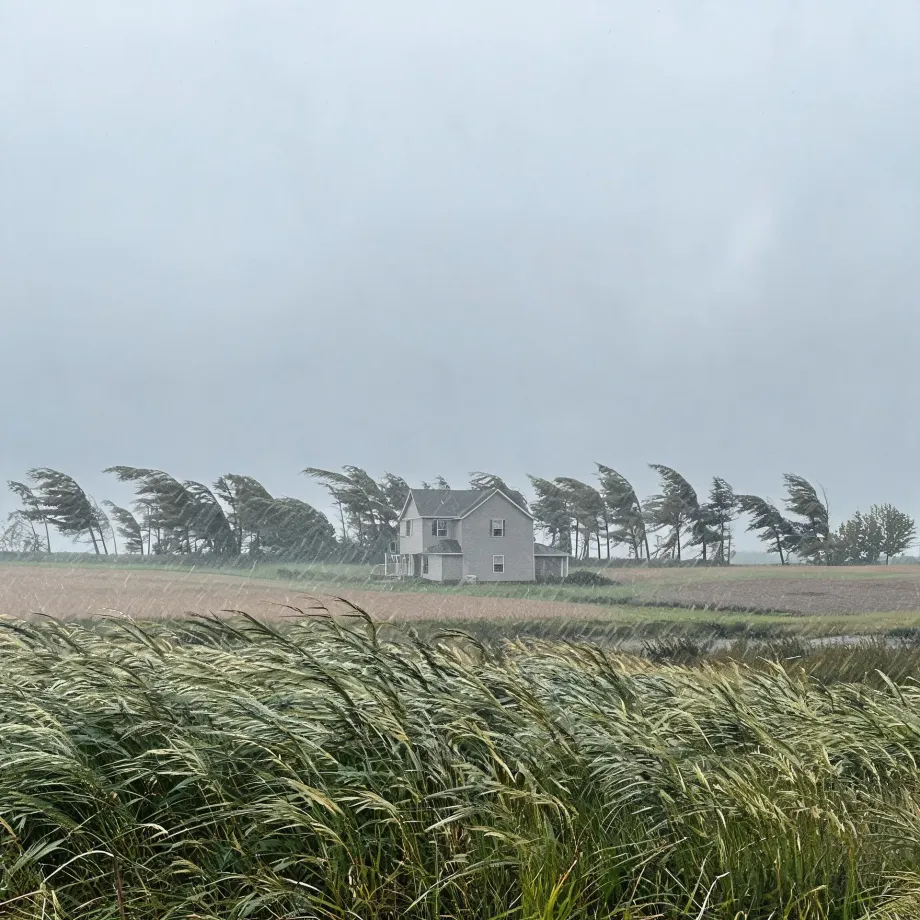
A furnace installation in Lincoln County is a local engineering decision before it is anything else. 103 severe weather events were recorded in Lincoln County, Minnesota between 2015 and 2024. At that rate, severe weather is a standing condition of operating here, and a contractor who ignores it when selecting equipment capacity or specifying installation materials is working from the wrong baseline. Duct sealing, equipment sizing, and exhaust routing all carry different stakes in a county that sees this kind of regular atmospheric stress. A contractor who has worked this area prices and plans accordingly.
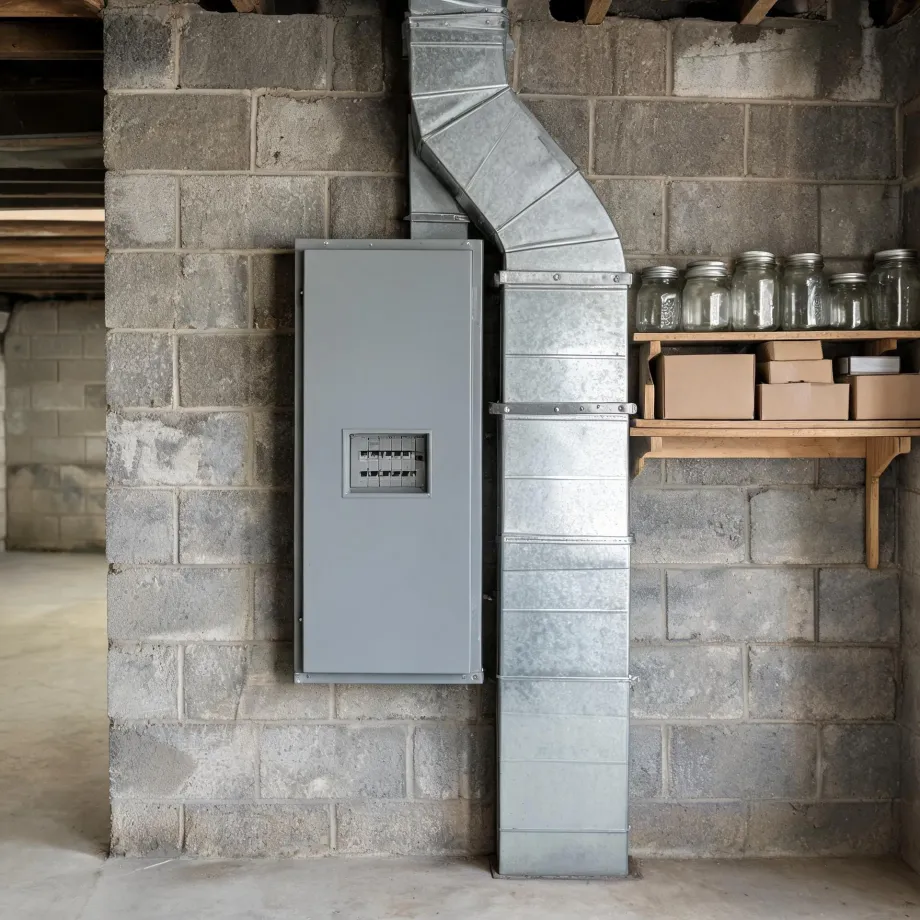
Ductwork sized for mid-century equipment may be too narrow, too leaky, or laid out in ways that choke airflow from a new furnace before the furnace itself has run a single cycle. Half the homes in Lincoln County, Minnesota were built in 1959 or earlier (2020-2024 ACS 5-year). That history shows up behind the drywall: trunk lines, branch runs, and return paths that were never engineered for today's equipment. A contractor pricing a furnace installation here walks the duct system first, because what those runs can actually carry sets the scope of the job more than the unit selection does.
What Gets Installed With a New Furnace
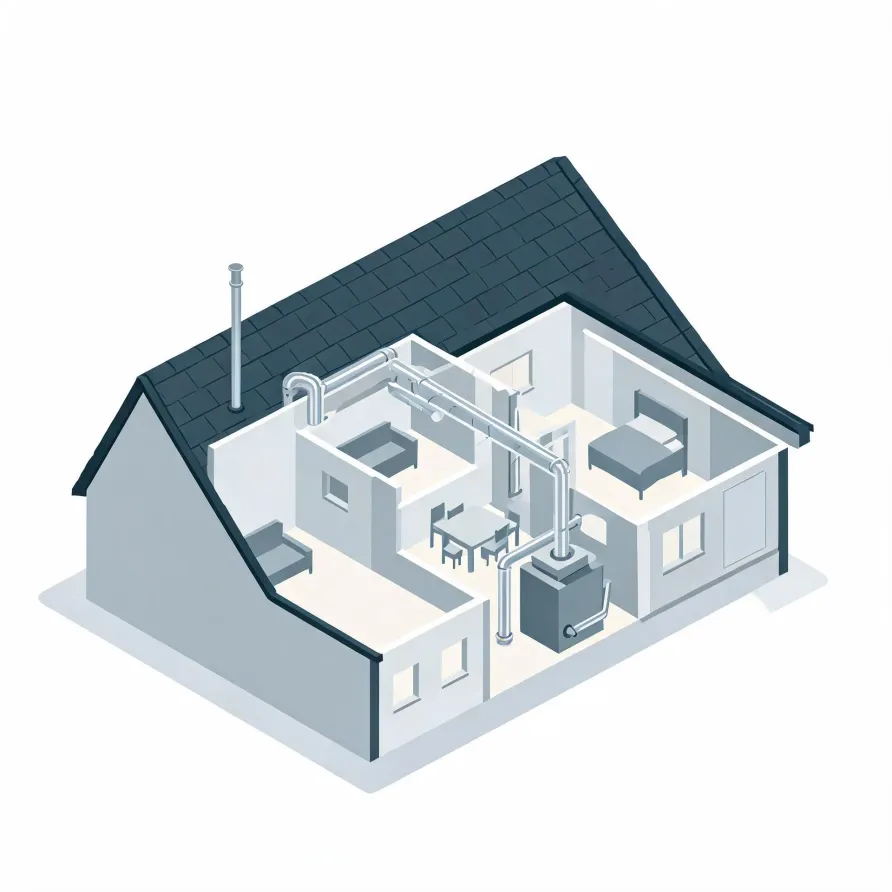
The furnace itself sits in a mechanical room, basement, or utility closet and is the central unit a homeowner is buying. A contractor mounts it there, connects it to the fuel supply, and ties it into the house's air distribution system. The flue pipe runs from the furnace to an exterior wall or up through the roof, carrying combustion gases out.
The air handler components built into the furnace cabinet include the blower, the heat exchanger, and the burner assembly. A new thermostat goes on an interior wall and gives the homeowner control over the whole system. The contractor also sets the condensate drain line if the furnace is a high-efficiency model that produces moisture during operation.
The drawing shows a typical layout, and a licensed contractor determines what applies to the specific configuration of your house.
Get matched in Lincoln CountyLincoln County, Minnesota, by the numbers that matter
103 severe weather events were recorded in Lincoln County, Minnesota between 2015 and 2024.
NOAA National Centers for Environmental Information, Storm Events Database, bulk CSV export, events 2015-01-01 through 2024-12-31.Half the homes in Lincoln County, Minnesota were built in 1959 or earlier (2020-2024 ACS 5-year).
U.S. Census Bureau, 2020-2024 American Community Survey 5-Year EstimatesLincoln County, Minnesota holds 3,045 housing units (2020-2024 ACS 5-year).
U.S. Census Bureau, 2020-2024 American Community Survey 5-Year EstimatesOwners occupy 81.4% of the occupied homes in Lincoln County, Minnesota (2020-2024 ACS 5-year).
U.S. Census Bureau, 2020-2024 American Community Survey 5-Year EstimatesFurnace Installation Rules for Lincoln County, Minnesota6 codes & standards
What the Installation Actually Looks Like
Non-weatherized gas furnaces manufactured on or after November 19, 2015 must reach 80.0 percent AFUE.
Non-weatherized oil-fired furnaces manufactured on or after November 19, 2015 must reach 83.0 percent AFUE.
Mobile home gas furnaces manufactured on or after November 19, 2015 must reach 80.0 percent AFUE.
Non-weatherized gas furnaces manufactured on or after December 18, 2028 must reach 95.0 percent AFUE, up from the 80.0 percent minimum that applies to units manufactured before that date.
Licensing and Legal Requirements in Lincoln County, Minnesota
Minnesota defines a mechanical contractor as a business that installs, repairs or maintains heating, ventilating, cooling or refrigeration systems — the definition that carries the exemption from the residential contractor licence.
Minnesota's residential contractor licence does not reach HVAC work: the licensing section carries its own exemption list, and a mechanical contractor is exempt from the licence requirement by name.
Severe Weather Events in Lincoln County
Weather in Lincoln County puts real demand on heating equipment over the course of a year. A furnace sized and installed for local conditions handles that load differently than one spec'd elsewhere, which is why the pattern of recorded weather events here is part of the picture.
103 severe weather events, 2015–2024. Source: NOAA National Centers for Environmental Information, Storm Events Database.