Tell us about the job
Takes about a minute. No obligation.
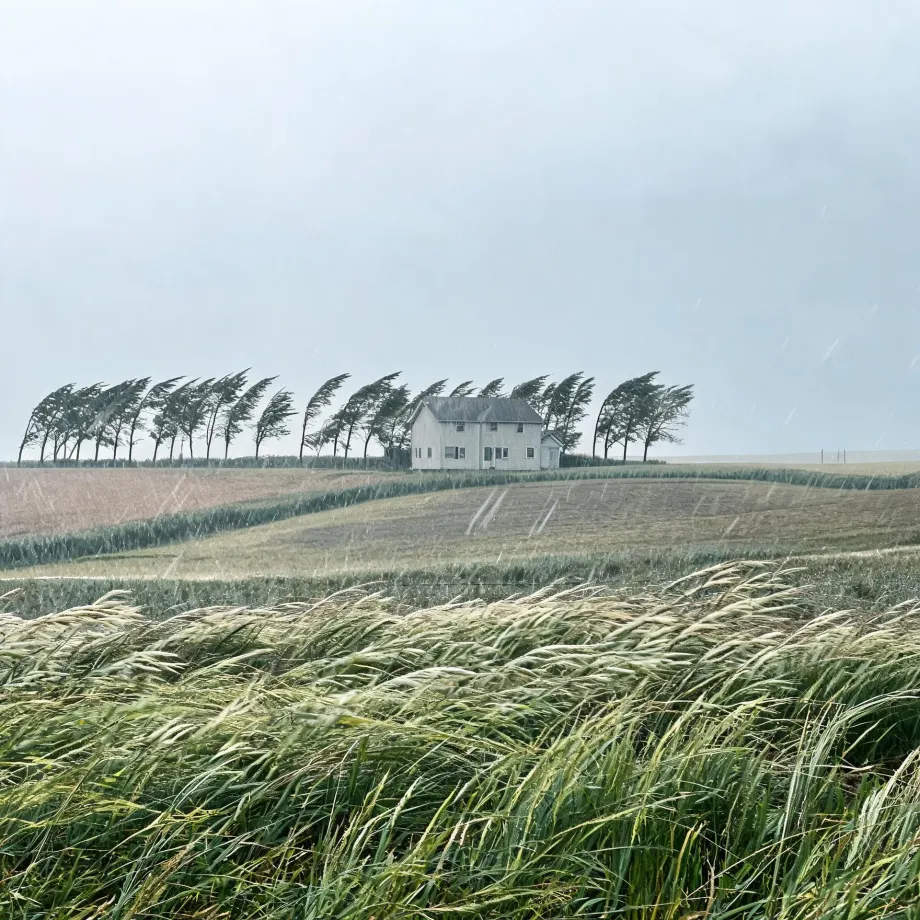
A contractor quoting a furnace installation in Traverse County starts from what the local climate has already asked of equipment like yours. 101 severe weather events were recorded in Traverse County, Minnesota between 2015 and 2024. At roughly the midpoint of what counties across the country see, that record puts real but not extraordinary load on a heating system. What it means in practice is that a furnace failing here is more likely underpowered for the structure, poorly sealed at install, or overdue for service than it is a casualty of severe weather alone. A contractor will size and specify accordingly.
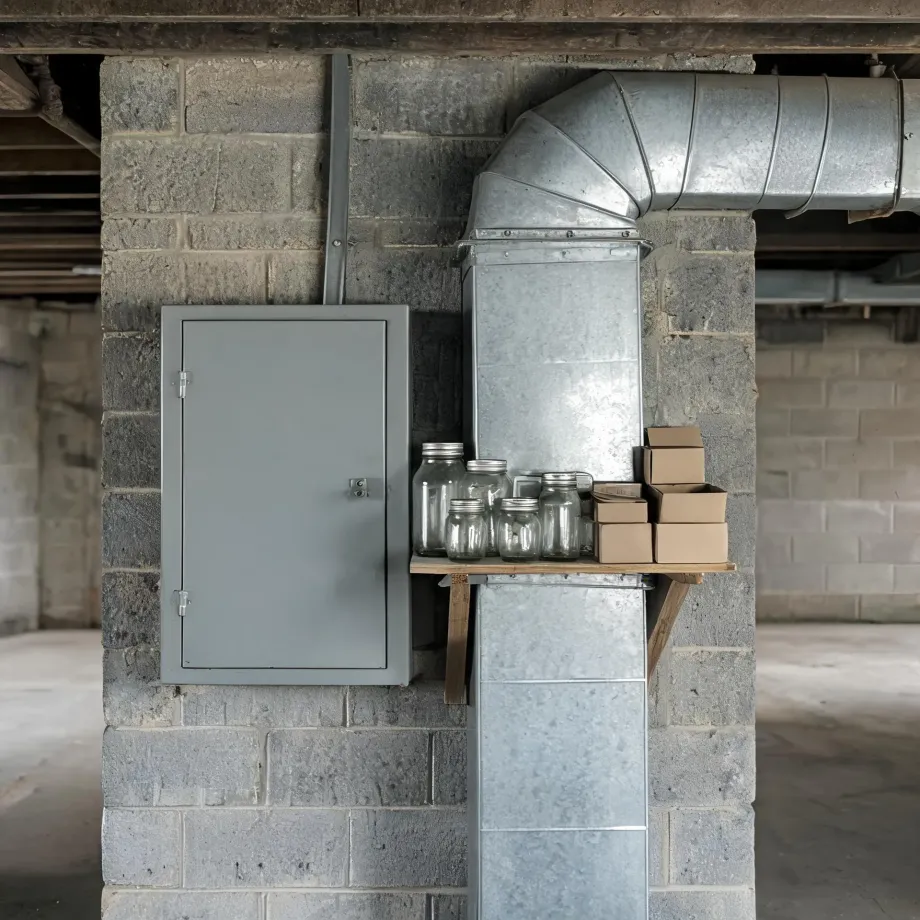
Ductwork laid into a house built for an earlier generation of heating equipment carries assumptions about airflow, trunk sizing, and return placement that a new furnace will test. Half the homes in Traverse County, Minnesota were built in 1962 or earlier (2020-2024 ACS 5-year). A contractor quoting a furnace installation has to read what is already in the walls and crawlspaces before the equipment choice settles anything, because a new unit running on undersized or poorly routed duct will not perform to spec regardless of what the nameplate says. The electrical service is the second check: what a modern furnace draws at startup has to match what the panel can actually deliver.
What Gets Installed With a New Furnace
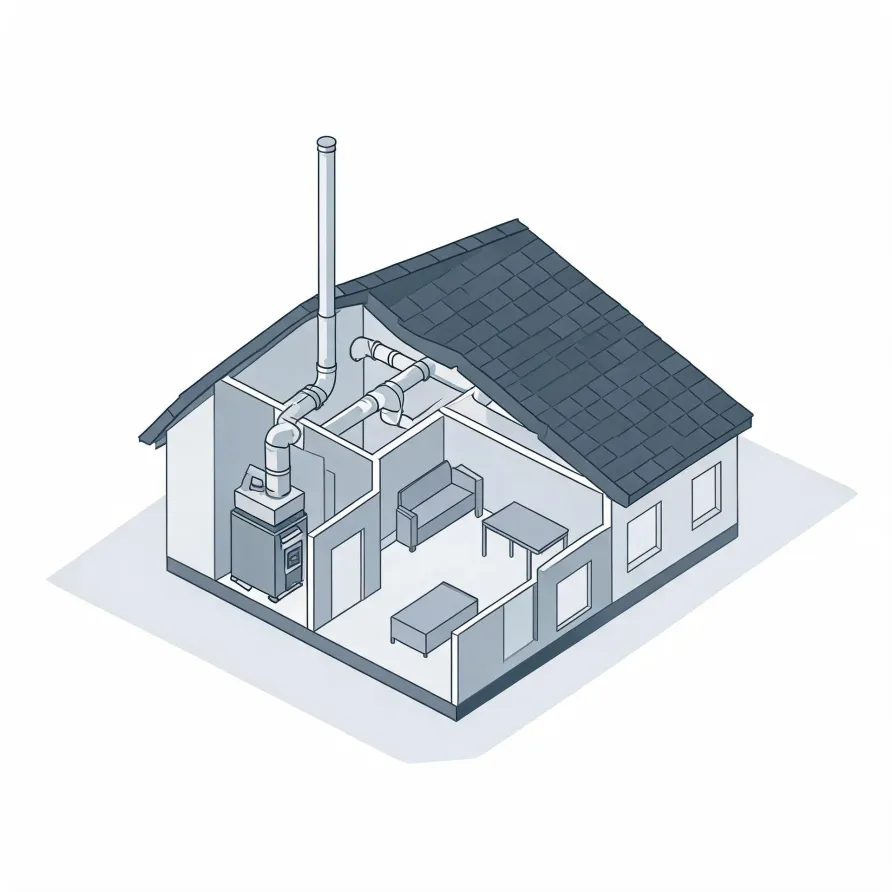
The furnace itself sits in the basement, utility room, or mechanical closet and is the unit that generates heat for the house. Attached to it is the flue or vent pipe, which runs upward and exits through the roof or sidewall, carrying combustion exhaust out of the building.
The air handler or blower cabinet, which may be built into the furnace or stand as a separate unit, moves conditioned air into the supply side of the home's duct system. A thermostat mounts on an interior wall and serves as the control point that tells the furnace when to fire and when to stop.
The drawing shows a typical layout, and a licensed contractor determines what the specific configuration looks like in your house.
Get matched in Traverse CountyTraverse County, MN, by the numbers
101 severe weather events were recorded in Traverse County, Minnesota between 2015 and 2024.
NOAA National Centers for Environmental Information, Storm Events Database, bulk CSV export, events 2015-01-01 through 2024-12-31.Half the homes in Traverse County, Minnesota were built in 1962 or earlier (2020-2024 ACS 5-year).
U.S. Census Bureau, 2020-2024 American Community Survey 5-Year EstimatesTraverse County, Minnesota holds 1,896 housing units (2020-2024 ACS 5-year).
U.S. Census Bureau, 2020-2024 American Community Survey 5-Year EstimatesOwners occupy 81.8% of the occupied homes in Traverse County, Minnesota (2020-2024 ACS 5-year).
U.S. Census Bureau, 2020-2024 American Community Survey 5-Year EstimatesCodes & Standards Governing Furnace Installation in Traverse County, Minnesota6 sourced rules and standards
What the installation actually looks like
Non-weatherized gas furnaces manufactured on or after November 19, 2015 must reach 80.0 percent AFUE.
Non-weatherized oil-fired furnaces manufactured on or after November 19, 2015 must reach 83.0 percent AFUE.
Mobile home gas furnaces manufactured on or after November 19, 2015 must reach 80.0 percent AFUE.
Non-weatherized gas furnaces manufactured on or after December 18, 2028 must reach 95.0 percent AFUE, up from the 80.0 percent minimum that applies to units manufactured before that date.
What Traverse County, Minnesota Requires for HVAC Installation
Minnesota defines a mechanical contractor as a business that installs, repairs or maintains heating, ventilating, cooling or refrigeration systems — the definition that carries the exemption from the residential contractor licence.
Minnesota's residential contractor licence does not reach HVAC work: the licensing section carries its own exemption list, and a mechanical contractor is exempt from the licence requirement by name.
Severe Weather Events in Traverse County
Minnesota winters put sustained demand on heating equipment, and Traverse County's climate shapes how hard a furnace has to work over its lifetime. What the local weather record shows is a workload reality, and that reality belongs in any honest conversation about furnace installation here.
101 severe weather events, 2015–2024. Source: NOAA National Centers for Environmental Information, Storm Events Database.