Tell us about the job
Takes about a minute. No obligation.

A contractor diagnosing a furnace in St. Louis County starts with the unit's service history and how old the heat exchanger and igniter are, because those are where failures actually originate. 695 severe weather events were recorded in St. Louis County, Minnesota between 2015 and 2024. At that rate, severe weather is a real but occasional factor rather than the standing pressure that wears through components year after year. A cracked heat exchanger or a failed inducer motor points to accumulated use and deferred maintenance, not weather load. Age and service gaps are what a contractor prices around first.
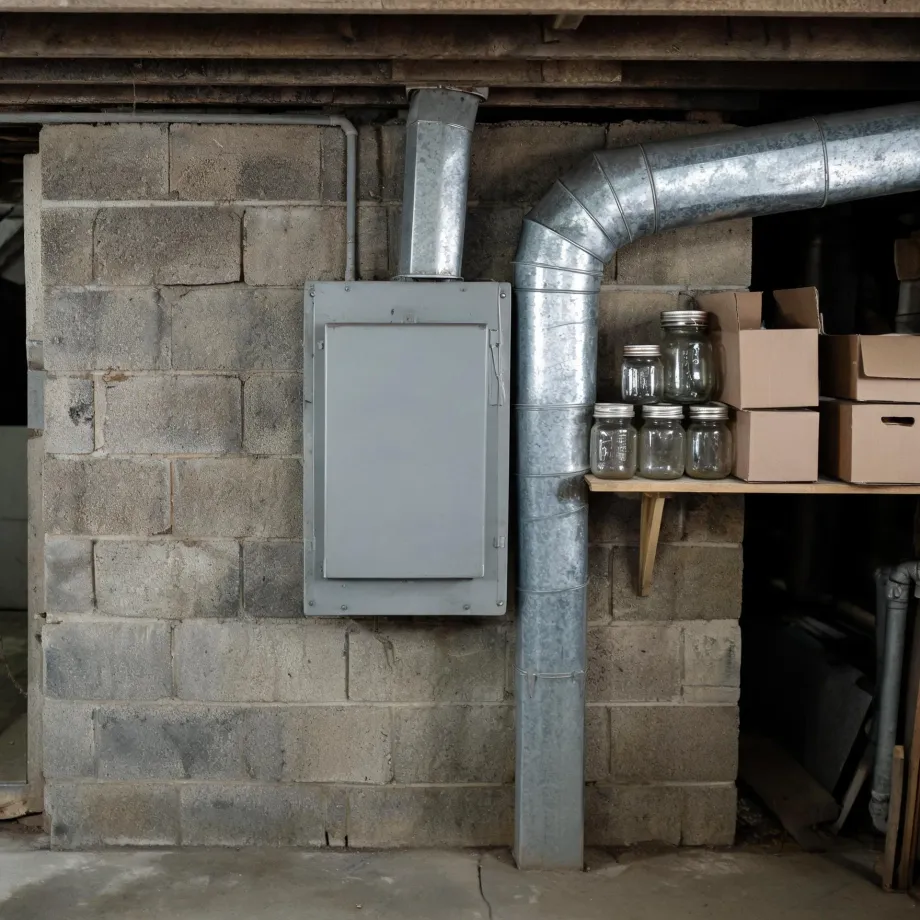
Ductwork in houses this old has usually been touched more than once before a furnace contractor arrives. Half the homes in St. Louis County, Minnesota were built in 1962 or earlier (2020-2024 ACS 5-year). That history means the duct runs and electrical service a current furnace is sitting on were adapted at some point after the house was framed, and they are unlikely to be the thing that broke. What the repair turns on is what the opened furnace actually contains: the heat exchanger, the inducer, the control board, and whether the replacement parts those components take are still in production.
The Parts of a Furnace a Contractor Checks First
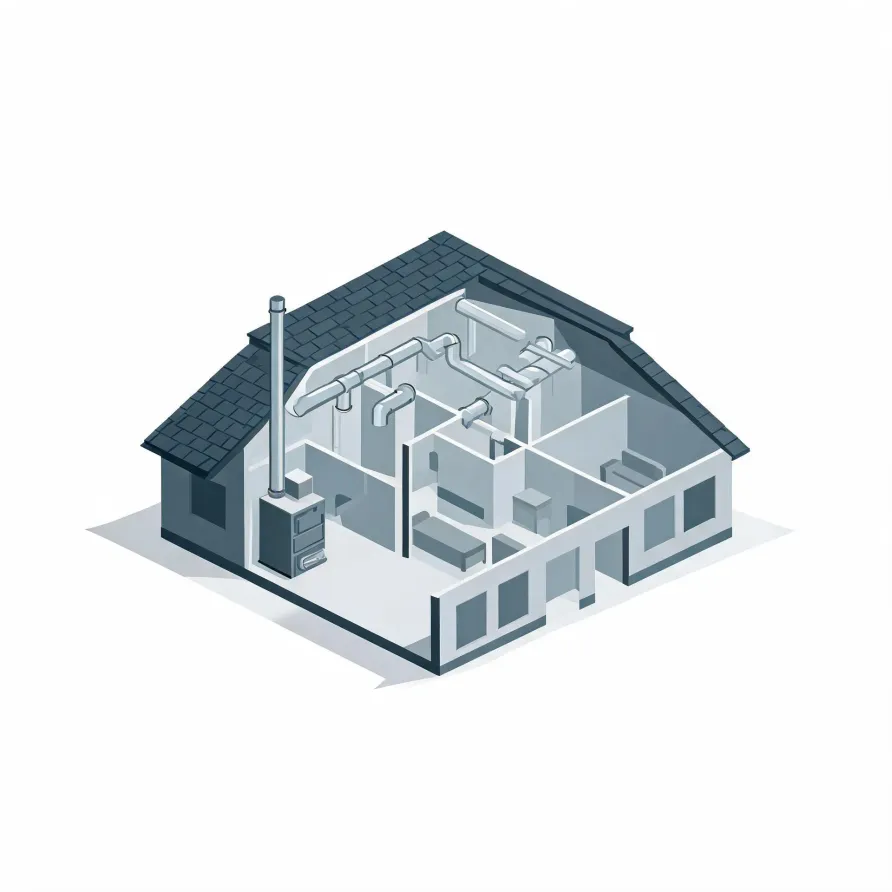
The furnace itself sits in a mechanical room, basement, or utility closet and is the core of the system. A contractor working on a repair will look first at the heat exchanger, burners, and igniter, since faults in any of those three pieces show up as no heat, weak heat, or a unit that cycles on and off without finishing a run.
The blower motor and its fan wheel sit inside the furnace cabinet and push conditioned air out through the supply side of your duct system. Alongside those, the control board and the flame sensor each govern whether the furnace fires and stays on, and both are common points of failure when the unit behaves erratically.
The drawing shows a typical furnace layout, and a licensed contractor will determine which components apply to your specific system and situation.
Get matched in St. Louis CountySt. Louis County, by the numbers
695 severe weather events were recorded in St. Louis County, Minnesota between 2015 and 2024.
NOAA National Centers for Environmental Information, Storm Events Database, bulk CSV export, events 2015-01-01 through 2024-12-31.Half the homes in St. Louis County, Minnesota were built in 1962 or earlier (2020-2024 ACS 5-year).
U.S. Census Bureau, 2020-2024 American Community Survey 5-Year EstimatesSt. Louis County, Minnesota holds 104,263 housing units (2020-2024 ACS 5-year).
U.S. Census Bureau, 2020-2024 American Community Survey 5-Year EstimatesOwners occupy 71.2% of the occupied homes in St. Louis County, Minnesota (2020-2024 ACS 5-year).
U.S. Census Bureau, 2020-2024 American Community Survey 5-Year EstimatesCodes & Standards Covering Furnace Repair in St. Louis County, Minnesota6 sourced rules and standards
What HVAC Repair Looks Like in St. Louis County
Non-weatherized gas furnaces manufactured on or after November 19, 2015 must reach 80.0 percent AFUE.
Non-weatherized oil-fired furnaces manufactured on or after November 19, 2015 must reach 83.0 percent AFUE.
Mobile home gas furnaces manufactured on or after November 19, 2015 must reach 80.0 percent AFUE.
Non-weatherized gas furnaces manufactured on or after December 18, 2028 must reach 95.0 percent AFUE, up from the 80.0 percent minimum that applies to units manufactured before that date.
Licensing and Legal Requirements in St. Louis County, Minnesota
Minnesota defines a mechanical contractor as a business that installs, repairs or maintains heating, ventilating, cooling or refrigeration systems — the definition that carries the exemption from the residential contractor licence.
Minnesota's residential contractor licence does not reach HVAC work: the licensing section carries its own exemption list, and a mechanical contractor is exempt from the licence requirement by name.
Weather That Works Your Furnace Hard in St. Louis County
Extreme weather puts real stress on heating equipment, pushing furnaces to run harder and longer than manufacturers design for in mild conditions. How much wear that adds up to depends on what the local climate actually delivers, and St. Louis County has its own record.
695 severe weather events, 2015–2024. Source: NOAA National Centers for Environmental Information, Storm Events Database.