Tell us about the job
Takes about a minute. No obligation.
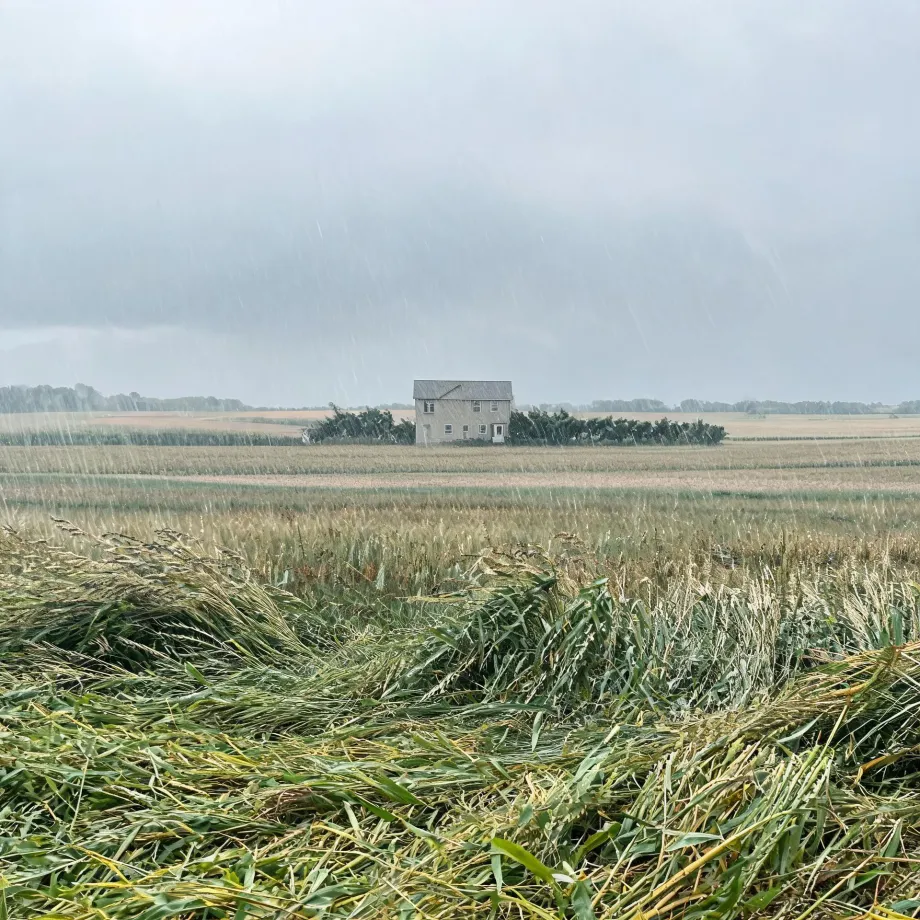
A furnace repair in Chisago County starts with a contractor working out what the system has already been asked to carry, because the answer shapes which components get checked first. 84 severe weather events were recorded in Chisago County, Minnesota between 2015 and 2024. At that rate, severe weather is a standing feature of operating life here, and heat exchangers, igniters, and blower motors accumulate stress in ways that show up long before a system finally stops. A part that looks like it failed suddenly often has a longer story behind it, and a contractor who skips that history quotes the wrong repair.
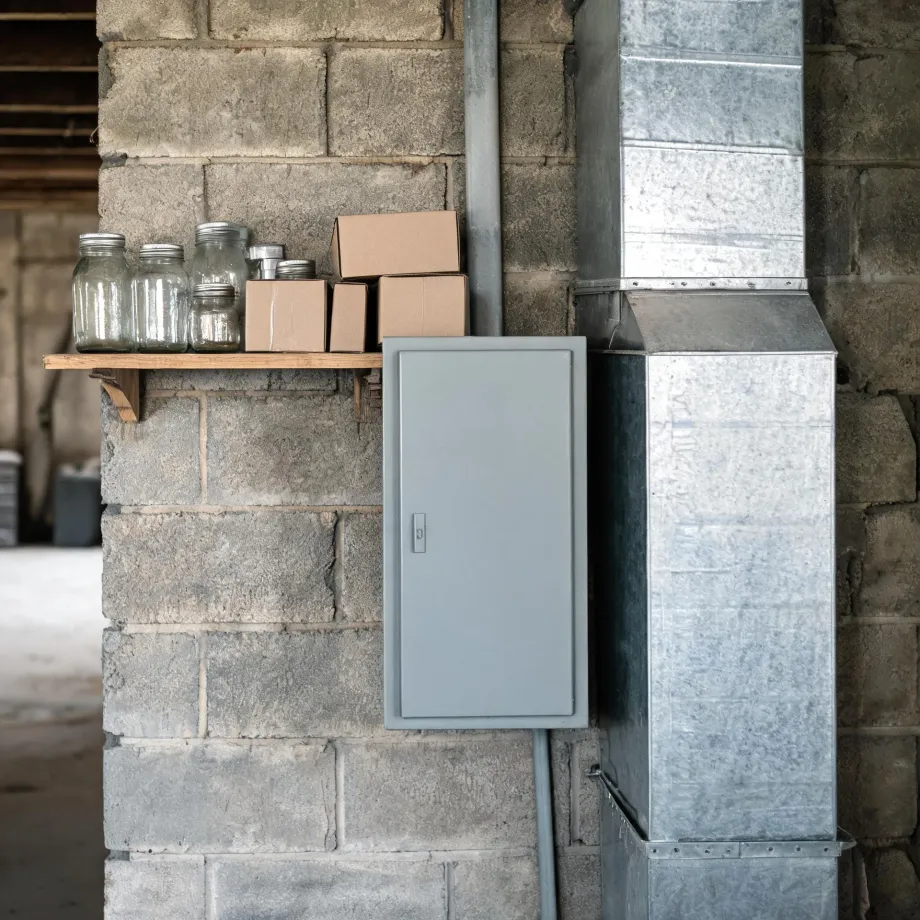
Furnace repair in housing stock this age rarely stops at the part that failed first. Half the homes in Chisago County, Minnesota were built in 1992 or earlier (2020-2024 ACS 5-year). A system that has cycled through that many Minnesota winters accumulates wear across the heat exchanger, the burner assembly, and the limit controls at the same time, so the presenting fault is often the youngest problem in the box. A contractor who opens the unit expecting one repair finds the rest of the picture only after looking at the components around it.
The Parts of a Furnace a Contractor Checks First
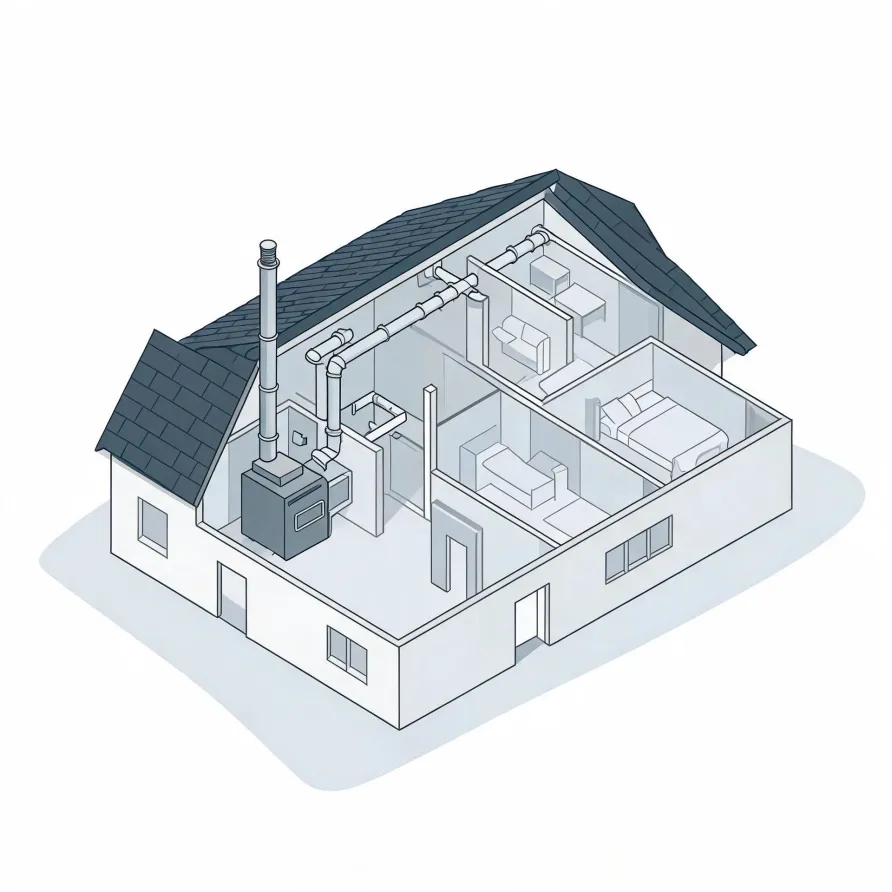
The furnace itself sits in a mechanical room, basement, or utility closet and is the piece a contractor goes to first. Inside it, the heat exchanger and burner assembly are the most common sources of failure. A cracked heat exchanger, a dirty or misfiring burner, or a failed ignitor will each stop the system cold in a different way.
The blower motor sits at the base of the furnace cabinet and pushes conditioned air through the house. Alongside it, the control board, the flame sensor, and the pressure switches all govern whether the furnace fires and stays running. Any one of those components can be the reason a furnace short-cycles, refuses to start, or runs without producing heat.
The drawing shows a general layout of the system, and a licensed contractor determines which components apply to the specific setup in your home.
Get matched in Chisago CountyChisago County, by the numbers
84 severe weather events were recorded in Chisago County, Minnesota between 2015 and 2024.
NOAA National Centers for Environmental Information, Storm Events Database, bulk CSV export, events 2015-01-01 through 2024-12-31.Half the homes in Chisago County, Minnesota were built in 1992 or earlier (2020-2024 ACS 5-year).
U.S. Census Bureau, 2020-2024 American Community Survey 5-Year EstimatesChisago County, Minnesota holds 22,998 housing units (2020-2024 ACS 5-year).
U.S. Census Bureau, 2020-2024 American Community Survey 5-Year EstimatesOwners occupy 85.9% of the occupied homes in Chisago County, Minnesota (2020-2024 ACS 5-year).
U.S. Census Bureau, 2020-2024 American Community Survey 5-Year EstimatesCodes & Standards Covering Furnace Repair in Chisago County, Minnesota6 sourced rules and standards
What happens when a contractor comes out
Non-weatherized gas furnaces manufactured on or after November 19, 2015 must reach 80.0 percent AFUE.
Non-weatherized oil-fired furnaces manufactured on or after November 19, 2015 must reach 83.0 percent AFUE.
Mobile home gas furnaces manufactured on or after November 19, 2015 must reach 80.0 percent AFUE.
Non-weatherized gas furnaces manufactured on or after December 18, 2028 must reach 95.0 percent AFUE, up from the 80.0 percent minimum that applies to units manufactured before that date.
Licensing Rules in Chisago County, Minnesota
Minnesota defines a mechanical contractor as a business that installs, repairs or maintains heating, ventilating, cooling or refrigeration systems — the definition that carries the exemption from the residential contractor licence.
Minnesota's residential contractor licence does not reach HVAC work: the licensing section carries its own exemption list, and a mechanical contractor is exempt from the licence requirement by name.
Severe Weather Events in Chisago County
Hard weather puts hours on a furnace fast, cycling it harder and more often than a mild season ever would. How much of that your equipment has absorbed is a local question, and the record below gives you a frame for it.
84 severe weather events, 2015–2024. Source: NOAA National Centers for Environmental Information, Storm Events Database.